3D Gallery
Weaving: The Interlacing That Clothed the World
Enter gallery
Weaving: The Interlacing That Clothed the World is a 3D virtual gallery on MyGallery3D, a walkable online exhibition of 12 works. Step inside and explore it in your browser: no app, no headset.
Walk through this 3D virtual gallery of weaving in your browser: two sets of thread crossing at right angles, and almost everything you are wearing.
Weaving is old. An impression at Dolní Věstonice suggests it was known 27,000 years ago. It is also the reason you have a computer. Joseph Marie Jacquard's 1804 loom attachment stored its pattern on punched cards, and changing the cards changed the cloth. Charles Babbage knew of it and planned to store programs on cards in his Analytical Engine. Punched cards stayed in computing until the mid-1980s.
In 1886 a Lyon workshop wove a prayer book. All 58 pages of the Livre de Prières are silk, black and grey thread at 160 threads per cm, and encoding them took an estimated 106,000 to 500,000 punchcards. It took two years and almost 50 trials to get right. The pages carry elaborate borders with text and pictures of saints. Nothing was printed. Every line is thread.
In late medieval Europe, tapestry was the grandest and most expensive medium for images, above painting, and it stayed there in the eyes of many Renaissance patrons. The price was in the thread. Using silk could quadruple the cost; gold thread could raise it perhaps fifty times that of wool alone. A weaver managed about a square yard of medium quality a month, half that at the finest.
Every loom does the same three things. Shedding lifts some warp threads and drops others to open a gap. Picking sends the weft through that gap. Battening tamps the new thread against the cloth so the gaps stay even. Repeat. A hand weaver throws the shuttle. A power loom hits it 80 to 250 times a minute. A rapier machine moves weft at over 2,000 metres per minute.
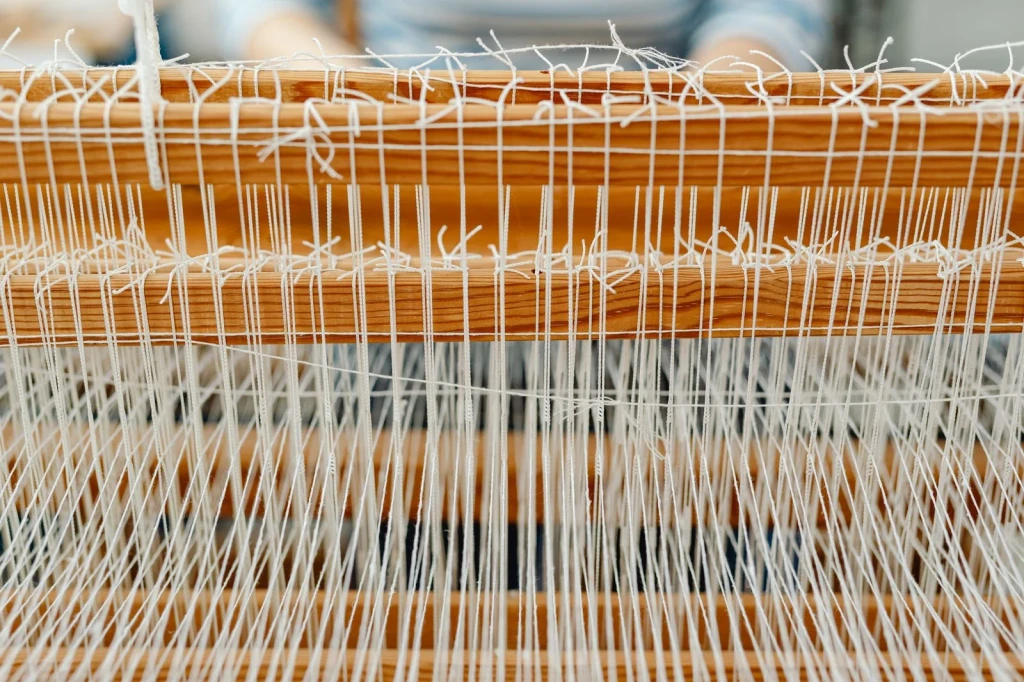
Another view of wooden loom and white threads, emphasizing the quiet precision required of hand weaving.
Photograph by www.kaboompics.com, via Pexels.
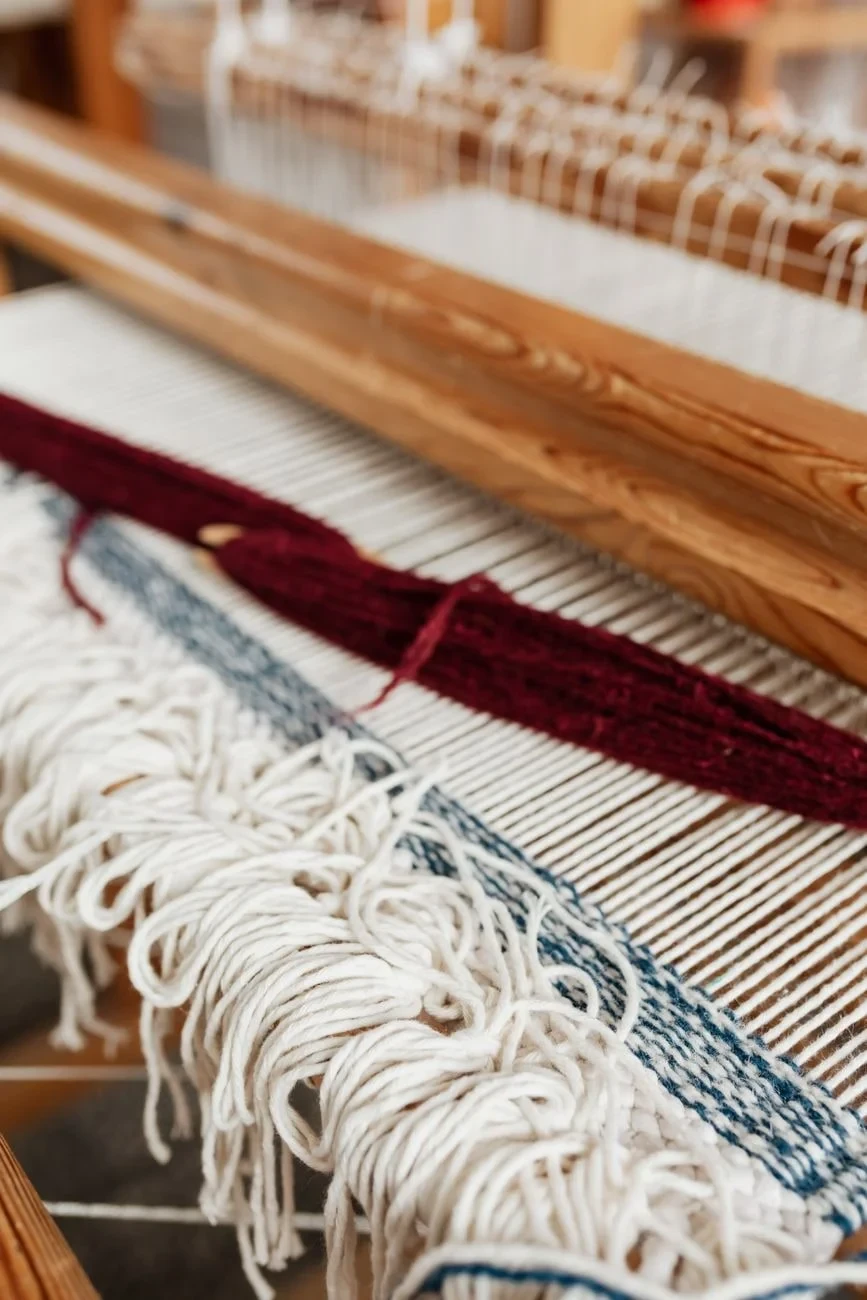
Handwoven textile takes shape on a loom in an artisan workshop. The image shows traditional techniques at work.
Photograph by www.kaboompics.com, via Pexels.
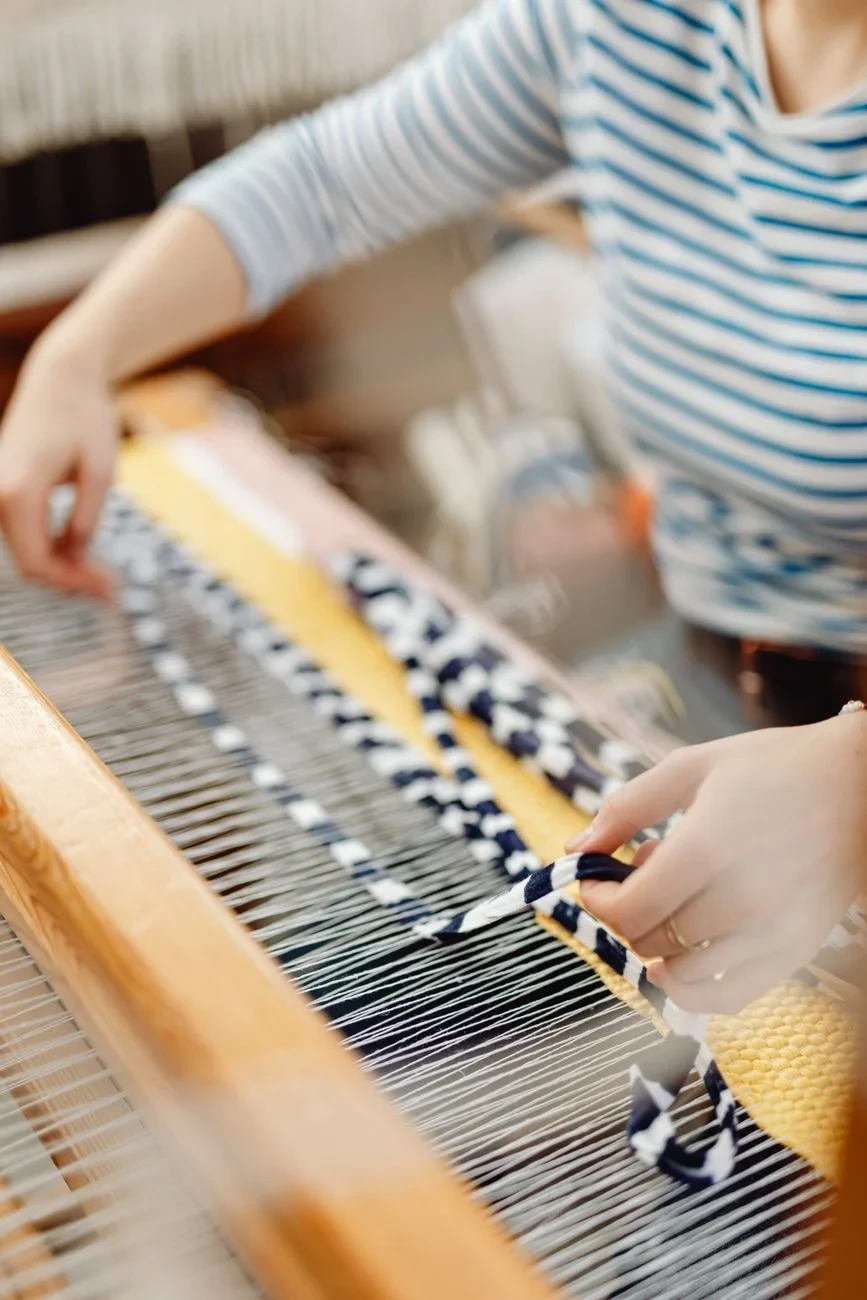
A woman's hands and loom become one in this close study of weaving. The photograph captures both the technical skill and artistic intention in the work.
Photograph by www.kaboompics.com, via Pexels.
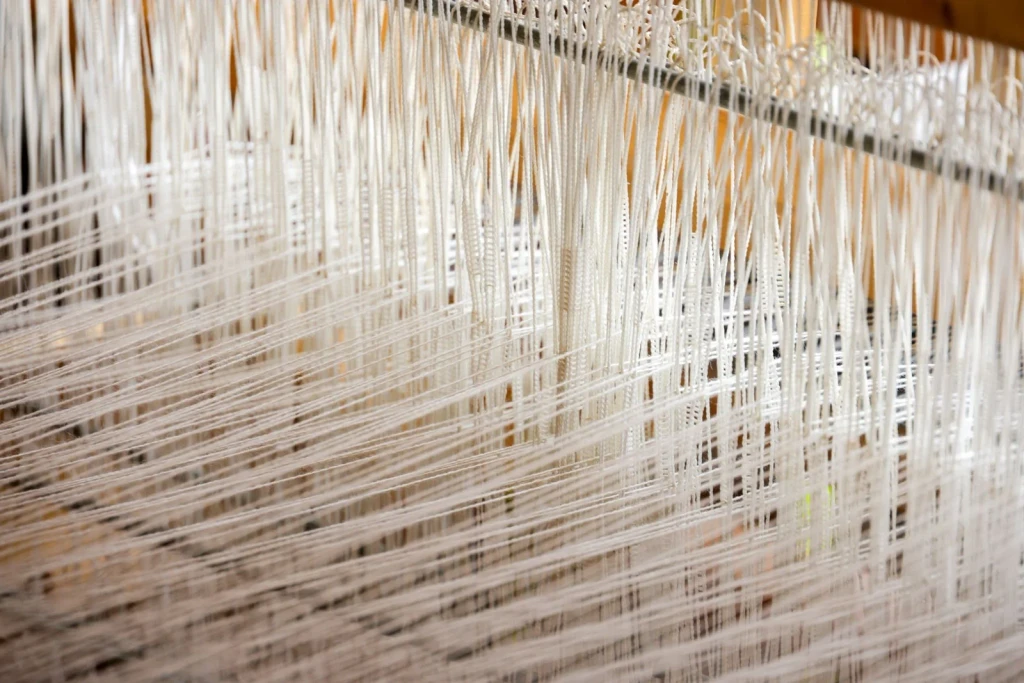
A detailed view of white threads interlaced on a loom. The photograph captures the fundamental structure that weaving creates: individual threads becoming cloth.
Photograph by Magda Ehlers, via Pexels.
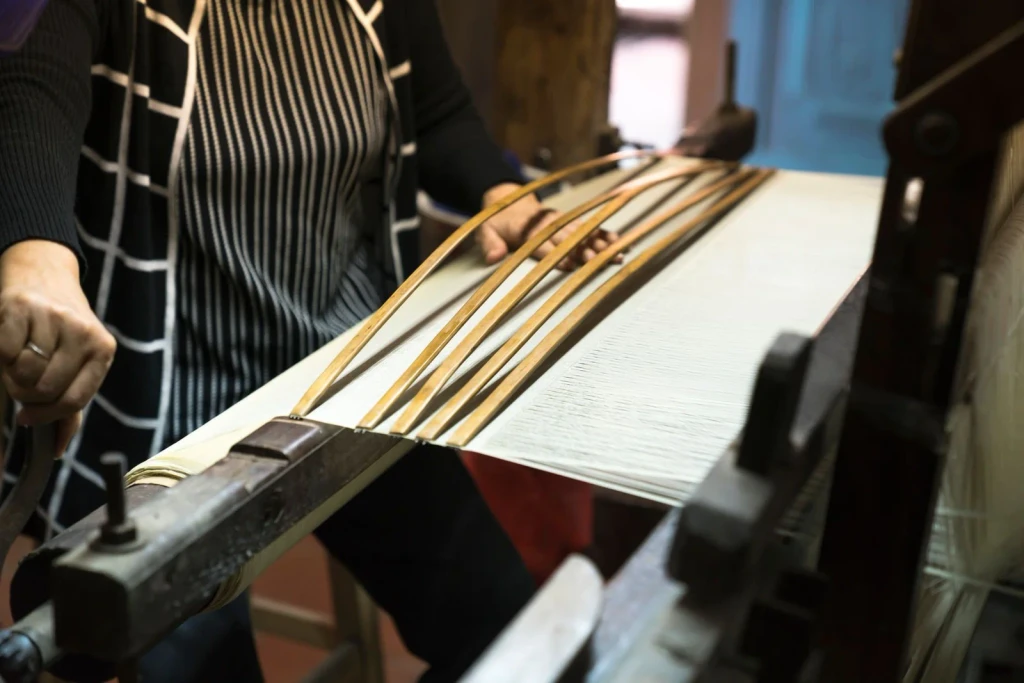
A worker operates a loom machine in a weaving factory. The photograph shows an industrial approach to the ancient craft of textile production.
Photograph by Quang Nguyen Vinh, via Pexels.
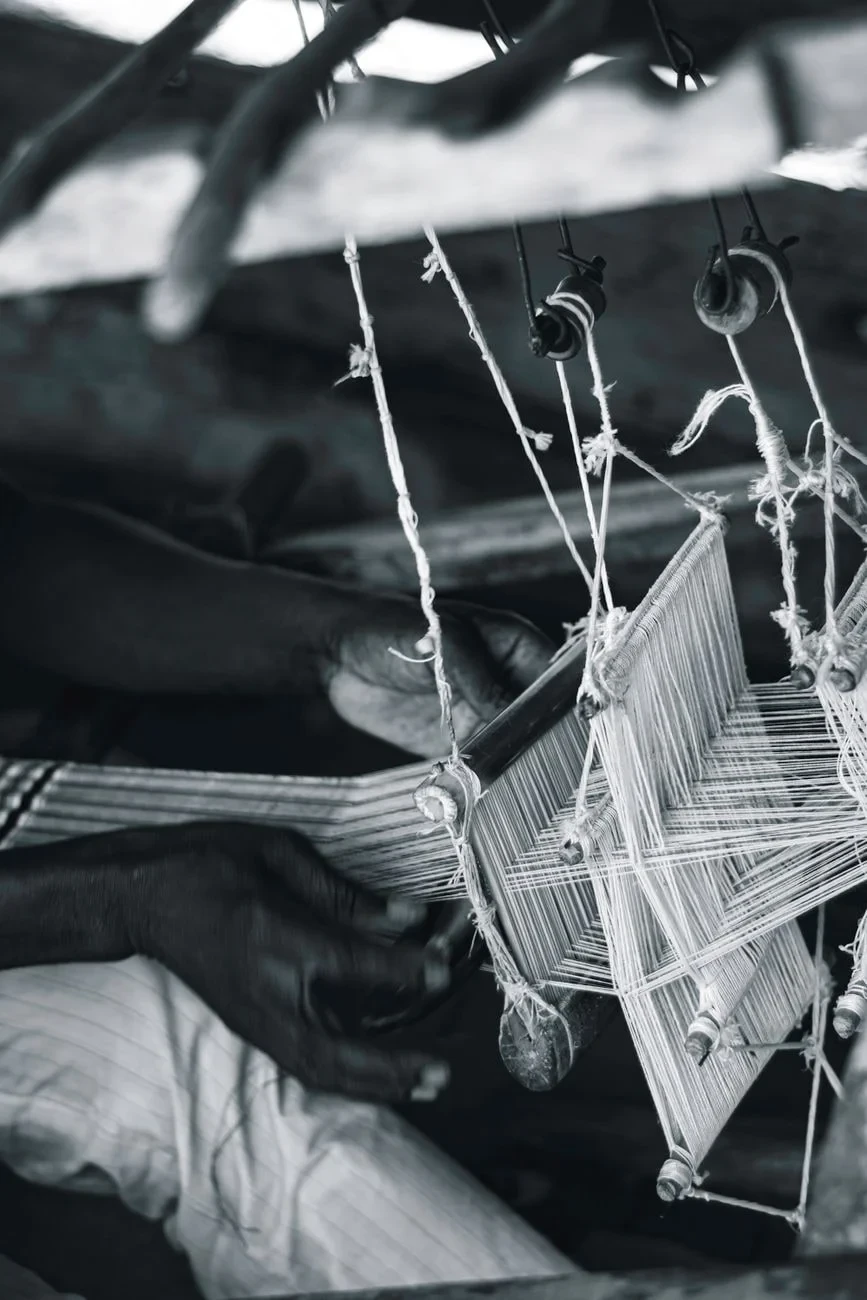
An artisan engaged in traditional technique, body and loom in conversation. This is weaving as lived practice.
Photograph by Jean Marc Bonnel, via Pexels.
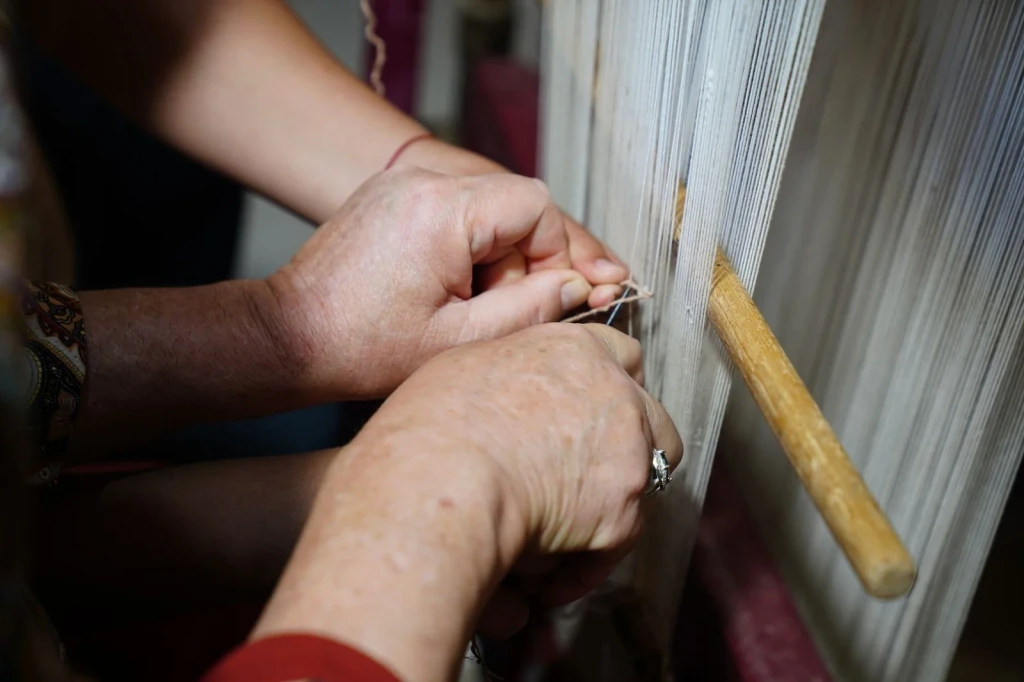
Skilled hands navigate the loom in real time. The photograph records textile craftsmanship as physical knowledge.
Photograph by Tahir Xəlfəquliyev, via Pexels.
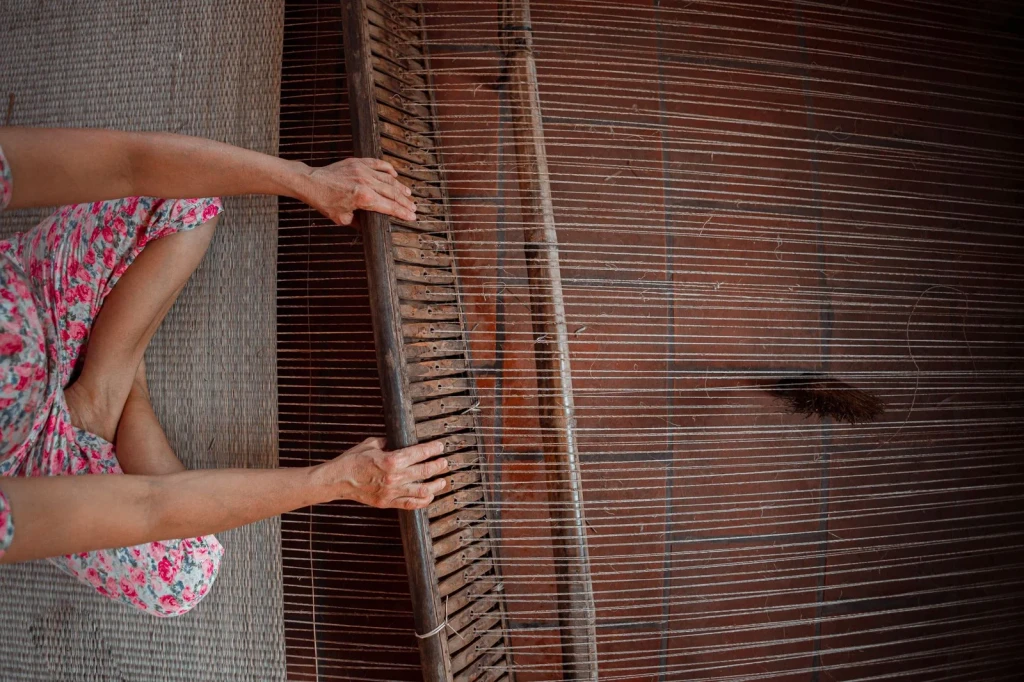
A person works at a wooden loom, demonstrating the craftsmanship involved in hand weaving. The photograph documents one method of cloth-making.
Photograph by HONG SON, via Pexels.
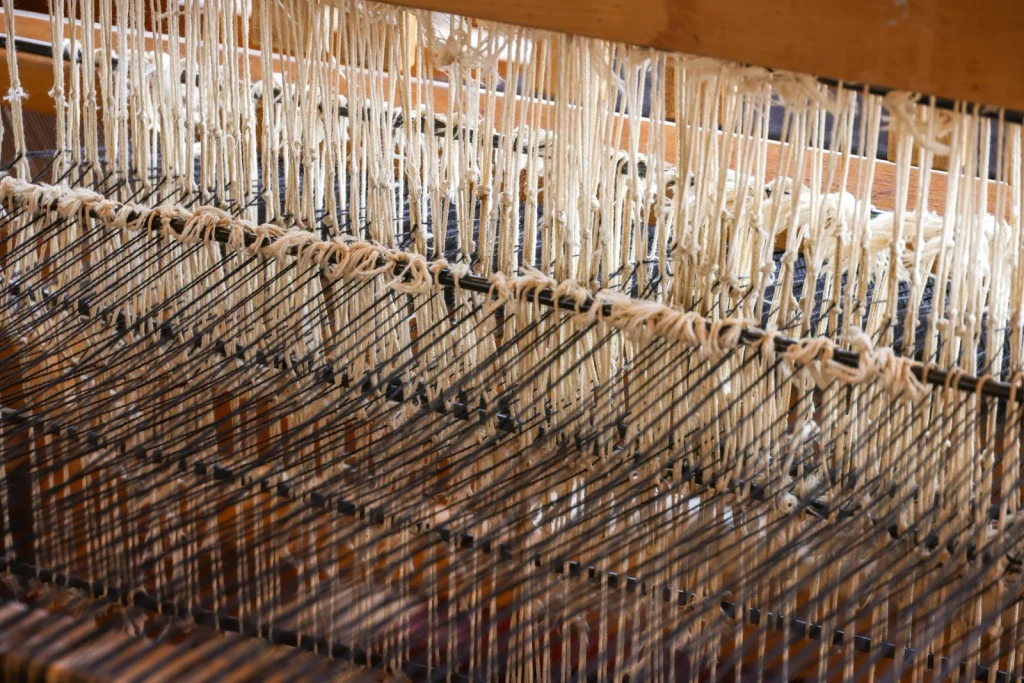
A loom holds alpaca wool threads in an artisanal space. Natural fiber meets traditional tool.
Photograph by Magda Ehlers, via Pexels.
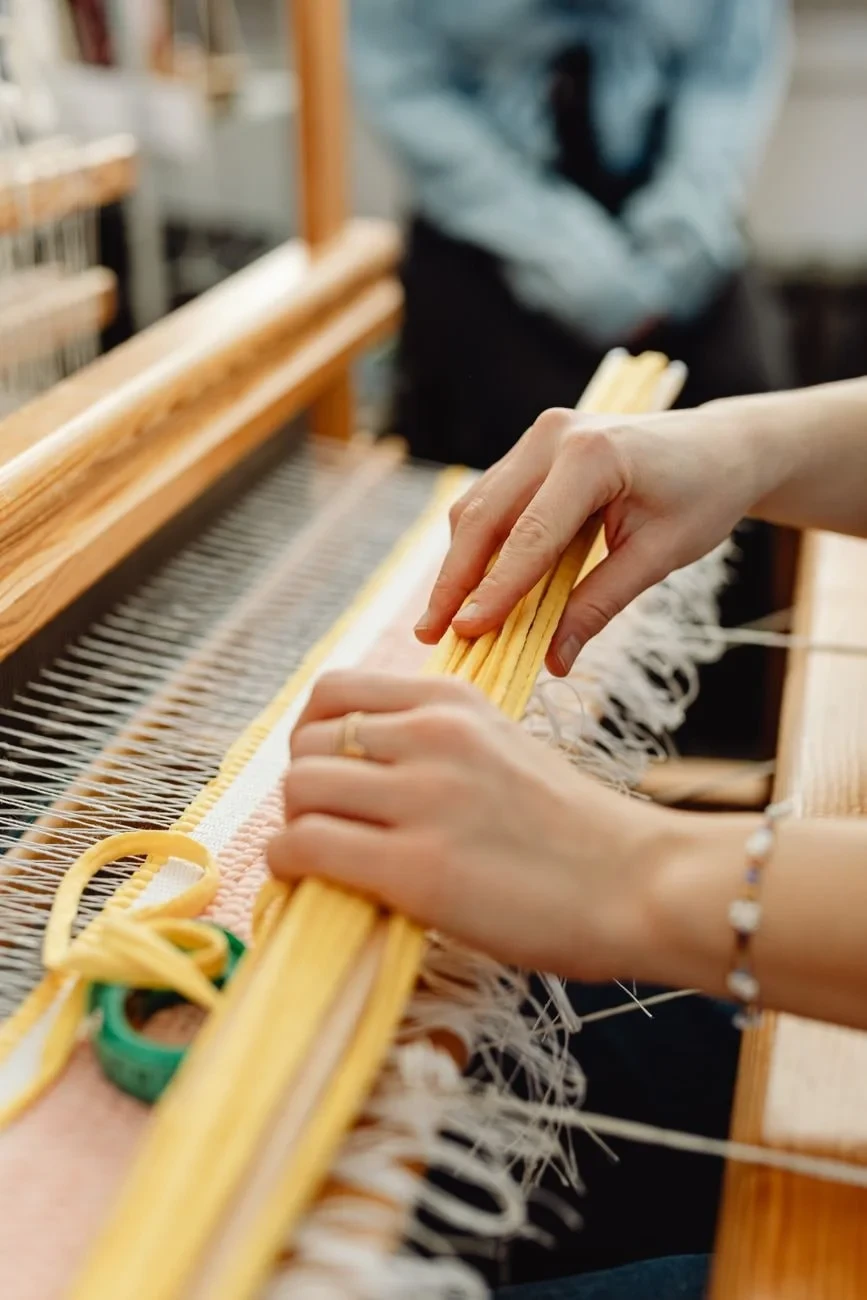
An artisan's hands work with yellow threads at the loom. The close focus shows the concentration and precision required in textile creation.
Photograph by www.kaboompics.com, via Pexels.
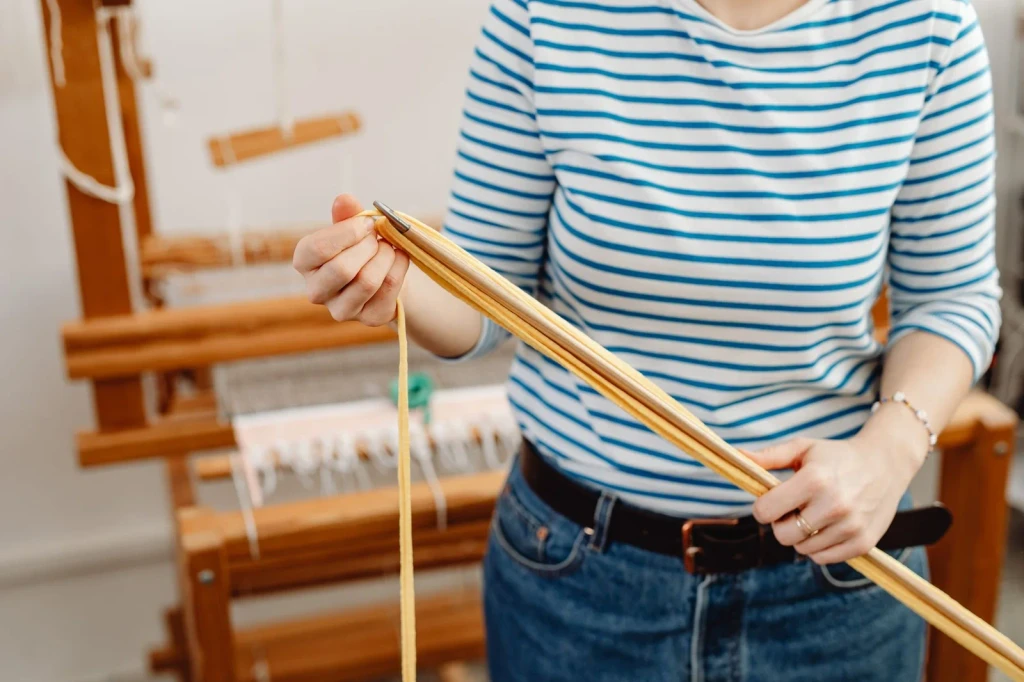
Hands and loom occupy the same frame in focused craftsmanship. The photograph witnesses weaving as concentrated work.
Photograph by www.kaboompics.com, via Pexels.
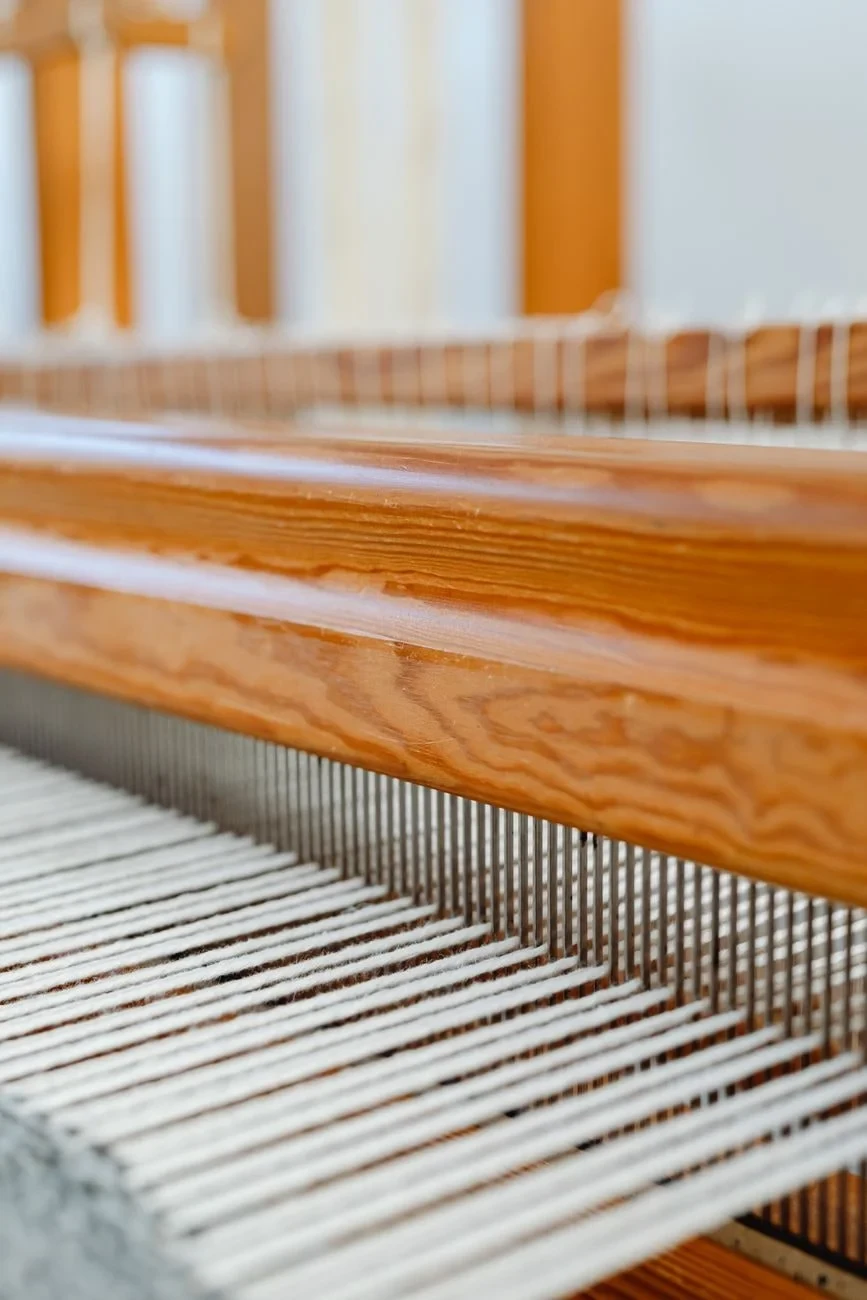
A close view of a wooden loom's white threads at rest. The photograph captures the foundational structure that makes weaving possible.
Photograph by www.kaboompics.com, via Pexels.
