3D Gallery
Every Staircase Is an Argument
Enter gallery
Every Staircase Is an Argument is a 3D virtual gallery on MyGallery3D, a walkable online exhibition of 12 works. Step inside and explore it in your browser: no app, no headset.
Welcome to a 3D virtual museum of stairs, a gallery you can walk through in your browser, one step at a time.
A staircase is a machine for dividing a height you could not cross into a series of heights you can. The idea is about 8000 years old. Ziggurats rose in tiers of two to seven with a shrine at the summit, and they were called the Hill of Heaven. Step pyramids then appeared in civilizations with no known connection to each other, partly because a stepped shape has a lower center of mass and stands up better.
The moving staircase arrived as a shock. Piat installed its stepless escalator at Harrods in Knightsbridge, unveiled on November 16, 1898, the first moving staircase in England: a continuous leather belt of 224 pieces strongly linked together. Customers unnerved by the experience, one account records, were revived by shopmen dispensing free smelling salts and cognac.
Charles Seeberger built the word from a Latin lexicon, taking the root scala, a prefix E and a suffix Tor, and trademarked escalator in 1900. Otis held it so tightly that rivals sold the Motorstair and the Electric Stairway instead. In 1950 a decision found that the public knew escalator as the name for a moving stairway and not its source, and the word fell into the public domain.
Builders count a flight by its risers, never by its treads. The rise height and the going must stay identical the whole way up, because a foot that has learned one height will trip on another. The rest is a vocabulary most people never notice: stringers carrying the load, winders turning a corner without a landing, a spandrel below doing quiet duty as a closet.
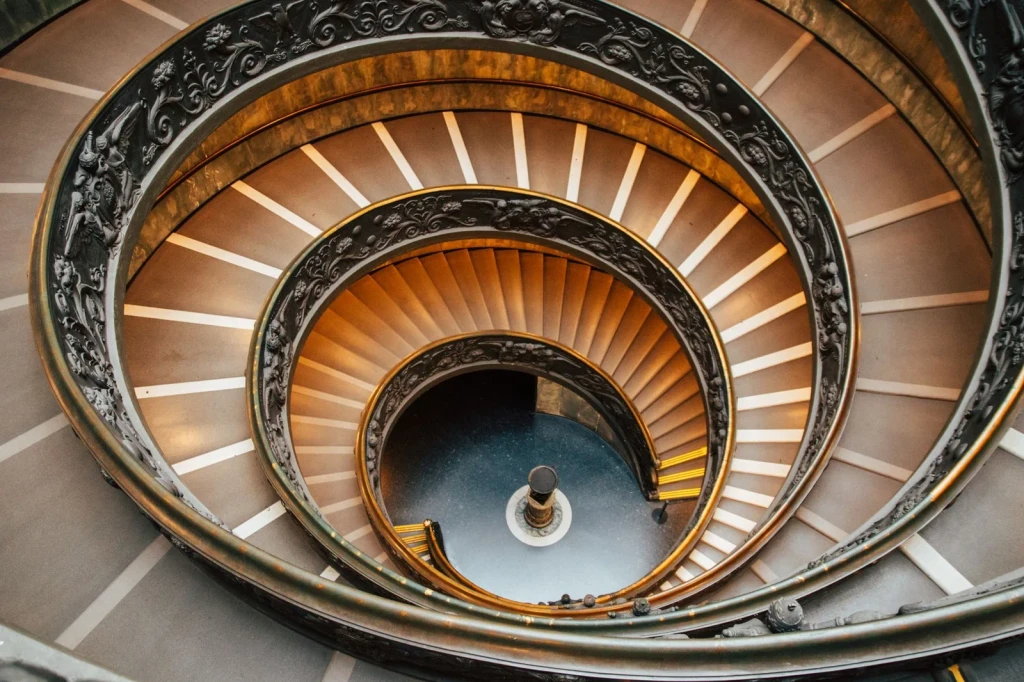
A dramatic spiral viewed as a famous museum staircase presents architecture as spectacle. The staircase argues for its own importance.
Photograph by Manish Jain, via Pexels.
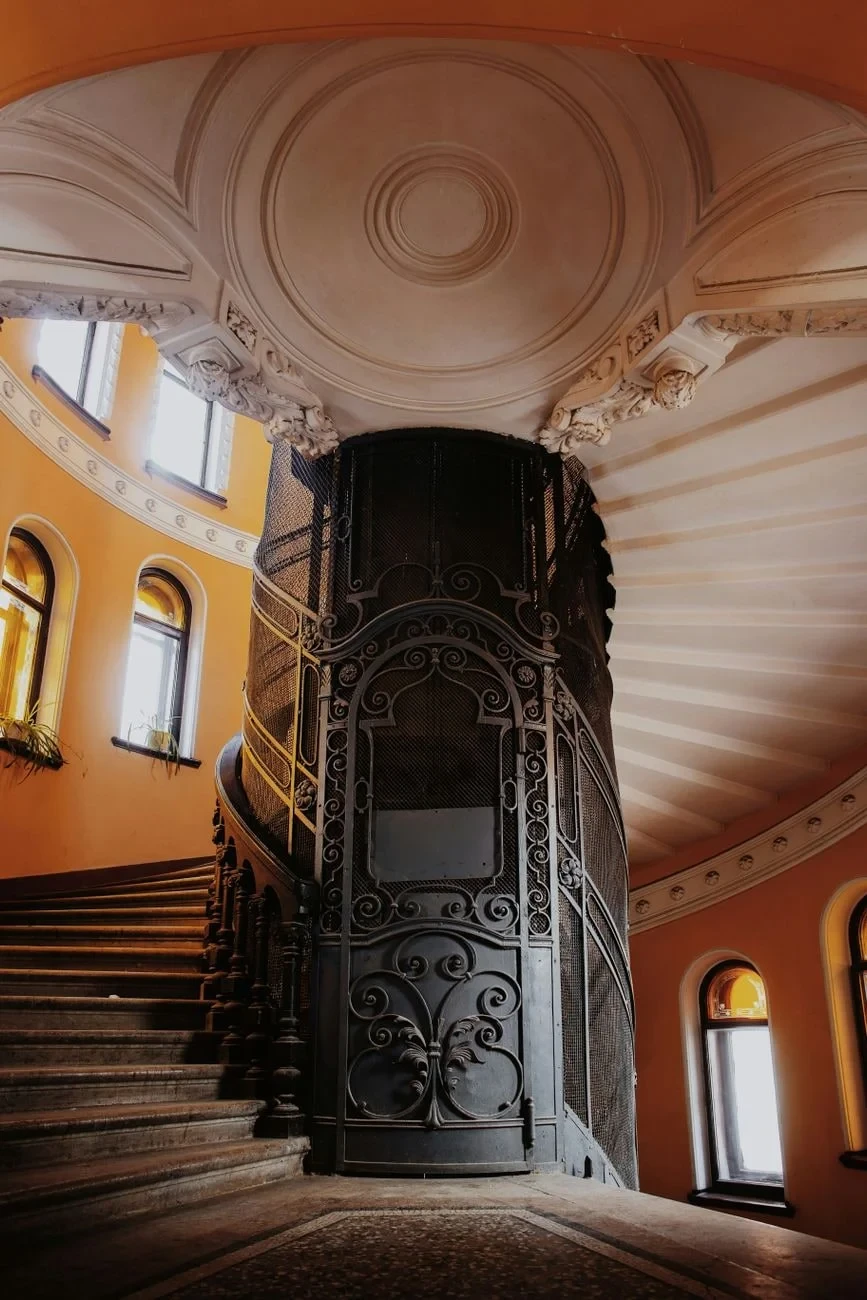
Intricate metalwork in a historic building's ornate staircase. The photograph documents how craftsmanship itself makes an argument about value and care.
Photograph by Ilia Bronskiy, via Pexels.
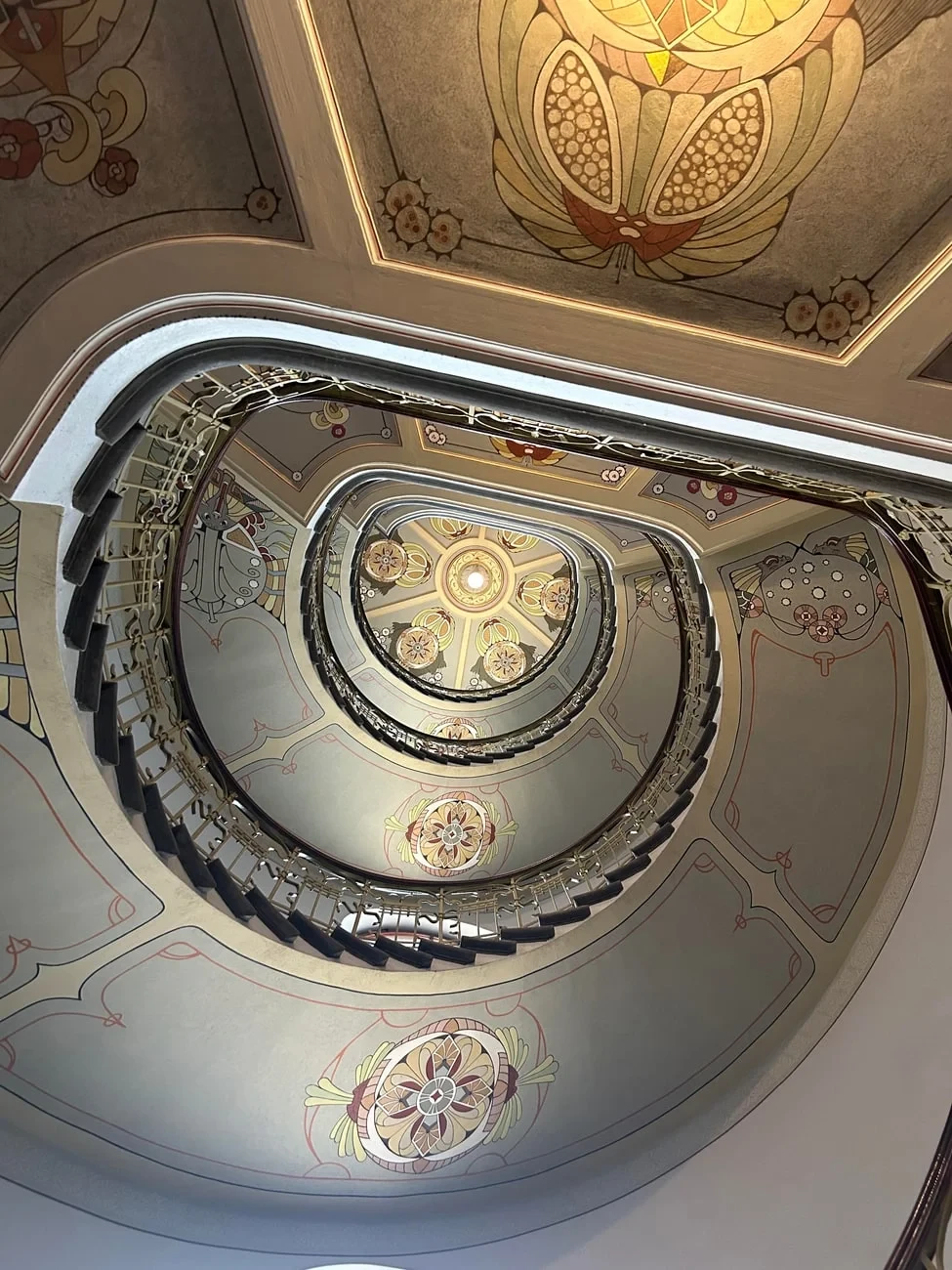
Sophisticated Art Deco architecture in spiral form. The photograph shows how style itself is an argument about taste, elegance, and progress.
Photograph by roba jr, via Pexels.
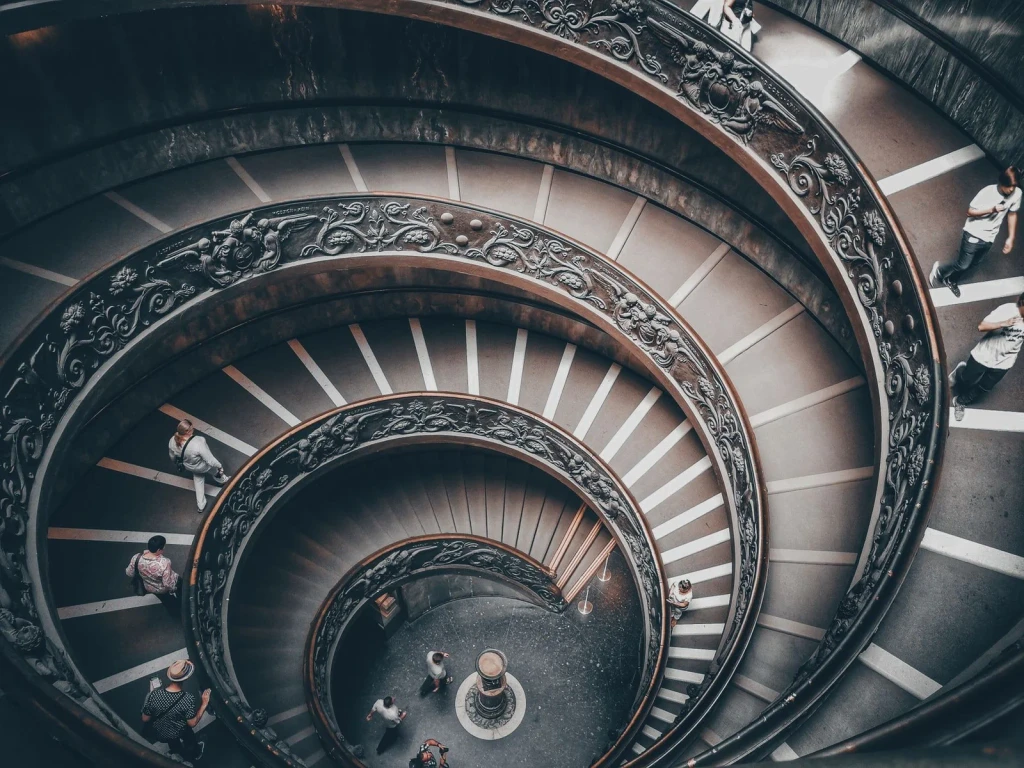
An architectural spiral with ornate detailing and figures moving through it shows stairs as contested space. Movement itself becomes the argument.
Photograph by Mehmet Turgut Kirkgoz, via Pexels.
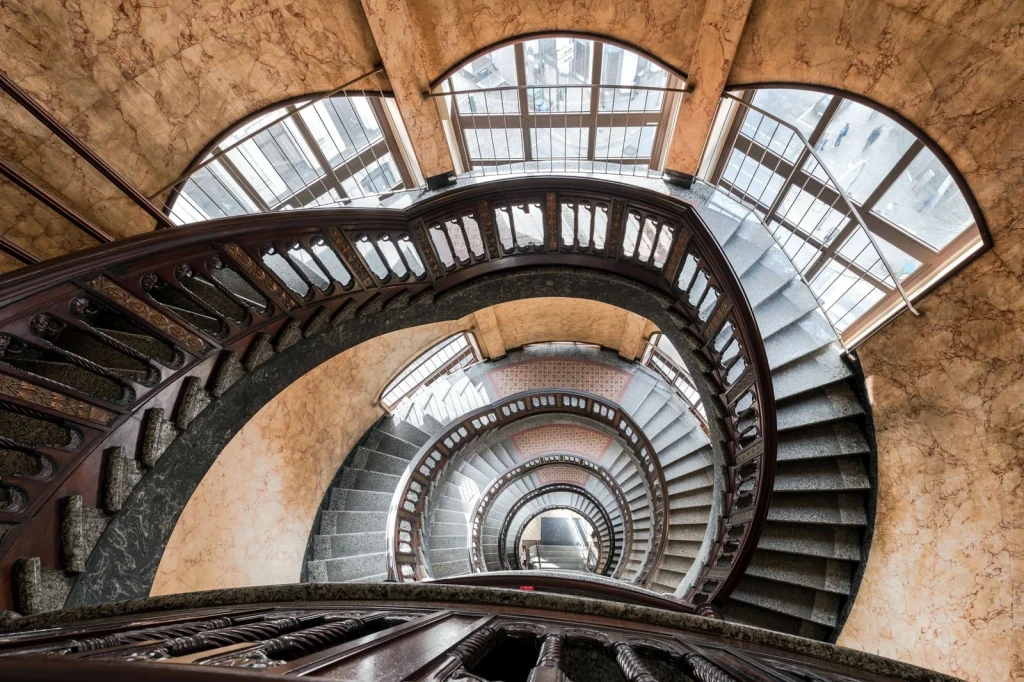
A staircase viewed from above in a historic building. Perspective shifts the argument: from below, it guides us. From above, it reveals its design's geometry.
Photograph by Wolfgang Weiser, via Pexels.
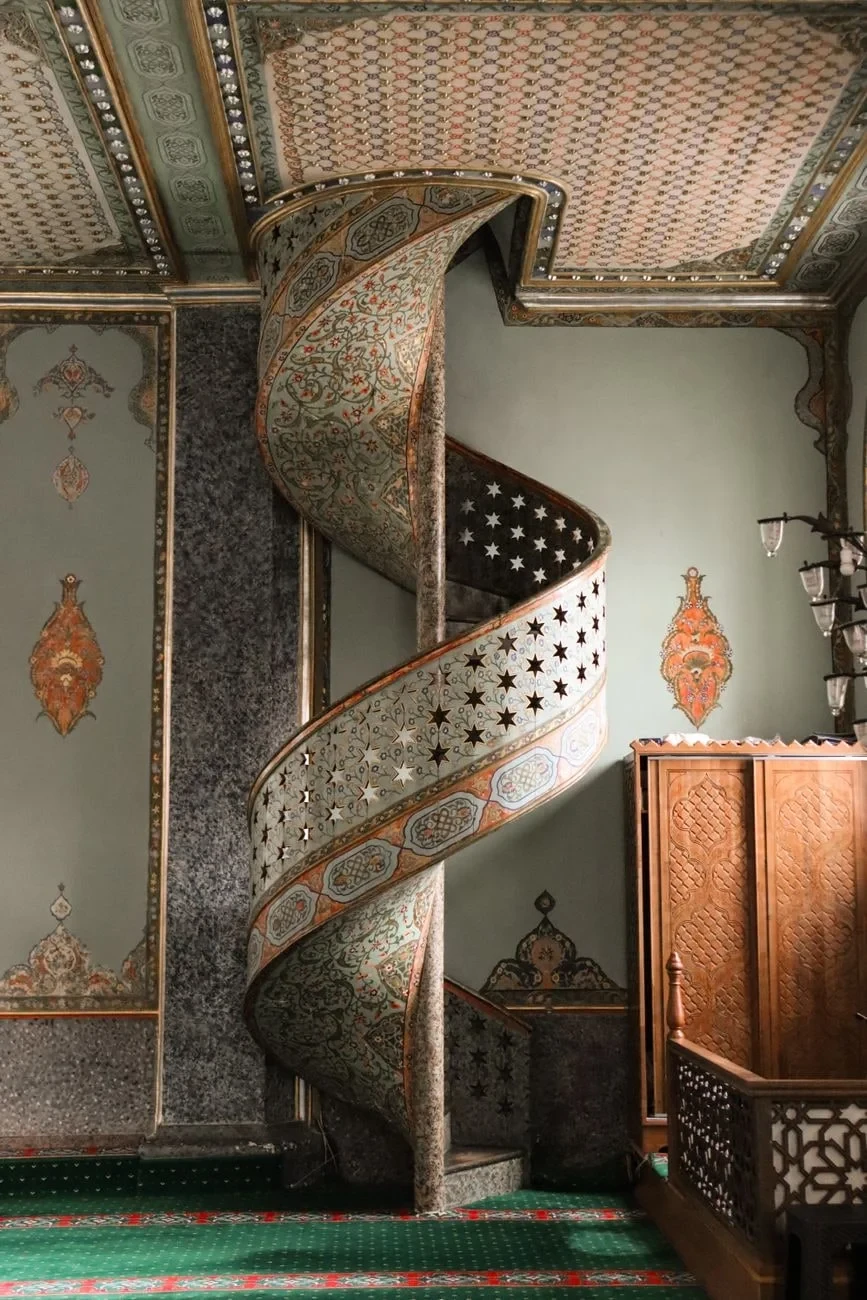
An intricate spiral staircase in a historical interior. The photograph asks: does ornament serve function, or does function serve ornament?
Photograph by Zeynep Öngel, via Pexels.
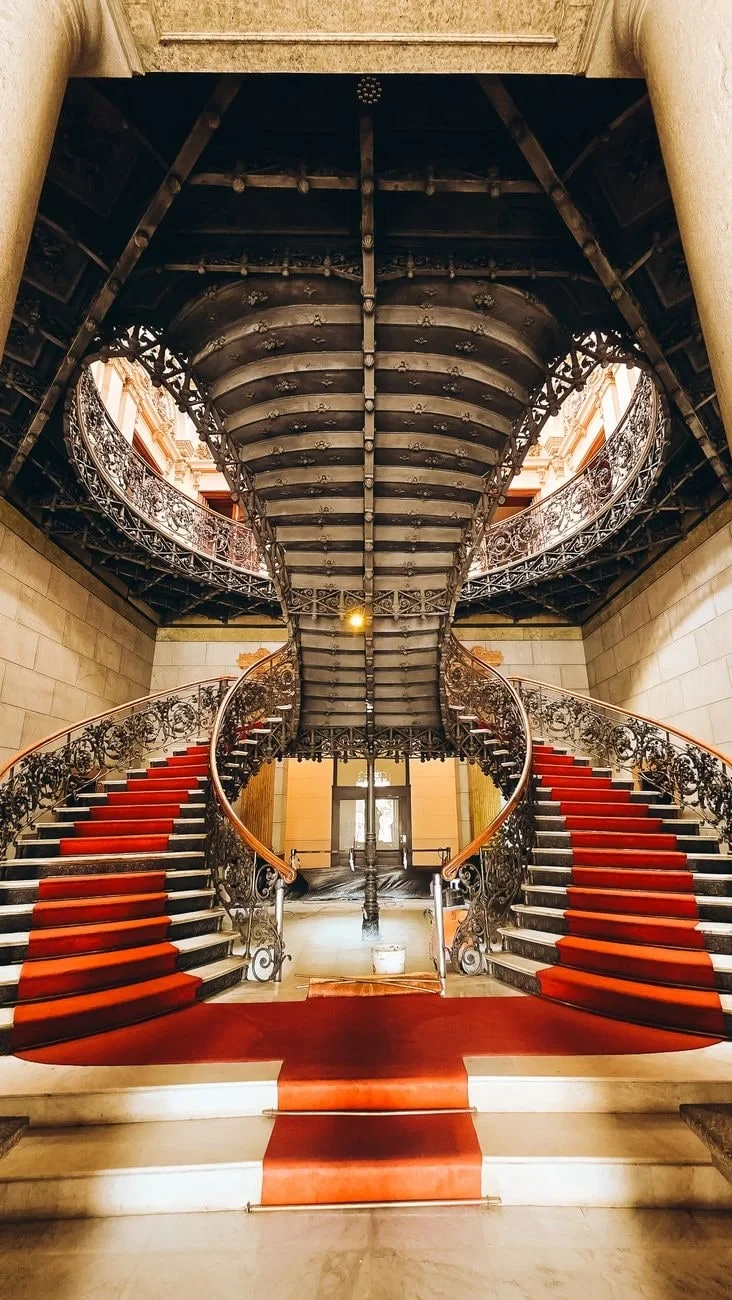
A historic staircase lined with red carpet and intricate ironwork suggests ceremony and hierarchy. Who climbs here, and what does the carpet mean?
Photograph by Matheus Freitas, via Pexels.
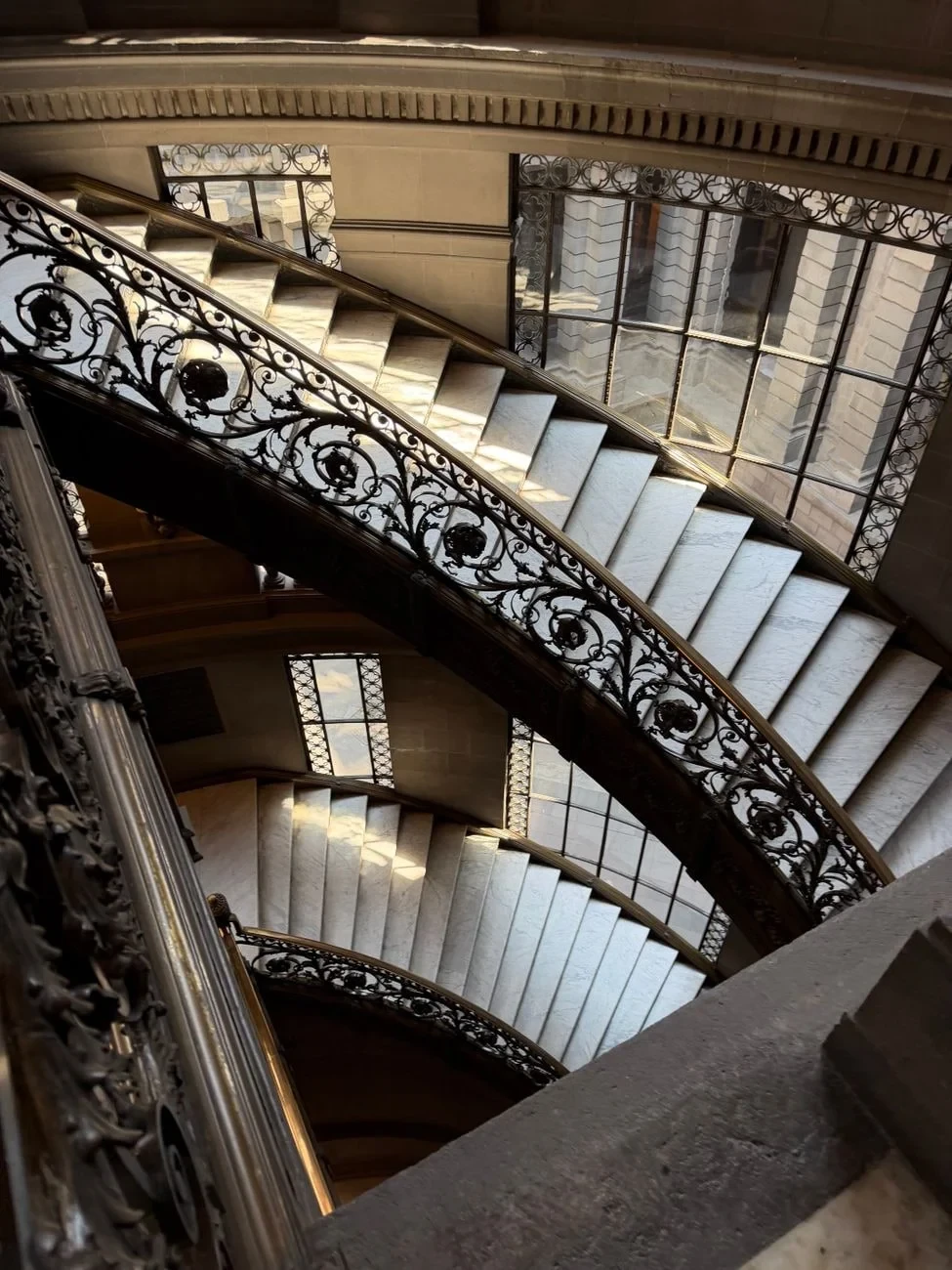
An elegant spiral staircase with ornate ironwork demonstrates how architecture itself can structure movement. Beauty becomes the argument for where we go.
Photograph by Israel Quiroz, via Pexels.
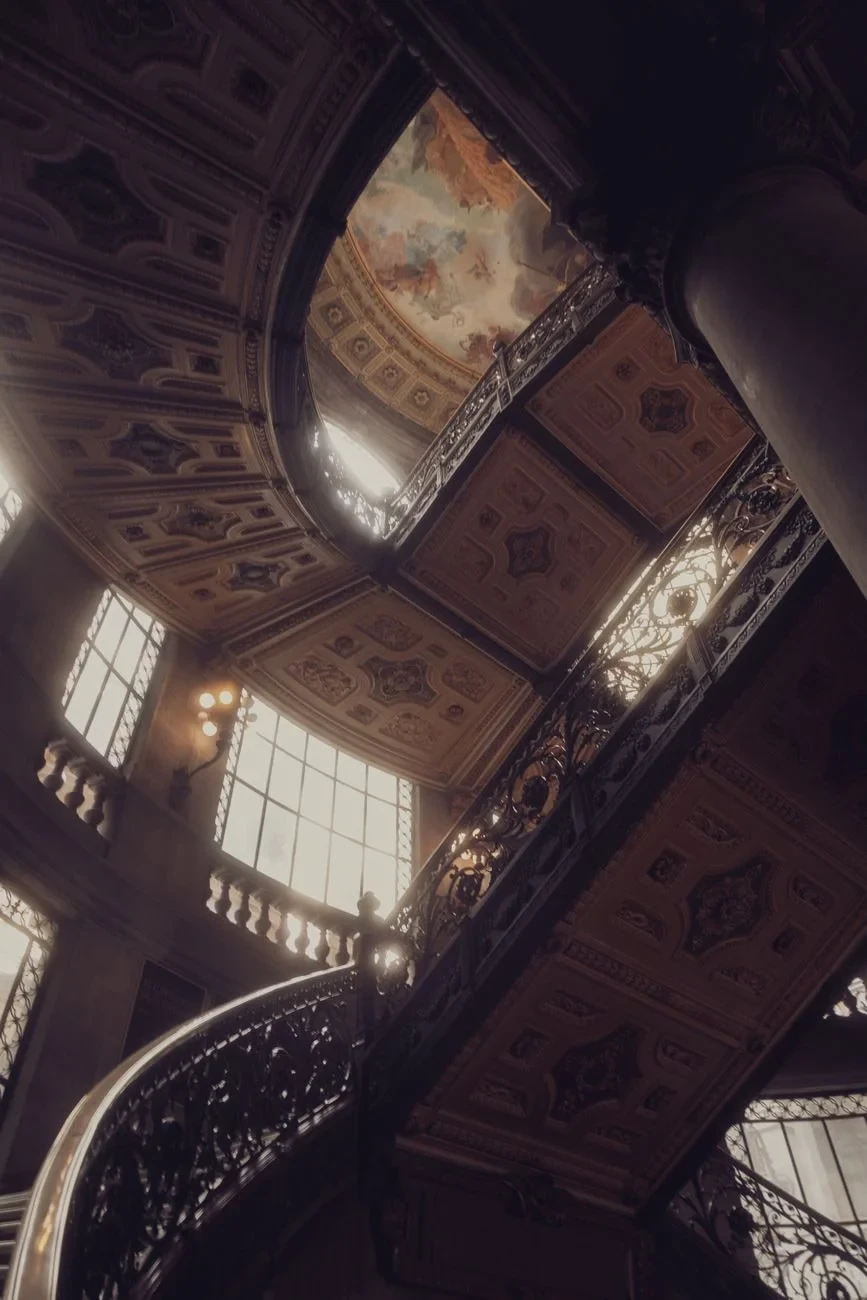
An ornate spiral in a historic setting combines decorated walls with ascending space. Every surface seems to argue about where we belong.
Photograph by Alvaro Camacho, via Pexels.
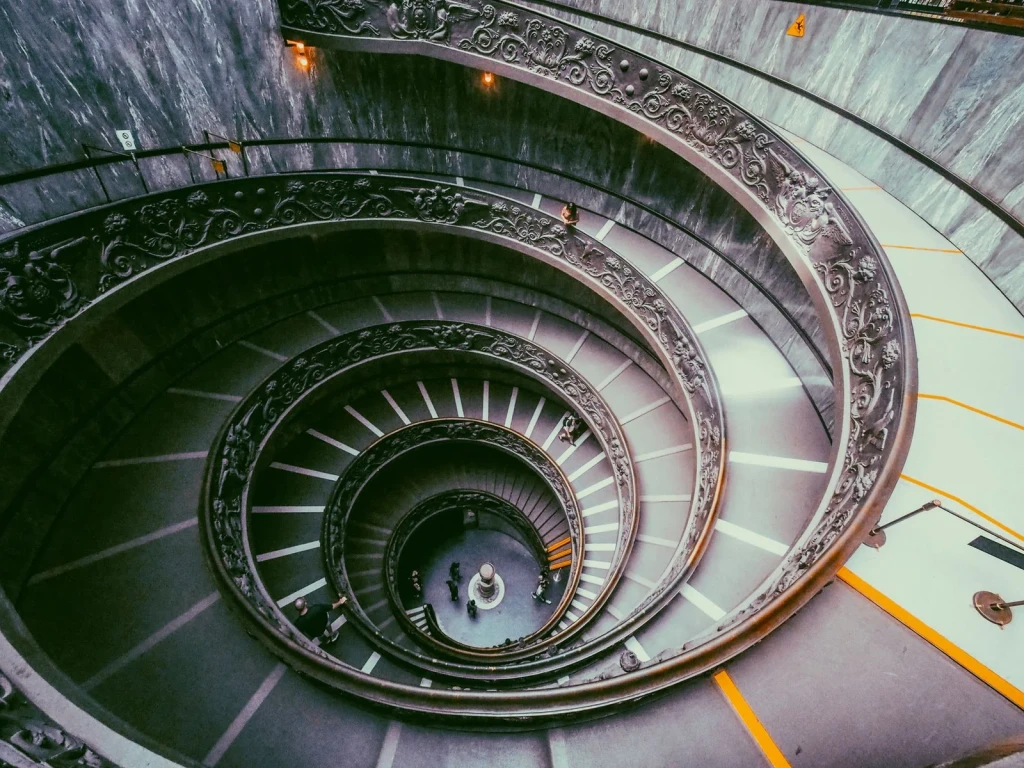
An elaborate spiral photographed from above, with decorative railing. The vantage point transforms architecture into abstract pattern. The argument becomes visual, not functional.
Photograph by Mehmet Turgut Kirkgoz, via Pexels.
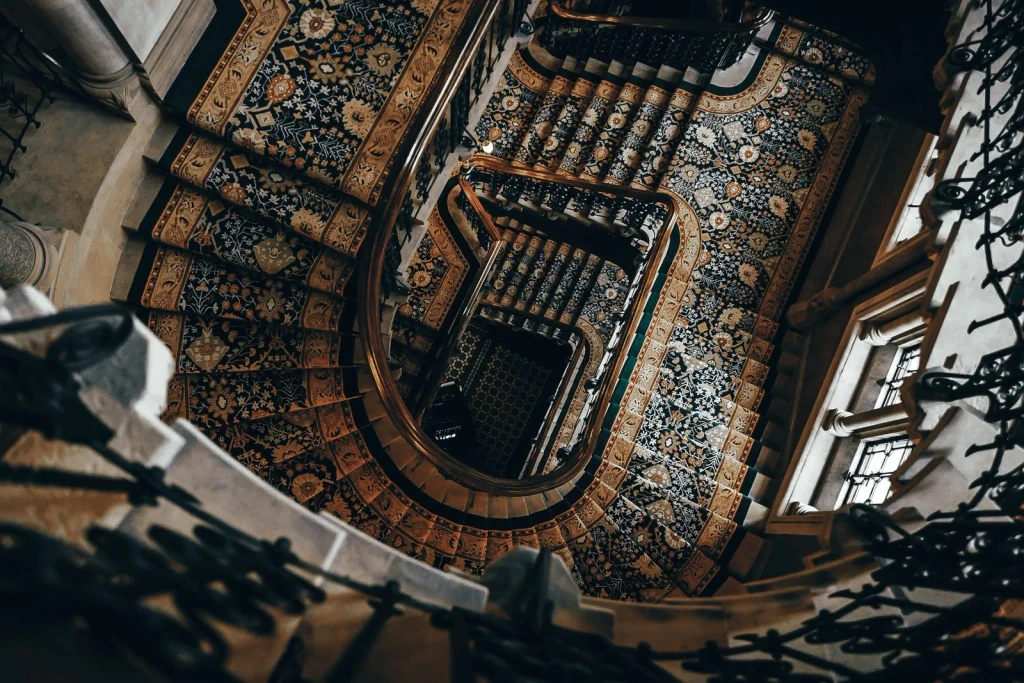
A spiral staircase where carpet patterns and railings speak equally. The design suggests that every surface makes a claim about how we should move.
Photograph by Yoss Traore, via Pexels.
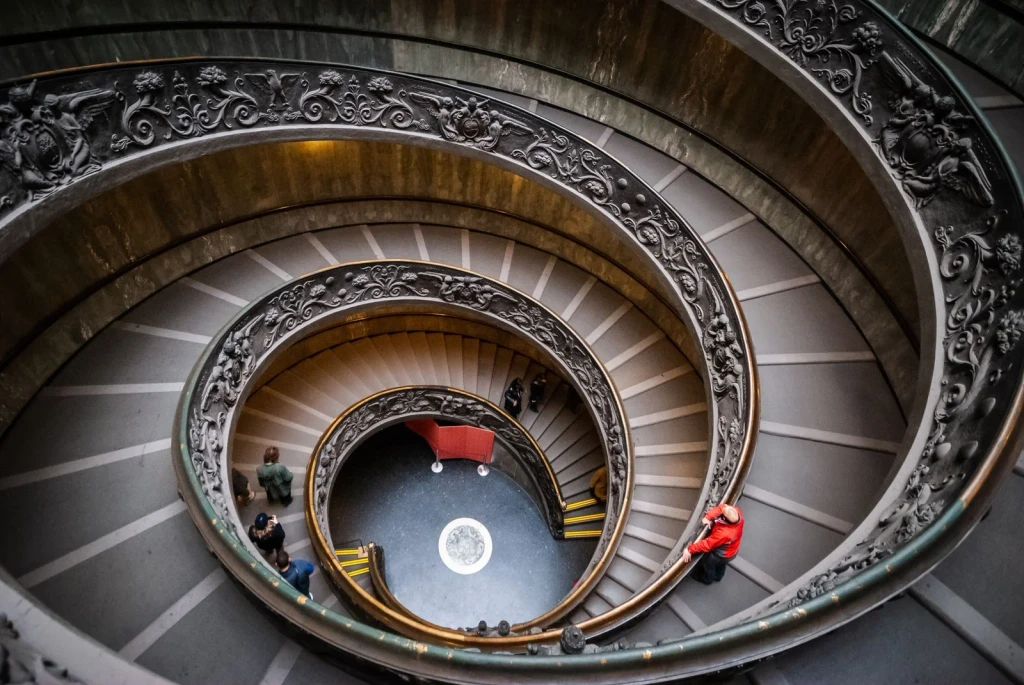
A spiral staircase viewed from above with people inside shows stairs as lived space, not just design. Humans make the argument real.
Photograph by Sandro Sandrone Lazzarini, via Pexels.
