3D Gallery
Eyes: How Evolution Learned to See
Enter gallery
Eyes: How Evolution Learned to See is a 3D virtual gallery on MyGallery3D, a walkable online exhibition of 16 works. Step inside and explore it in your browser: no app, no headset.
This is a 3D virtual gallery of eyes, and you walk through it in your browser: ten fundamentally different ways an animal can turn light into an image.
Darwin admitted the eye seemed "absurd in the highest possible degree" as a product of natural selection. Then he explained why it was not. Eyespots have evolved independently somewhere between 40 and 65 times, and a model using deliberately pessimistic numbers found that a flat patch of photoreceptor cells could become a full vertebrate eye in under 364,000 years. Some jellyfish have elaborate eyes and no brain at all.
The oldest certain fossilised eye comes from a Schmidtiellus reetae fossil, 530 million years old, collected at Saviranna in northern Estonia. It carried around 100 ommatidia, spaced further apart than a modern dragonfly's, and no lens at all. Trilobite eyes were stranger still: clear calcite crystals formed their lenses, unlike most other arthropods, which have soft eyes.
A compound eye is a bundle of ommatidia, each with its own lens, pointing in slightly different directions. Some carry up to 28,000 of them and see a full 360 degrees. The trade is resolution: physics stops a compound eye from resolving better than 1 degree. What it gains is speed. A honey bee registers a change in light in 0.01 seconds, where a human takes 0.05.
Every technological method humans commonly use to capture an optical image already occurs in nature, with two exceptions: zoom and Fresnel lenses. The scallop Pecten fringes the edge of its shell with up to 100 reflector eyes, each focusing with mirrors rather than a lens. The spookfish uses a curved mirror of stacked guanine crystals to catch light from below while a lens handles the light from above.
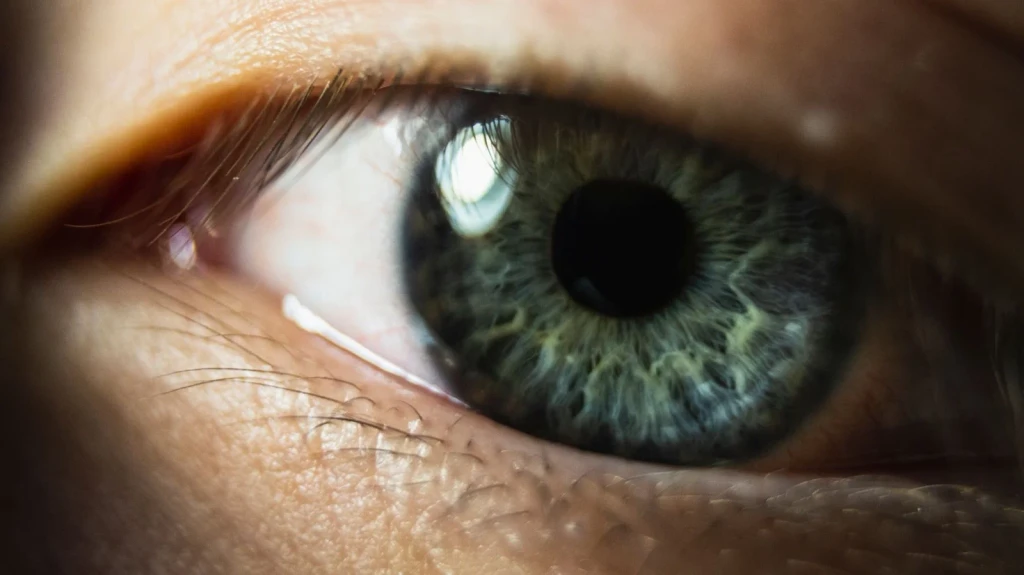
A macro lens reveals the vibrant complexity of the human iris. This close view shows the intricate machinery that millions of years of evolution refined.
Photograph by Wojtek Pacześ, via Pexels.
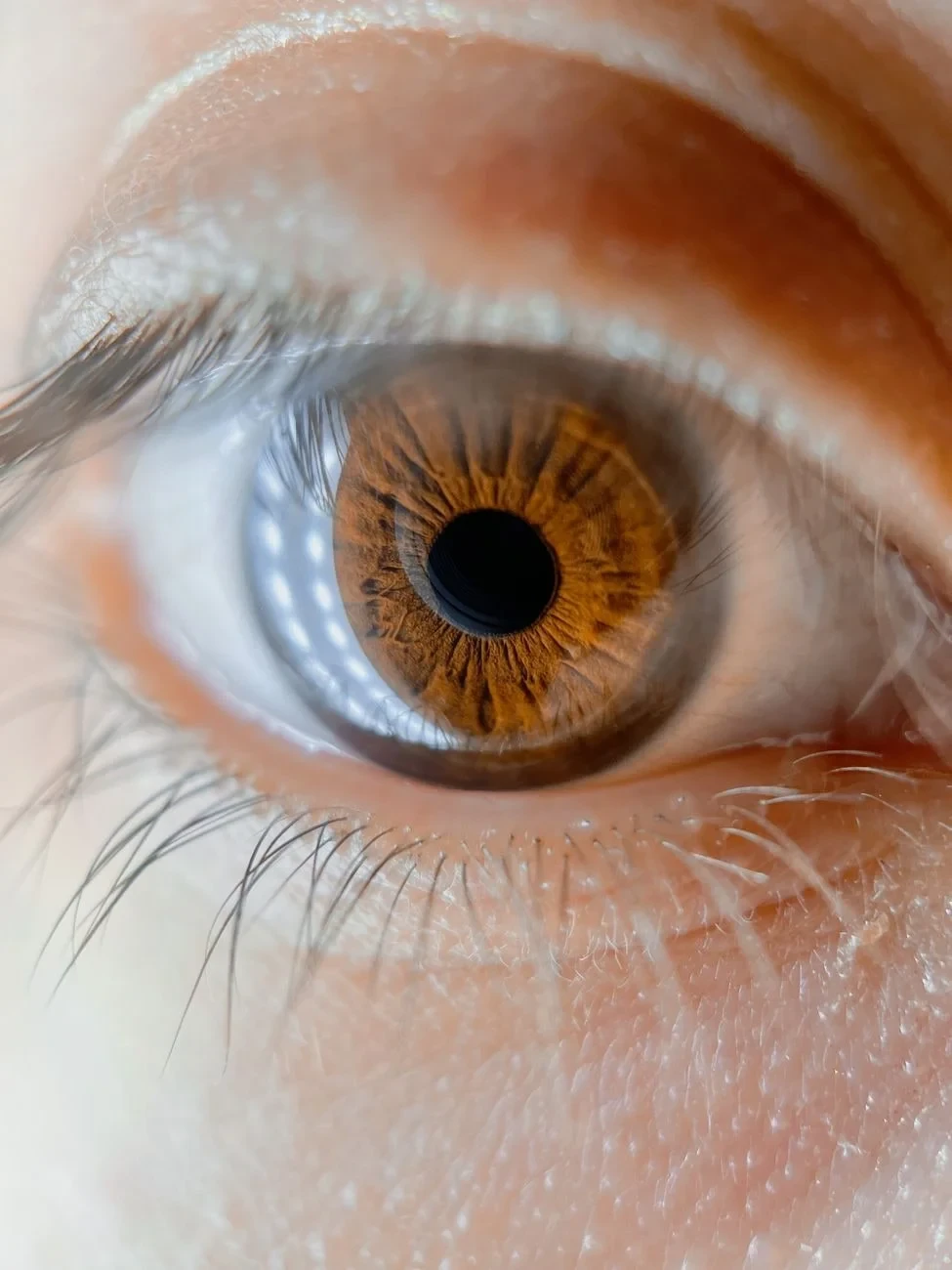
Extreme magnification transforms a brown eye into revealing detail. The iris displays the complexity that evolution refined for sight.
Photograph by Yaren Aysan, via Pexels.
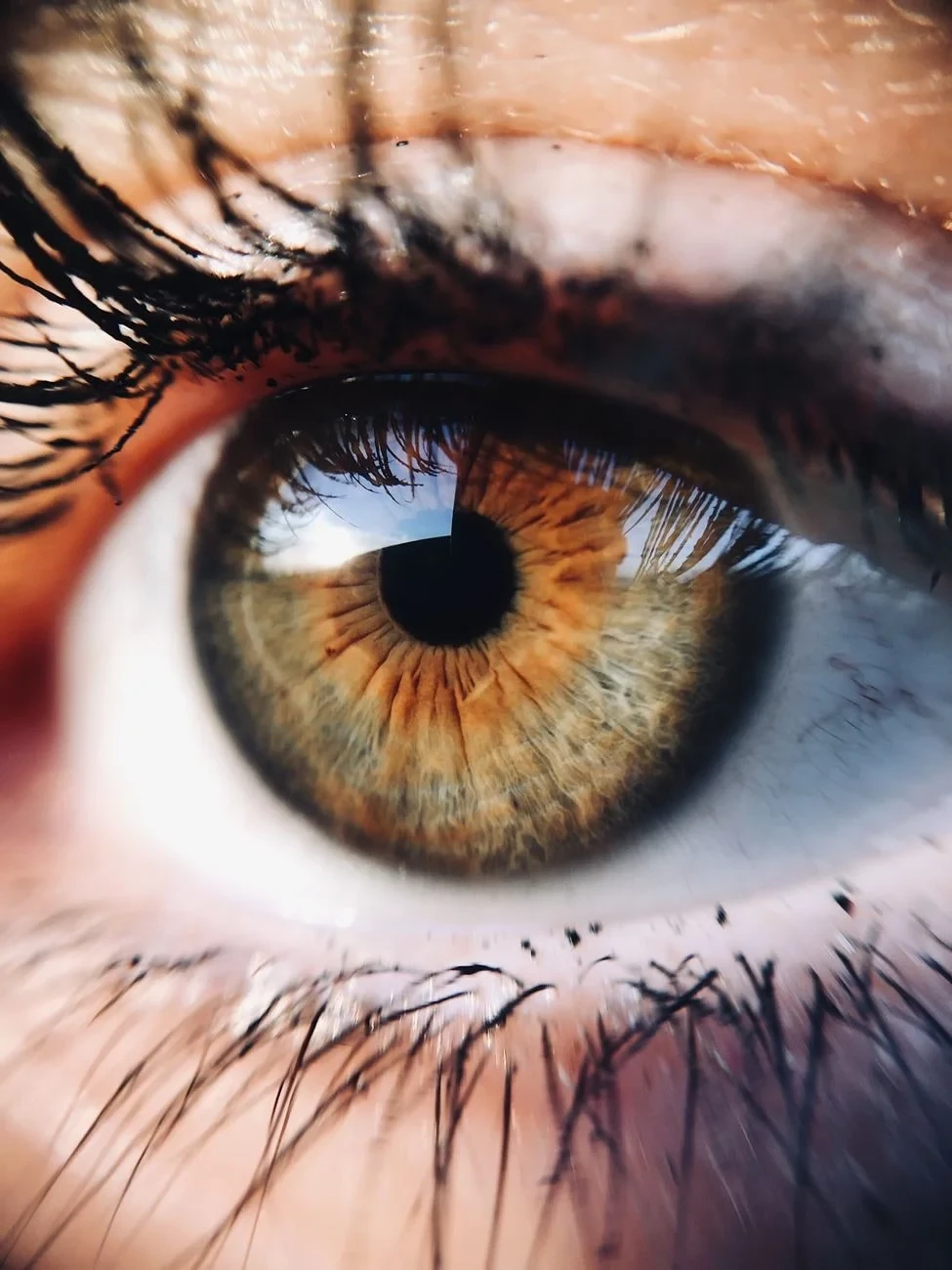
Eyelashes frame a brown iris in close detail. This photograph captures the protective structures that evolved alongside the eye itself.
Photograph by Lukáš Dlutko, via Pexels.
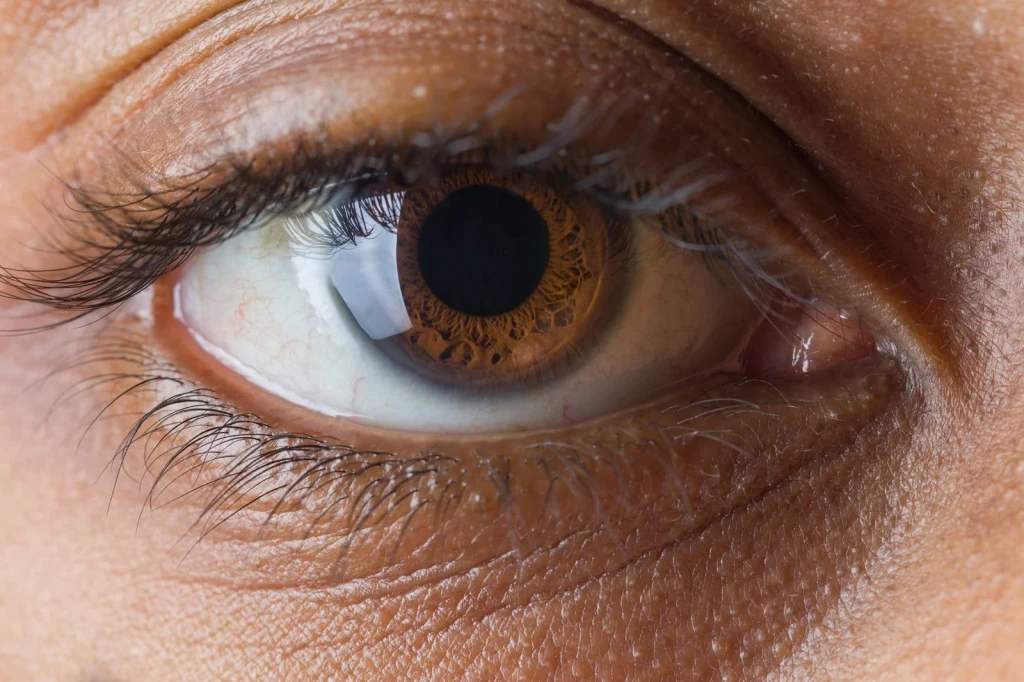
A macro examination of human eye anatomy. The photograph reveals how evolution packed intricate detail into the iris, lashes, and surrounding skin.
Photograph by Yeny Ferreras, via Pexels.
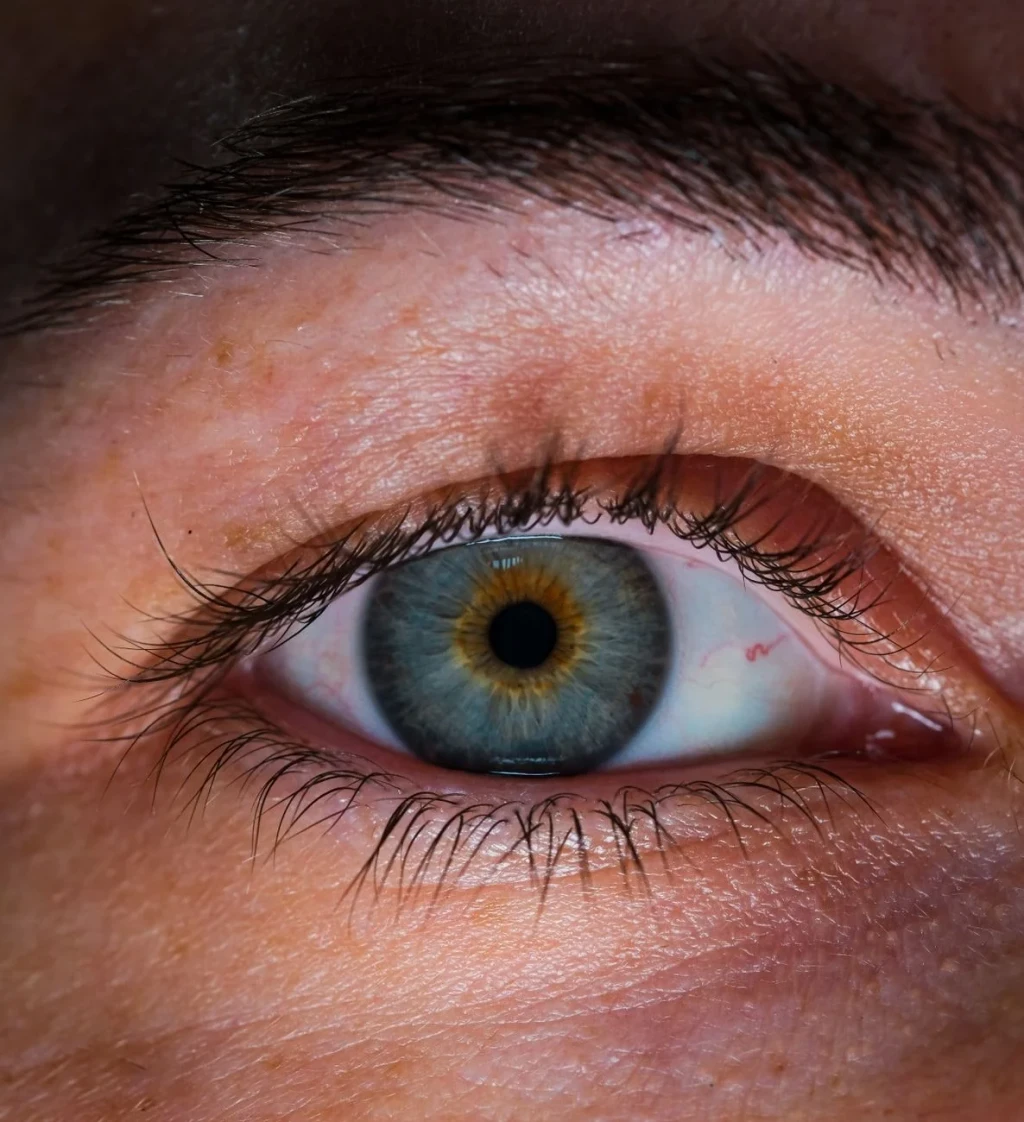
A magnified view of a blue eye's iris and pupil. The vibrant patterns shown here are unique to each individual, marking a triumph of evolutionary design.
Photograph by Cem Gizep, via Pexels.
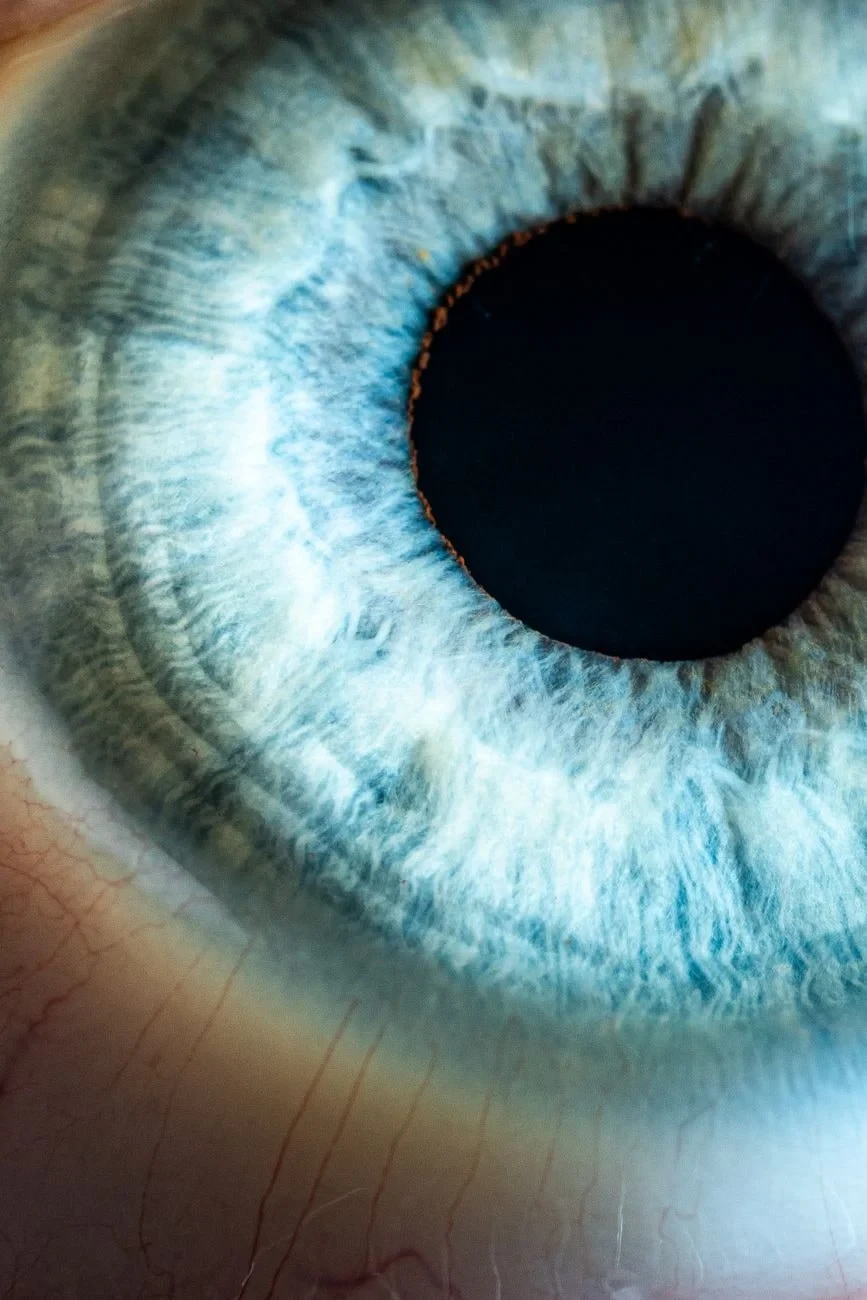
A blue iris reveals patterns and textures invisible to the naked eye. Macro photography exposes the complexity evolution built into sight.
Photograph by Krystian Stanislaw Adamowicz, via Pexels.
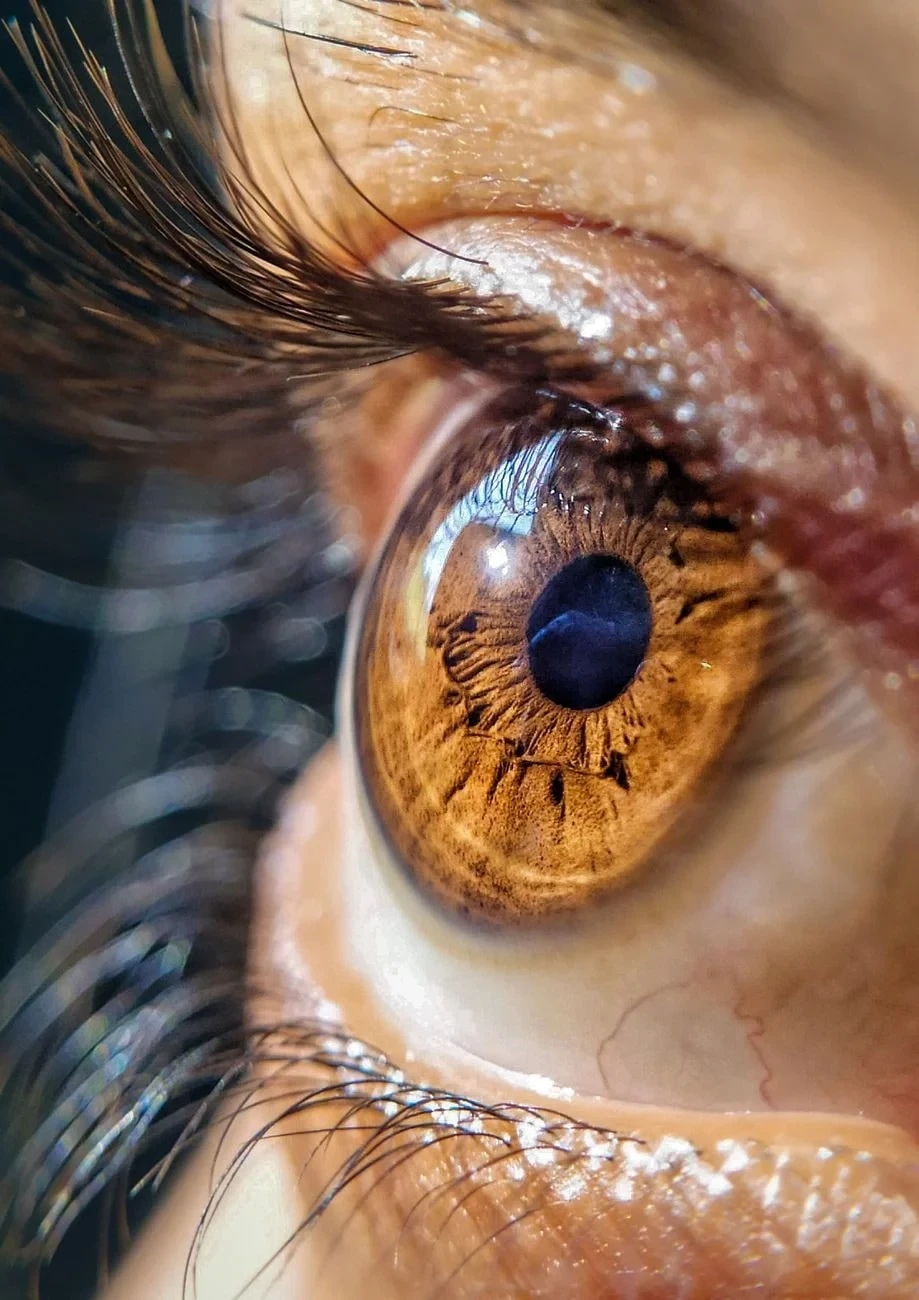
Eyelashes and iris details emerge in sharp focus. The photograph highlights the protective and sensory structures that evolved as vision became central to survival.
Photograph by Sayan Ghosh, via Pexels.
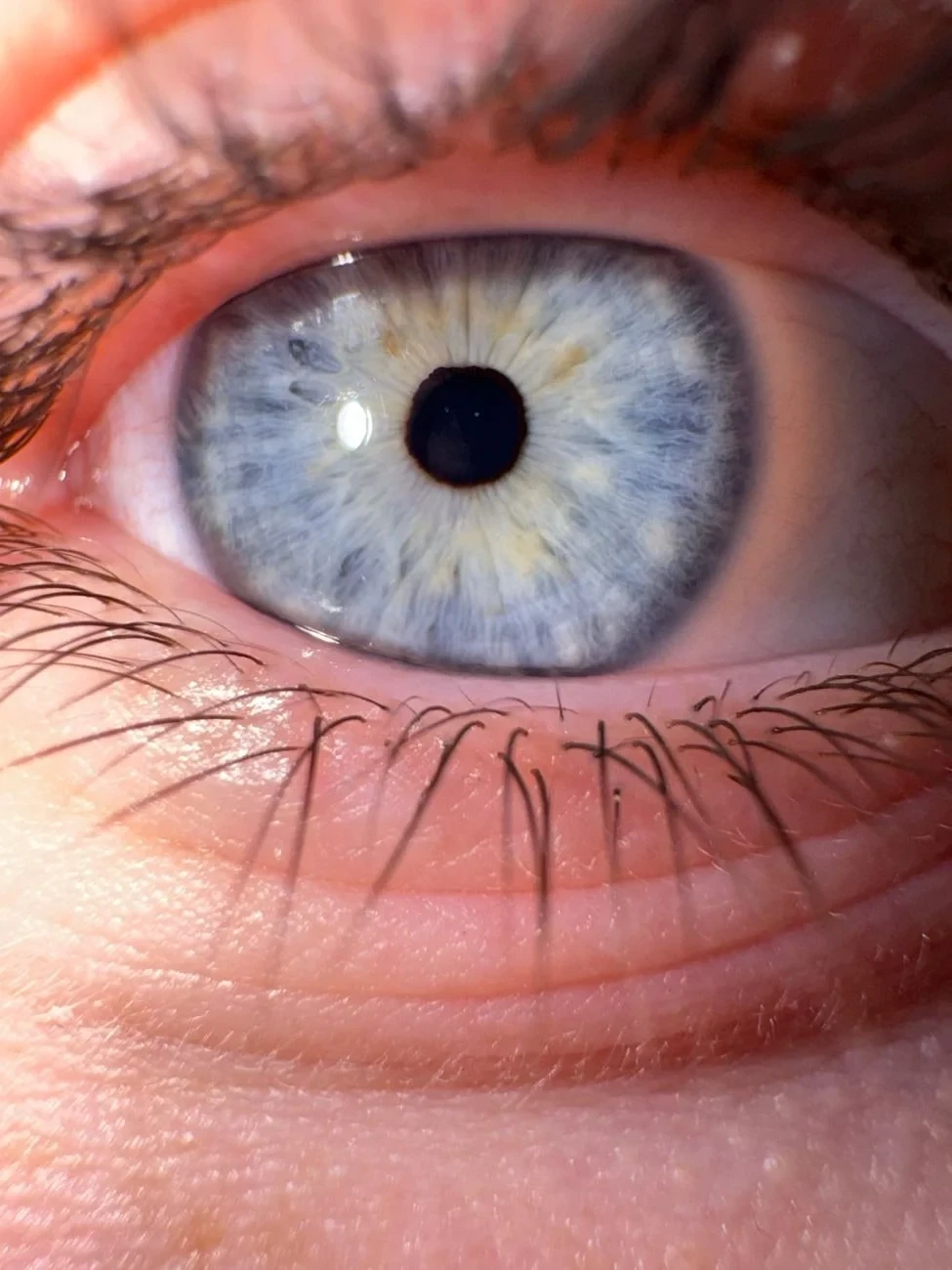
A macro study of the human eye's iris patterns. The photograph's high resolution reveals the intricate structures evolution developed to control light and focus vision.
Photograph by Joshua Röber, via Pexels.
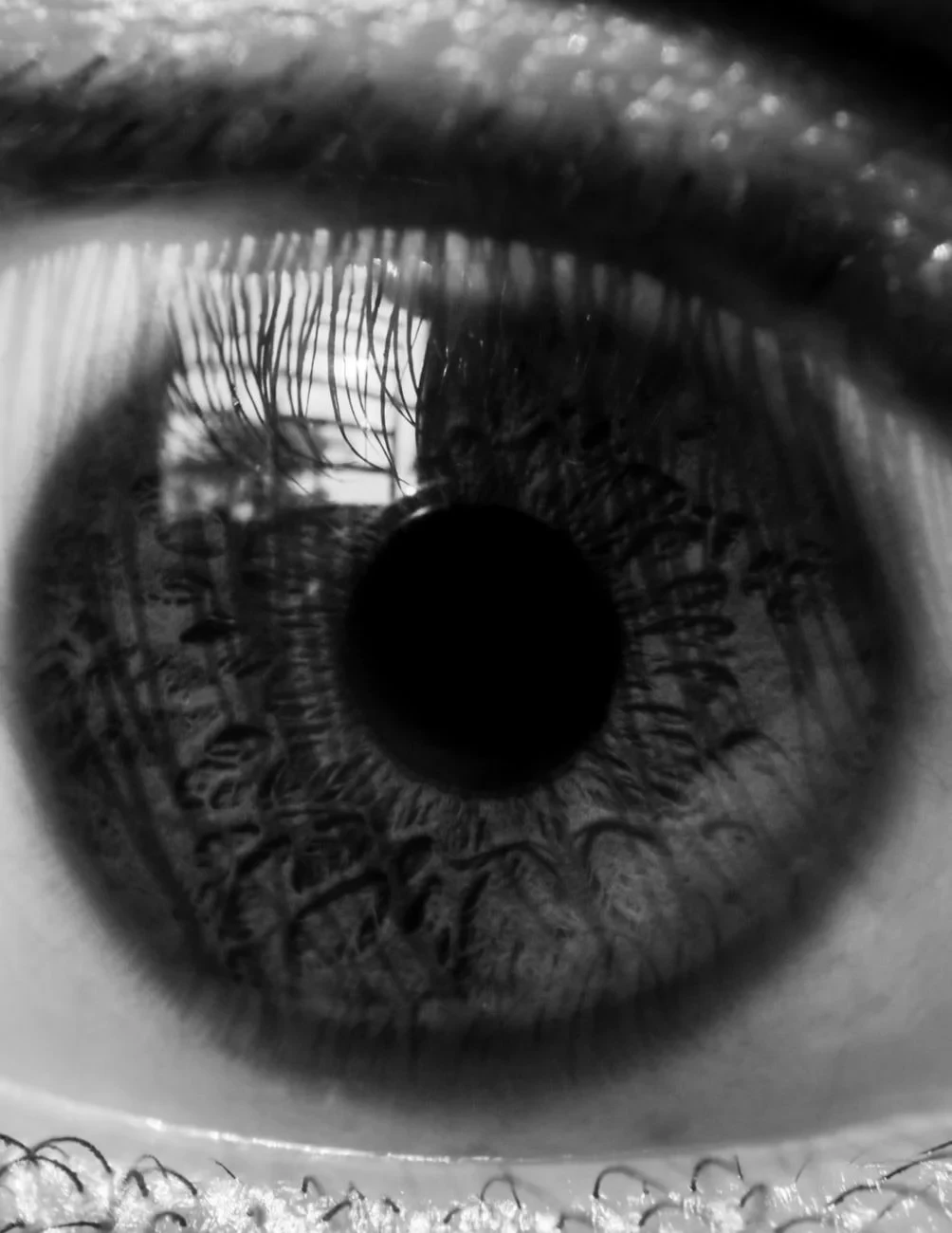
Light reflects across the cornea in this black and white study. The photograph documents how the eye's curved surface captures and focuses the world around it.
Photograph by The masked Guy, via Pexels.
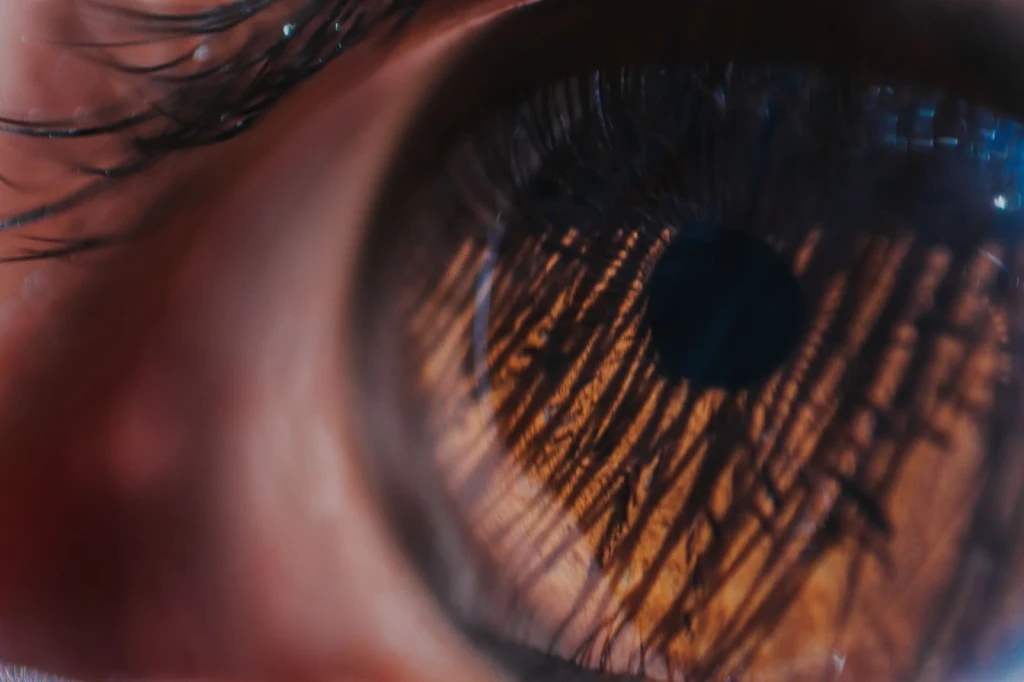
Macro photography exposes the intricate geometry within an iris. Each eye contains a unique landscape of patterns and light reflections.
Photograph by Bran Sodre, via Pexels.
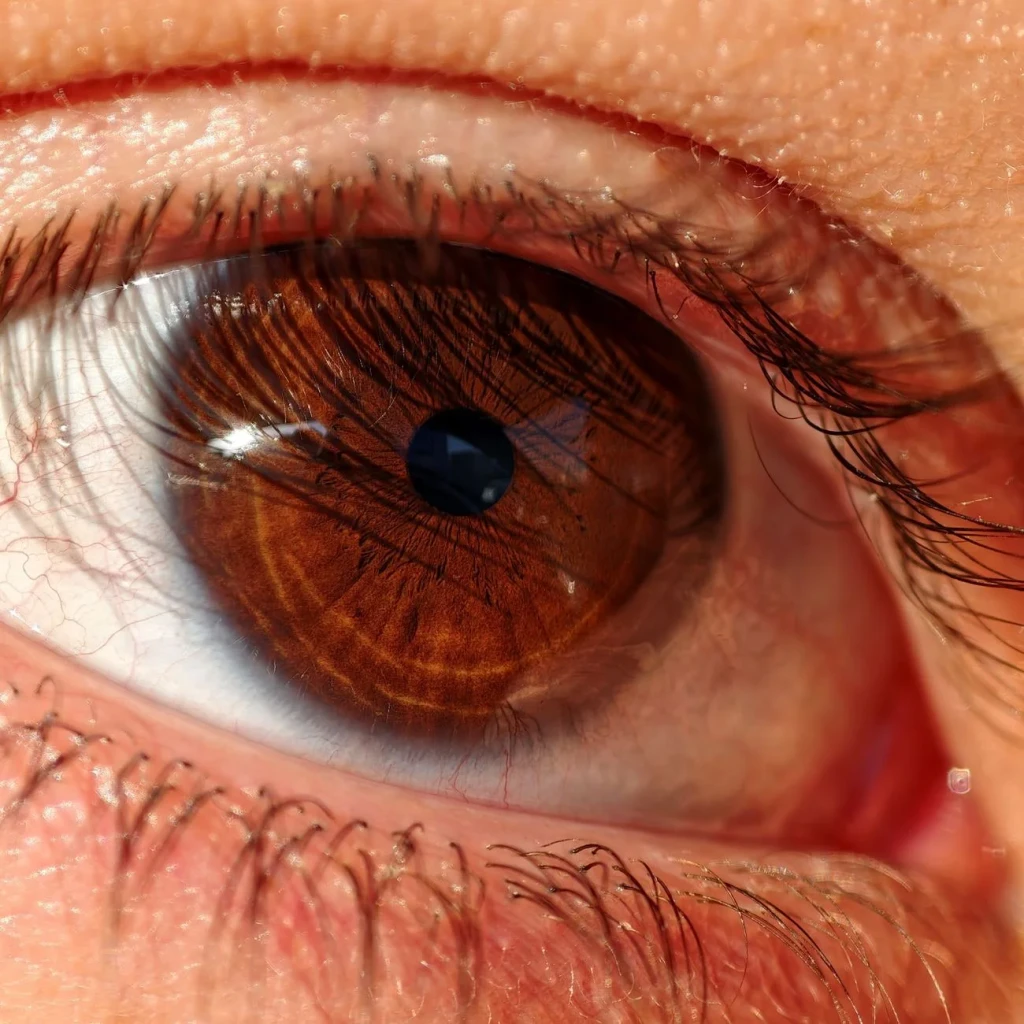
A brown iris surrounded by lashes in extreme close-up. Each hair and pigment pattern speaks to the precision of the seeing eye.
Photograph by Raid Akram, via Pexels.
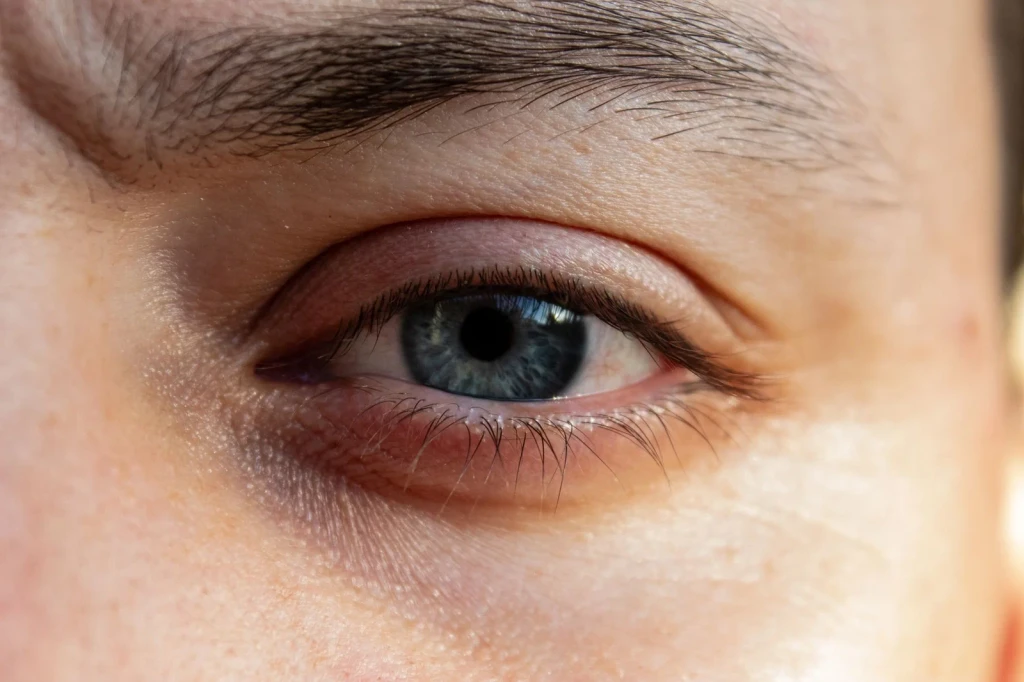
A magnified view of blue iris and eyebrow. The photograph finds abstract beauty in the biological structures that enable vision.
Photograph by Fotoarte en mérida, via Pexels.
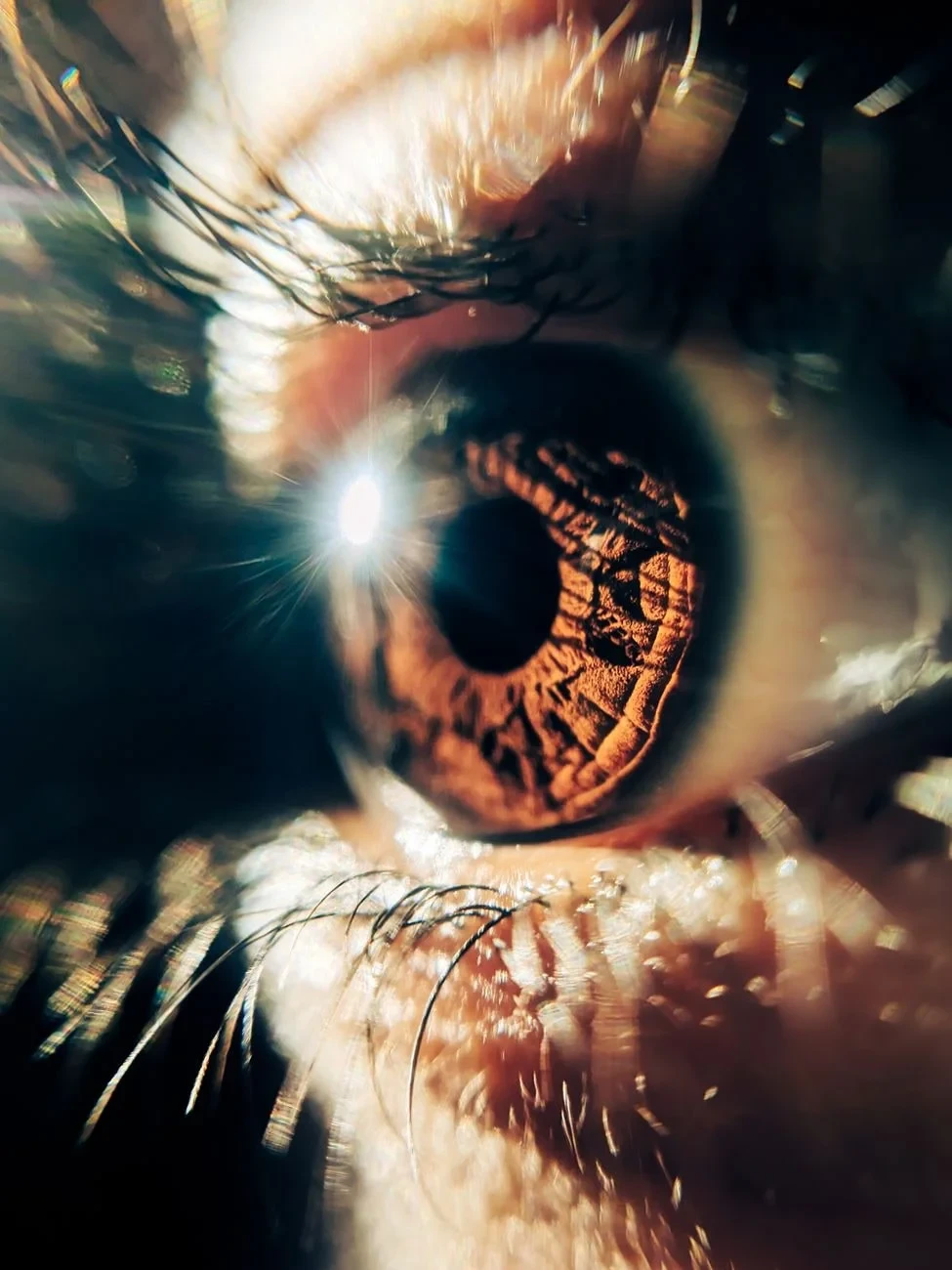
Light catches in a human eye, creating reflection. The iris patterns emerge as nature's unique fingerprint of vision.
Photograph by Sayeed Chowdhury, via Pexels.
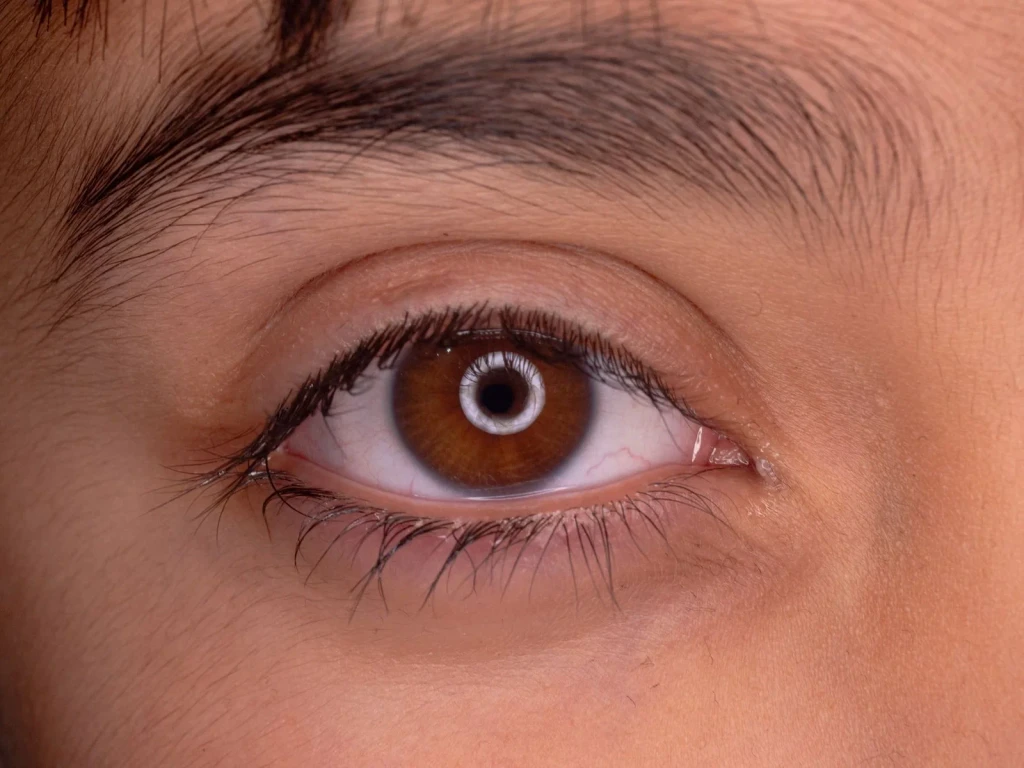
A close-up of human eye and brow reveals the intricate architecture evolution built for sight. Natural features become abstract patterns when magnified.
Photograph by Vintage Laka, via Pexels.
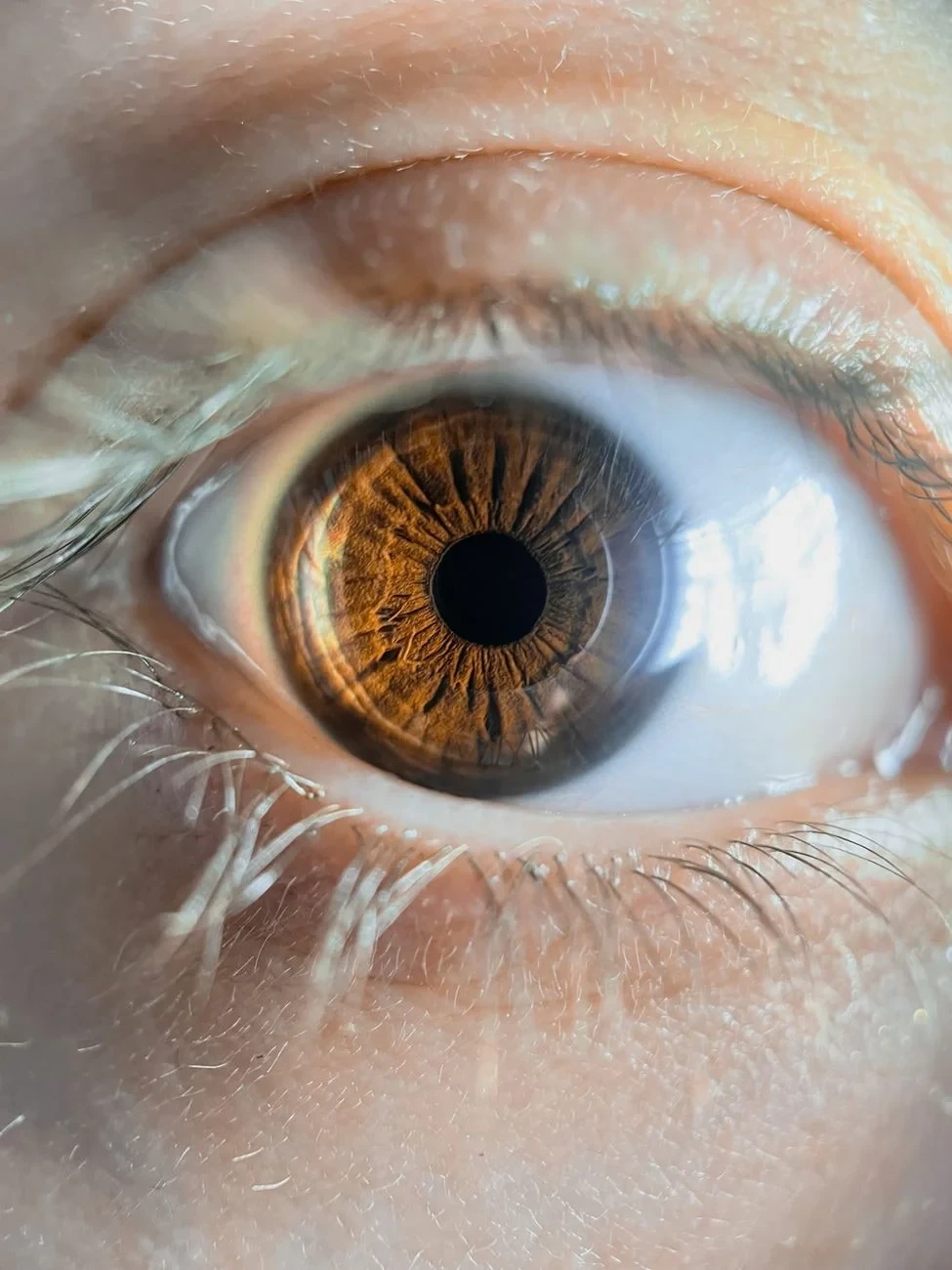
Brown tones dominate this study of the pupil and surrounding iris detail. The photograph captures the gateway through which we see.
Photograph by Yaren Aysan, via Pexels.
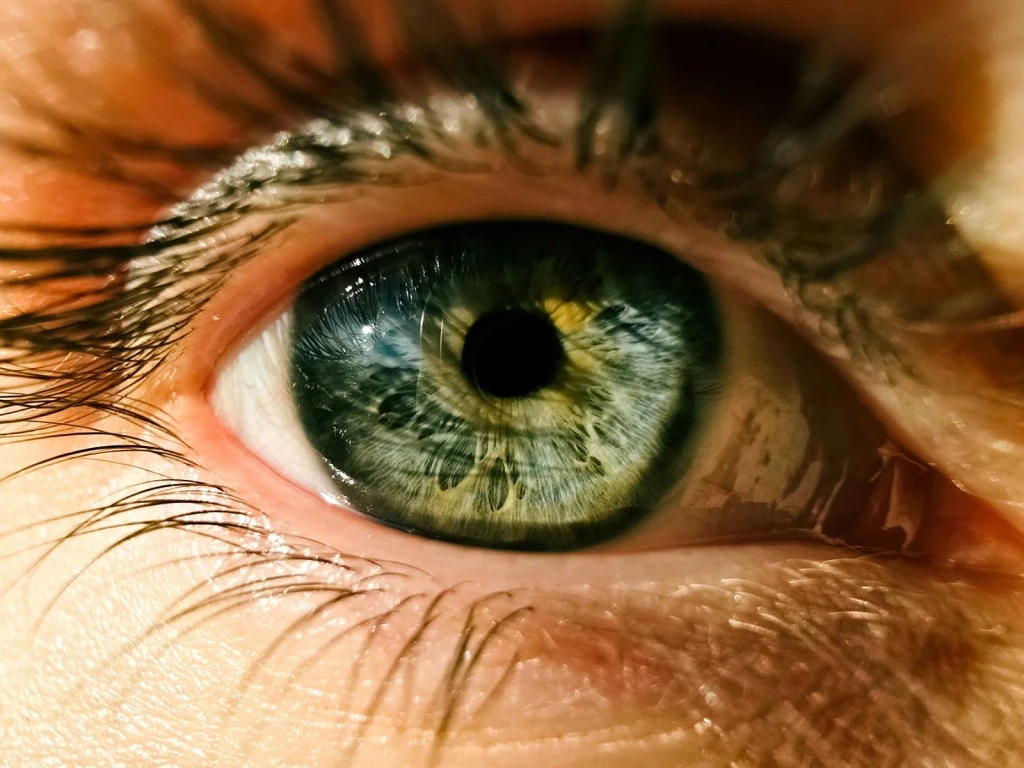
Intricate patterns and vivid colors fill the human iris. Evolution's optical engineering becomes visible at the macro scale.
Photograph by iilushk0, via Pexels.
