3D Gallery
Fungi: The Kingdom That Is Neither Plant nor Animal
Enter gallery
Fungi: The Kingdom That Is Neither Plant nor Animal is a 3D virtual gallery on MyGallery3D, a walkable online exhibition of 14 works. Step inside and explore it in your browser: no app, no headset.
Step into this 3D virtual museum of fungi and walk through it in your browser: the mushroom on the wall is not the organism, only its fruit.
Fungi are not plants. Their cell walls are built from chitin, the material of arthropod exoskeletons, and they are genetically closer to animals than to plants, having split from us around one billion years ago. The body of the fungus is the mycelium, a mat of threads in the soil. One Armillaria colony in Malheur National Forest is estimated at 2,400 years old and spans some 2,200 acres.
More than 125 species of fungi glow. The light is greenish, at a wavelength of 520 to 530 nm, continuous, and produced only by living cells. Every glowing species is a white rot fungus that breaks down lignin, and all share the same enzymatic mechanism. Why they do it is unsettled: the light may lure animals that carry spores away, or warn grazers off.
Nothing grows that fast. A mushroom begins as a primordium less than two millimeters across, and the cells of the cap and stalk take days to form underground. What happens overnight is inflation: the fruit body pulls water up from the mycelium and expands cells that already exist. Raw brown mushrooms are 92% water. Parasola plicatilis can balloon, release spores and collapse within a day.
Over 90% of plants depend on mycorrhizal symbiosis. The fungus threads into the root, hands over phosphorus, nitrogen and water pulled from soil the plant cannot reach, and takes sugars in return. By some estimates mycelial networks receive well over 10% of a host plant's photosynthesis output. Fossils in the 407 million year old Rhynie chert show the arrangement already running before plants had roots.
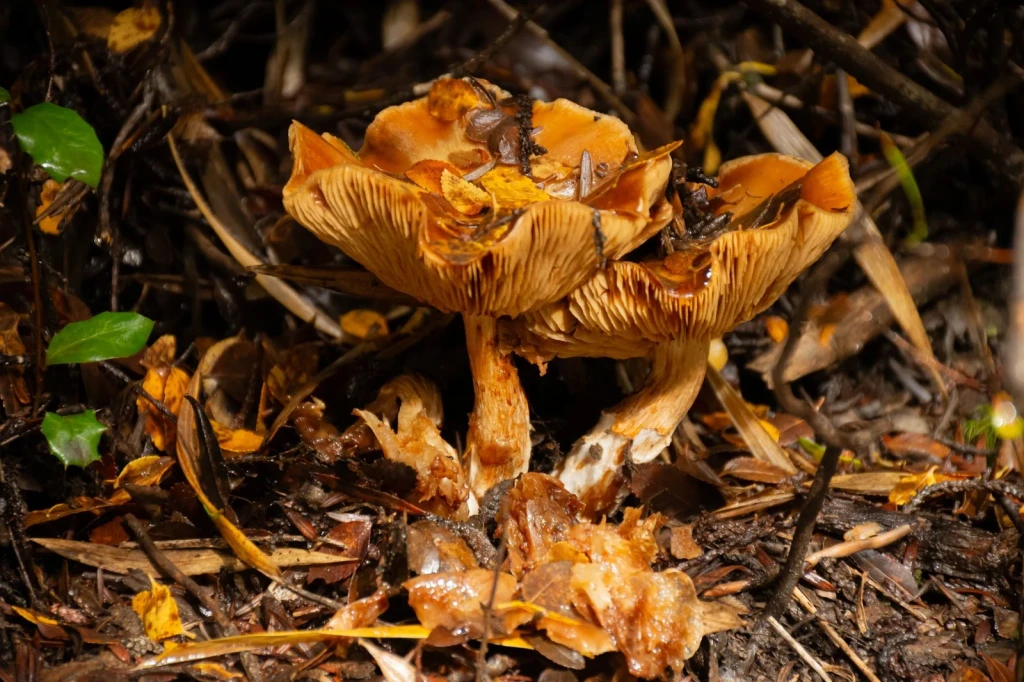
Two wild mushrooms emerge from fallen leaves. These decomposers thrive where dead plant matter gathers, occupying an ecological niche neither plants nor animals claim.
Photograph by Jennifer Gaete, via Pexels.
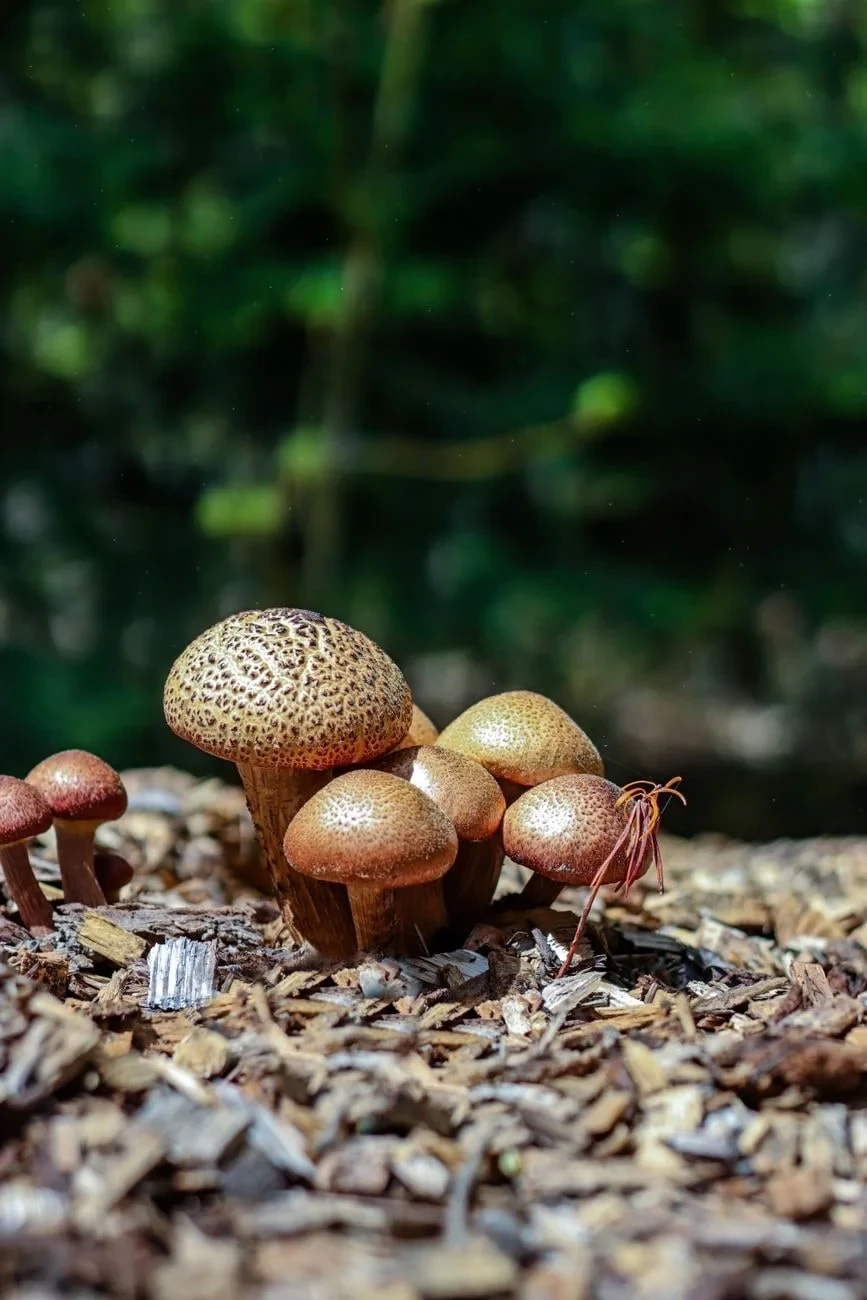
A close view of wild mushrooms on the forest floor. Natural light reveals the intricate details of fruiting bodies emerging from soil.
Photograph by LExie Blessing, via Pexels.
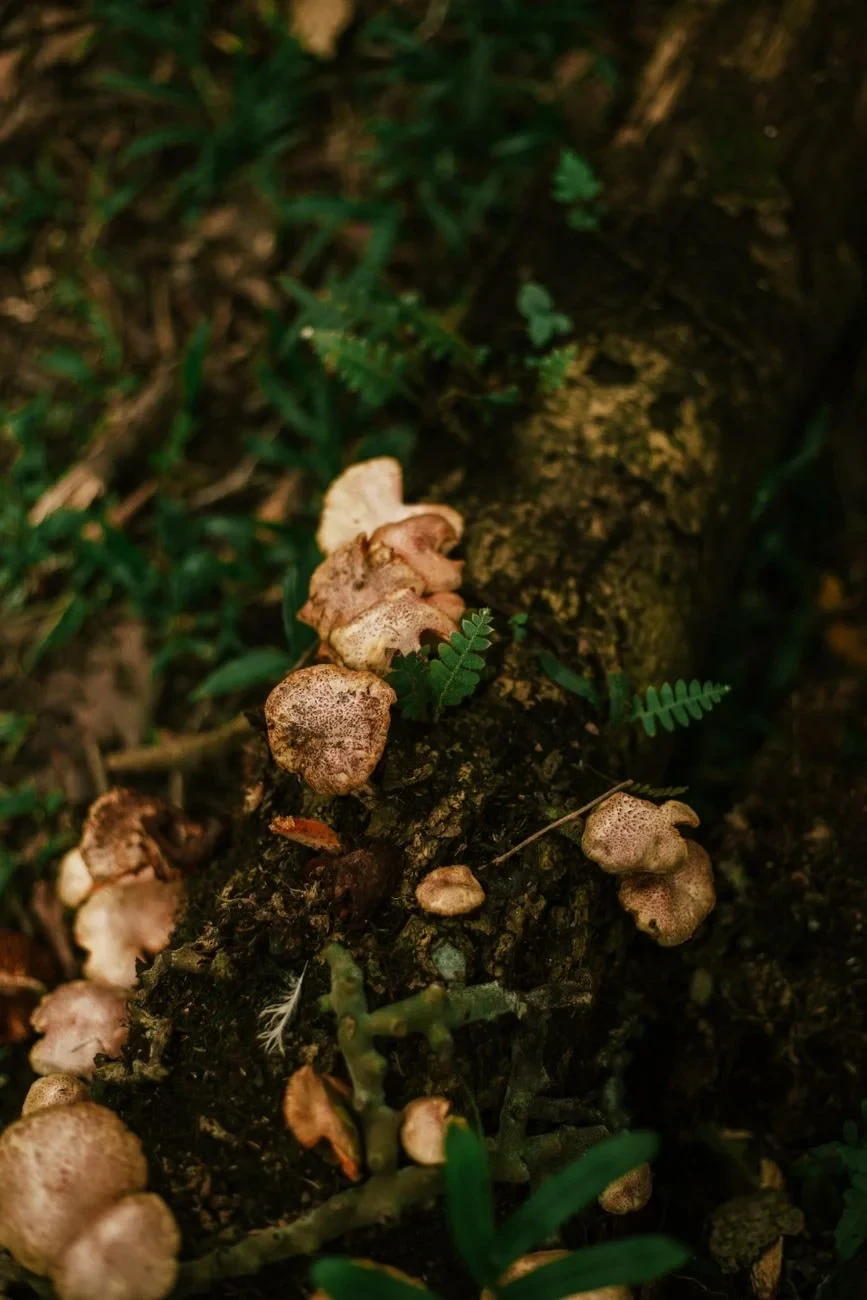
Wild mushrooms fruit from a mossy log. This collaboration between fungi and decomposing wood shows how the kingdom transforms dead matter into visible life.
Photograph by Kamille Sampaio, via Pexels.
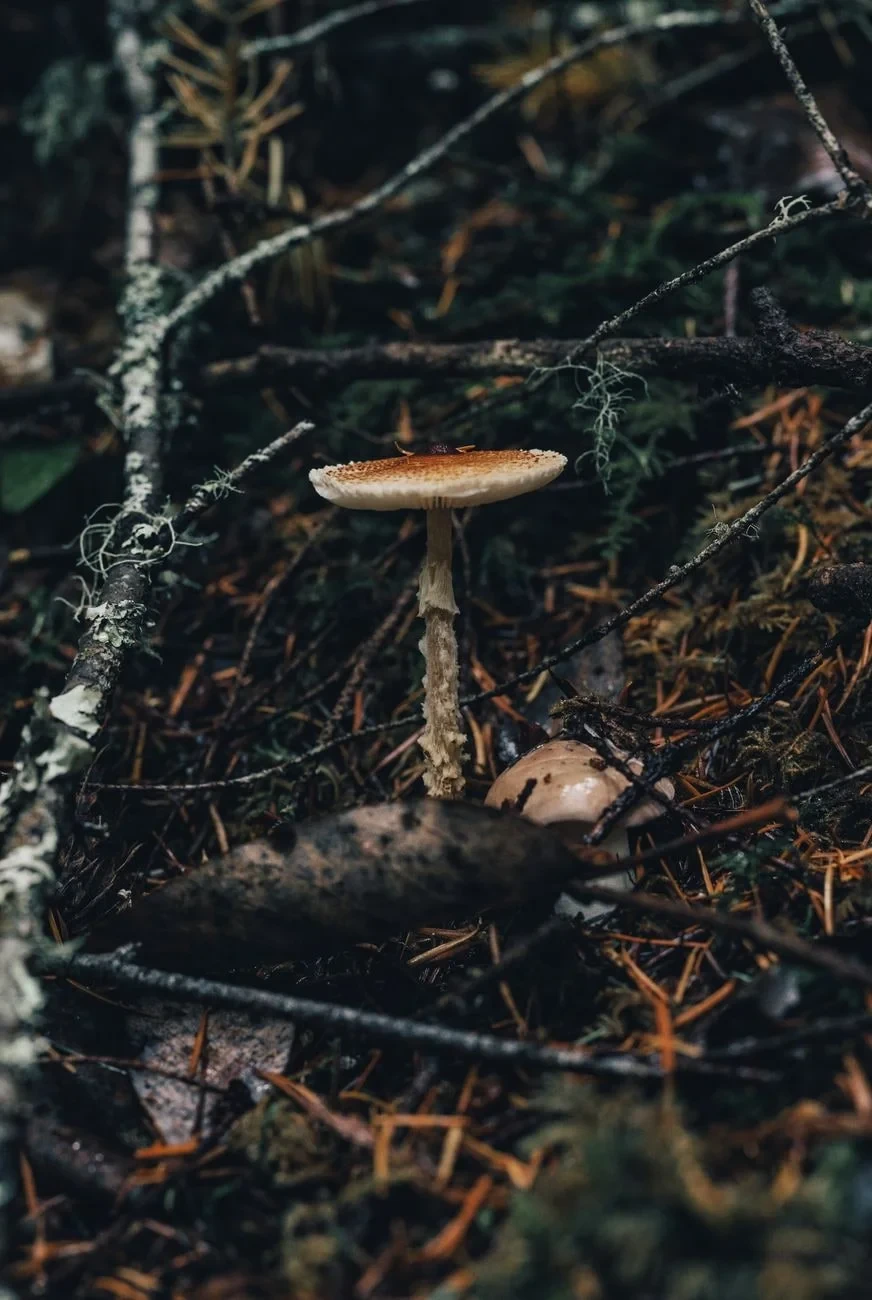
A mushroom fruits on the forest floor amid branches and leaves. Fungi break down these materials, completing cycles that sustain the woodland.
Photograph by Alfo Medeiros, via Pexels.
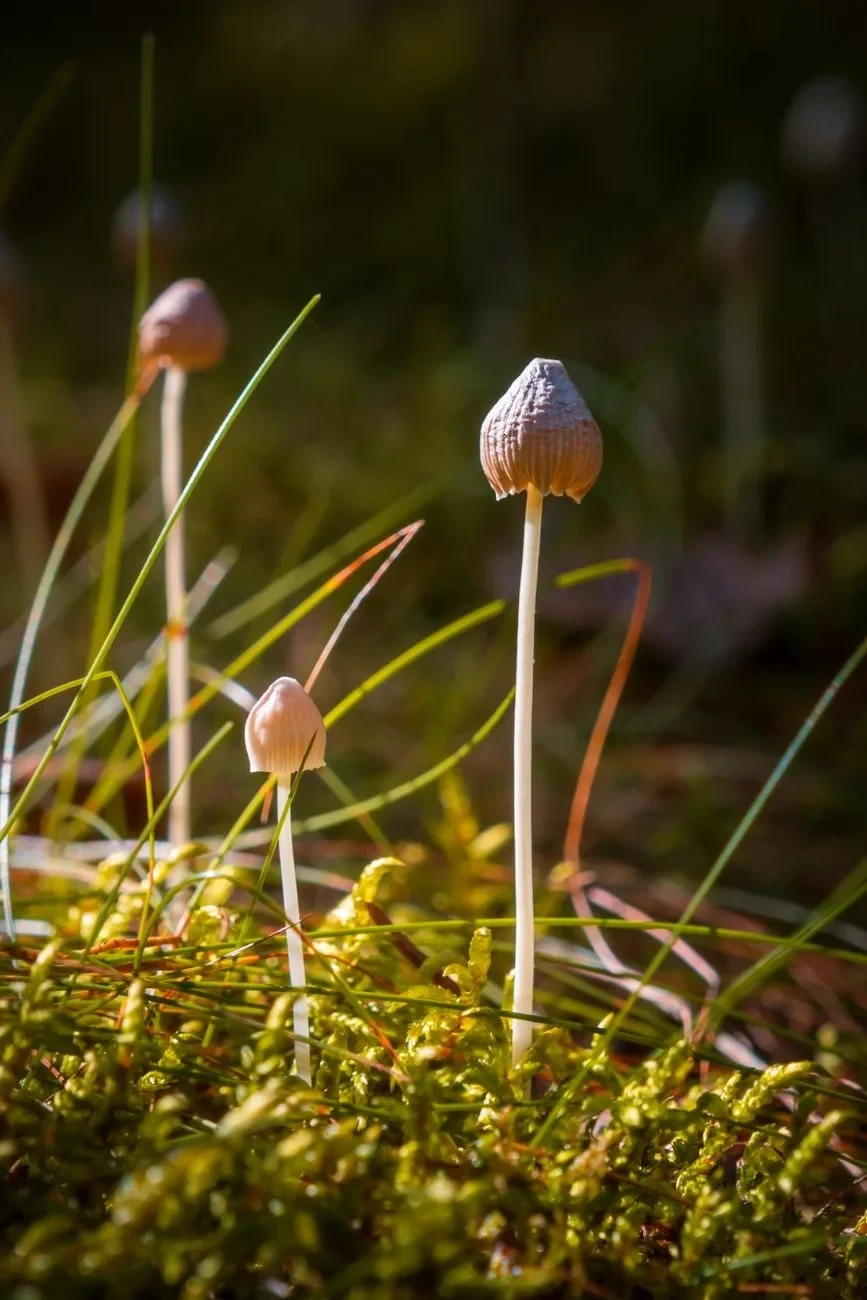
Delicate mushrooms fruit across moss and grass in an autumn forest. This seasonal abundance reveals how thoroughly fungi permeate woodland ecosystems.
Photograph by Surdu Horia, via Pexels.
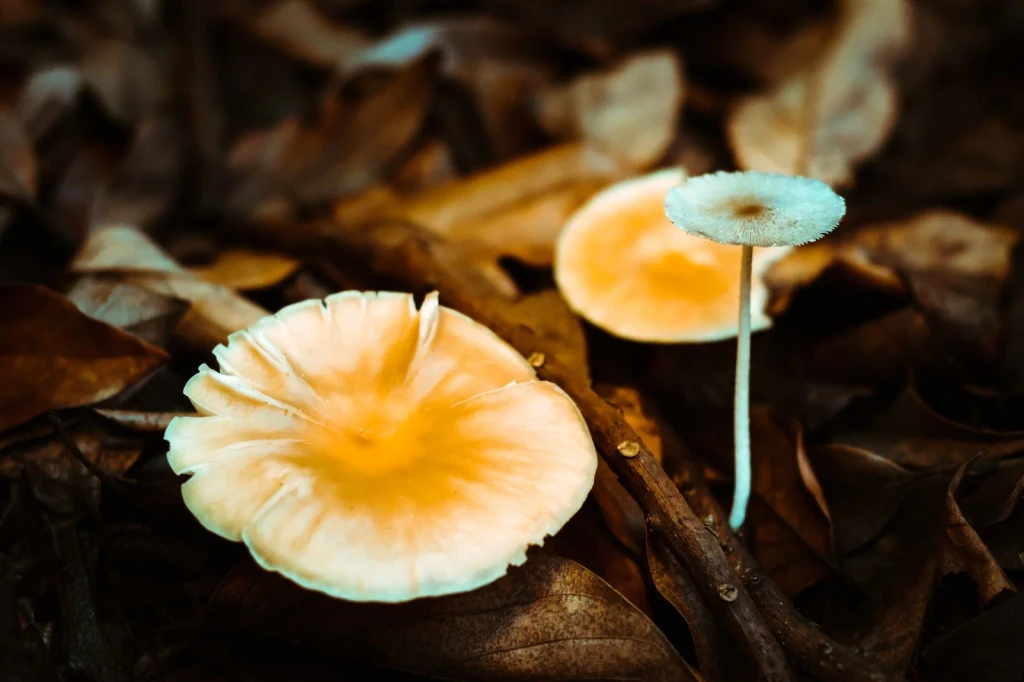
Mushrooms fruit among fallen leaves. These decomposers thrive where plants have died, embodying fungi's unique role in neither plant nor animal kingdoms.
Photograph by FOTEROS, via Pexels.
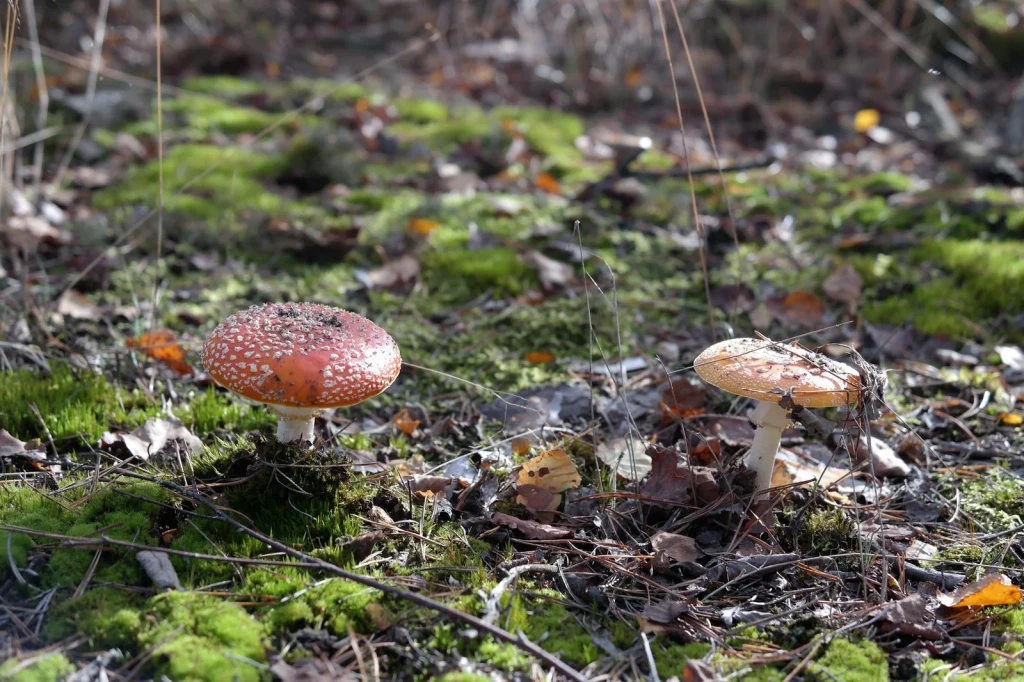
Two fly agaric mushrooms emerge among moss and debris. Their distinctive shapes hint at the diversity hidden within the fungal kingdom.
Photograph by Roman Biernacki, via Pexels.
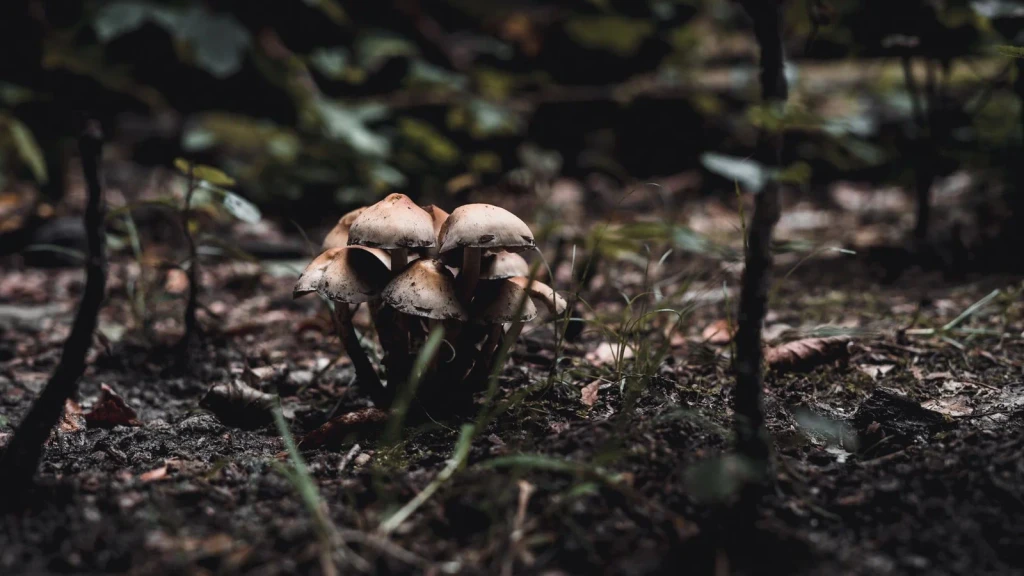
Wild mushrooms display their varied forms as they fruit from the forest floor. Each structure reflects fungi's alien biology, neither rooted nor mobile.
Photograph by Tatianna, via Pexels.
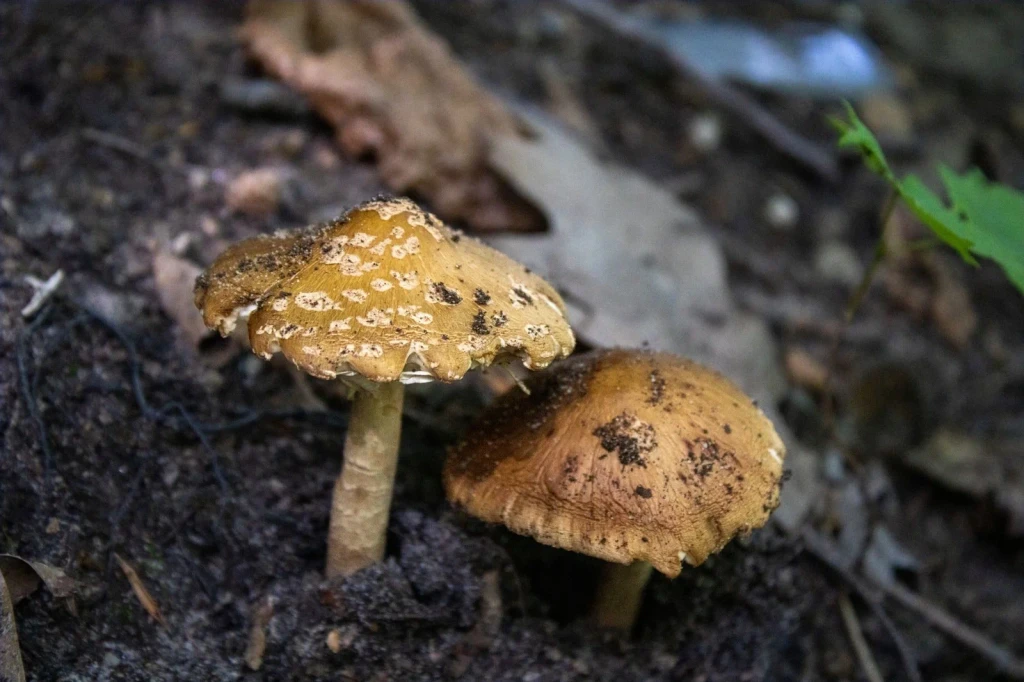
Brown mushrooms rest on soil in close detail. A decomposer at work, breaking down the forest's dead matter and cycling nutrients back to life.
Photograph by Gabriel Douglas, via Pexels.
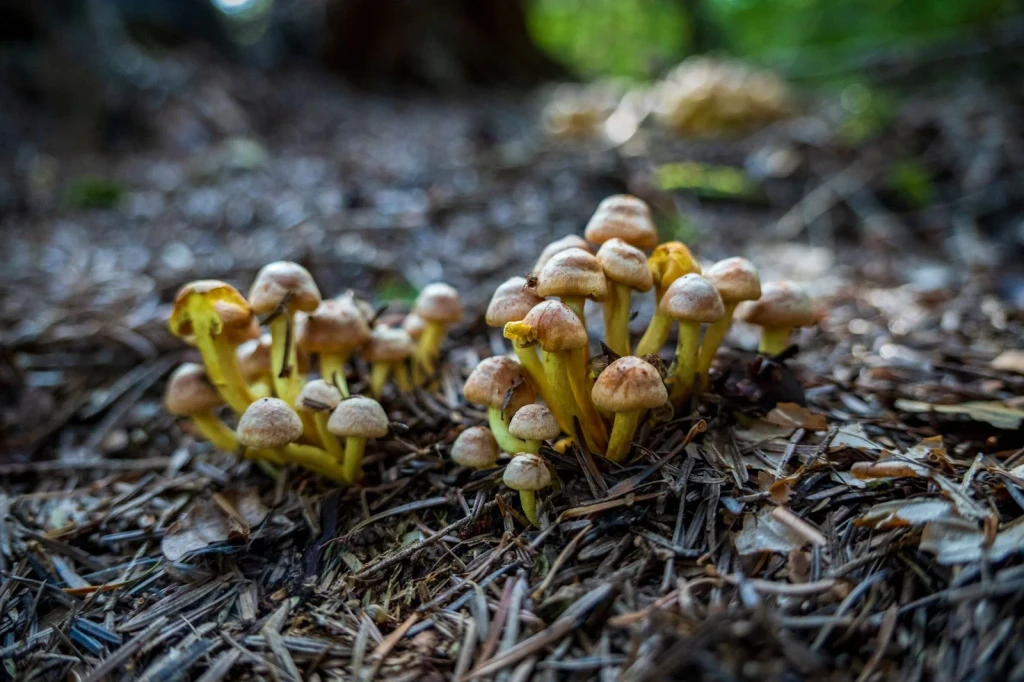
A cluster of mushrooms emerges from the forest floor. Fungi spread not as individuals, but as connected networks beneath our feet.
Photograph by Michał Robak, via Pexels.
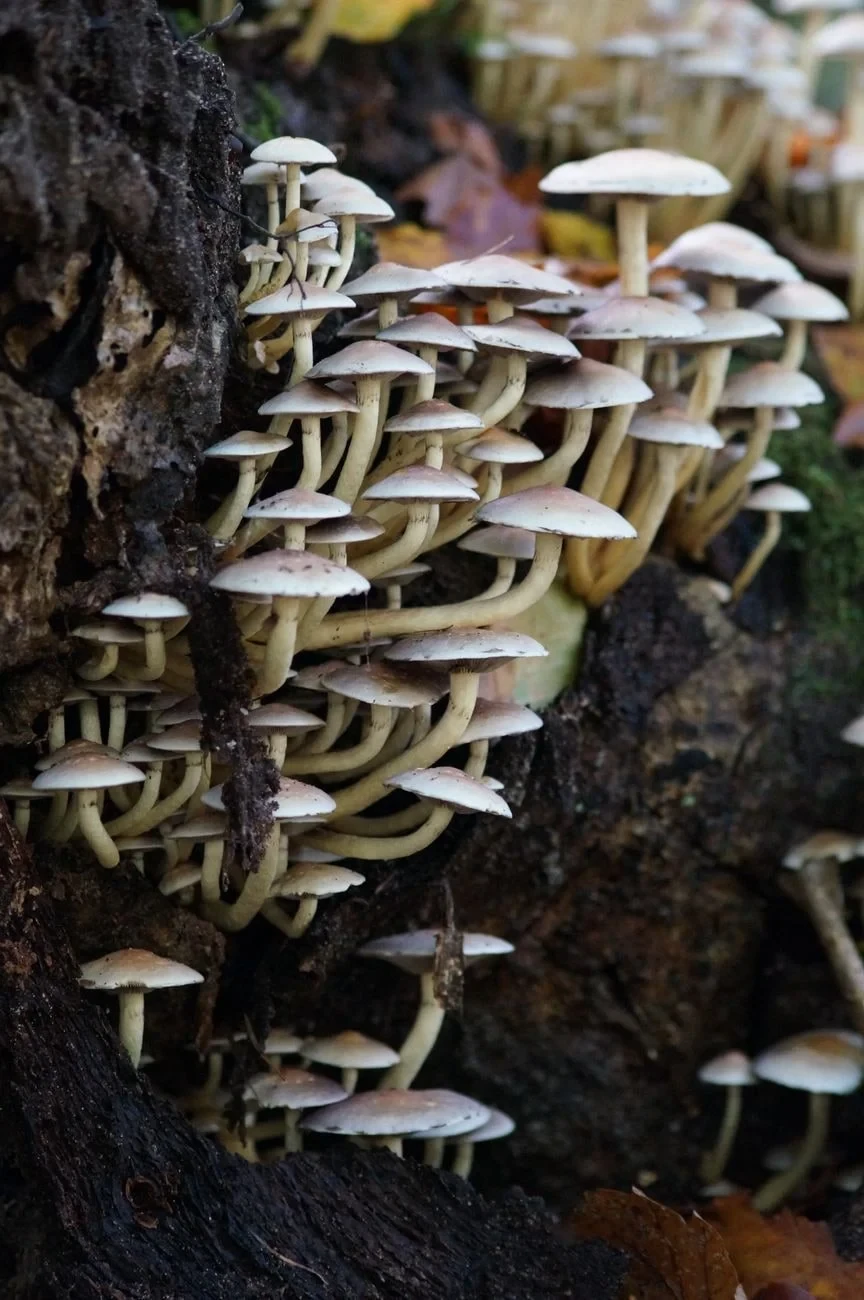
Mushrooms colonize a tree stump, revealing how fungi transform decay into new growth. The stump becomes habitat and food source simultaneously.
Photograph by Femke Hansen, via Pexels.
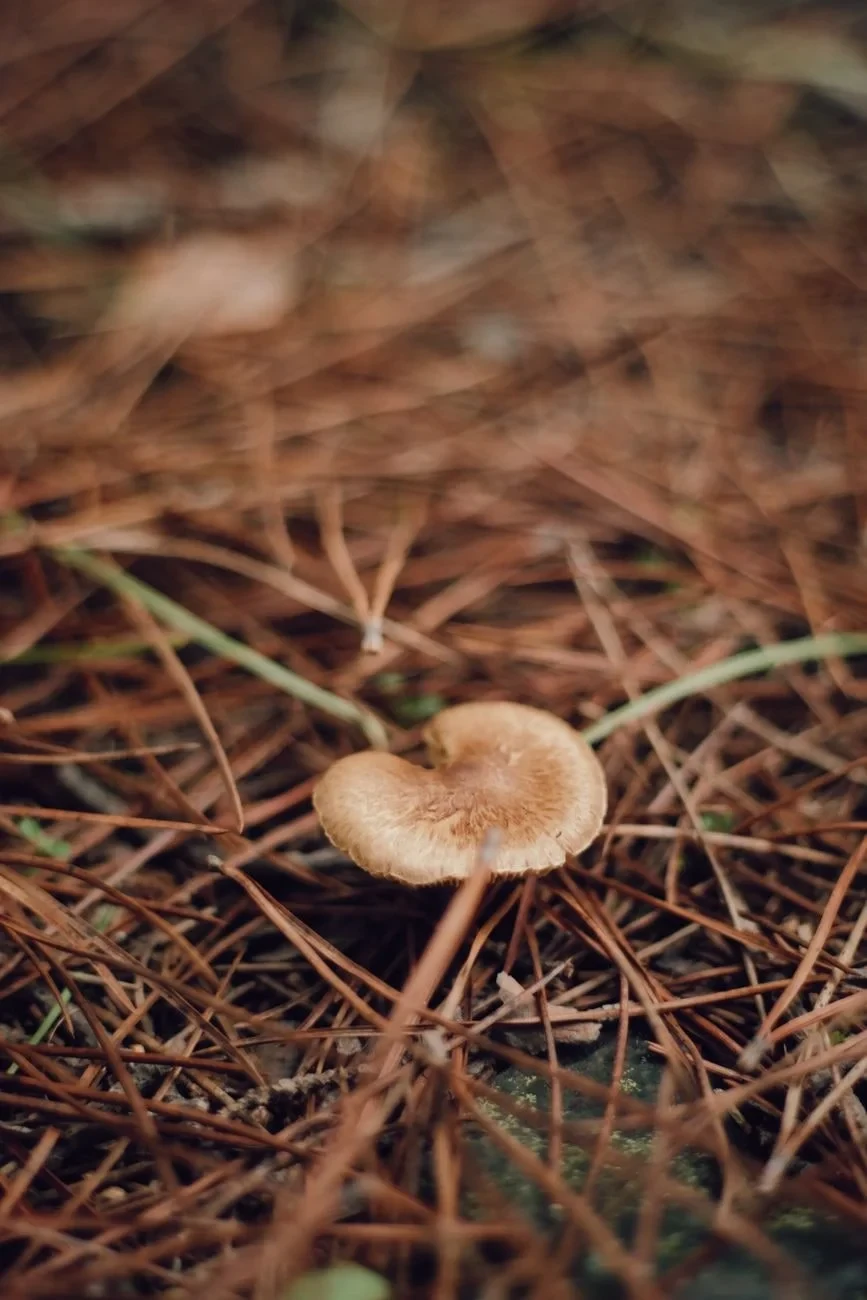
A brown mushroom nestled in pine needles. Fungi often fruit in forest floors where plant debris accumulates, breaking down what trees have shed.
Photograph by Feyza Altun, via Pexels.
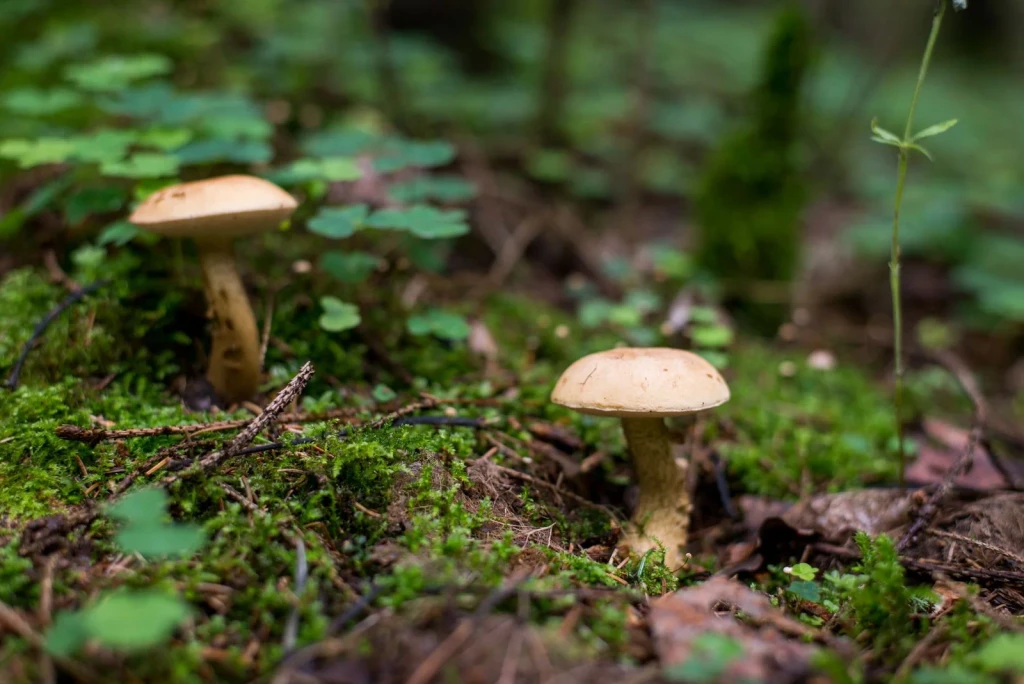
Mushrooms grow through lush forest moss in a moment of quiet abundance. Fungi and moss often flourish together in damp, shaded woodland spaces.
Photograph by Regimantas Danys, via Pexels.
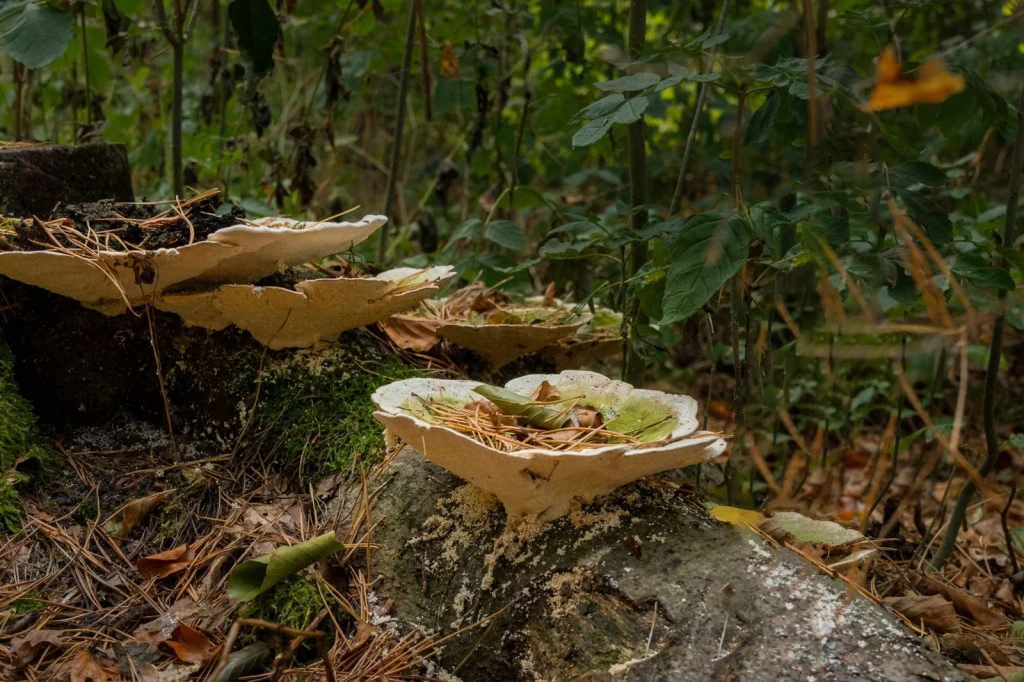
Wild mushrooms colonize a fallen log, transforming decay into a scaffold for life. Fungi break down dead wood, cycling nutrients back through the forest.
Photograph by Gundula Vogel, via Pexels.
