3D Gallery
Vaccination: The Idea That Emptied Graveyards
Enter gallery
Vaccination: The Idea That Emptied Graveyards is a 3D virtual gallery on MyGallery3D, a walkable online exhibition of 12 works. Step inside and explore it in your browser: no app, no headset.
Walk through this 3D virtual gallery of vaccination in your browser. It begins with a cow.
Smallpox killed an estimated 300 to 500 million people in the 20th century alone. On 14 May 1796, Edward Jenner scraped pus from cowpox blisters on the hands of a milkmaid, Sarah Nelmes, who had caught the disease from a cow called Blossom, and worked it into the arm of James Phipps, the eight-year-old son of his gardener. The boy never developed smallpox. The word vaccine comes from vacca, Latin for cow.
The last naturally occurring case of smallpox was diagnosed in October 1977, and the World Health Organization certified eradication in 1980. It is still the only human disease ever eradicated. Vaccination now prevents an estimated 3.5 to 5 million deaths a year, and a Lancet study puts the 50 years from 1974 at 154 million deaths prevented, 146 million of them children under 5.
Before vaccination came variolation: live smallpox, taken from a patient's pustule or scab, worked into the skin of a healthy person. It often gave them the disease, and they could pass it on. Lady Mary Wortley Montagu brought the practice to Britain in 1721 after seeing it in Constantinople. In 1840 the British government banned it and gave cowpox vaccination free of charge.
Jenner was not first. John Fewster had realised by 1768 that cowpox protected against smallpox, and the Dorset farmer Benjamin Jesty vaccinated his wife and two children in 1774. Jenner's contribution was proof: he deliberately challenged Phipps with smallpox material afterwards, showed that nothing happened, tested the same hypothesis on 23 further subjects, and published.
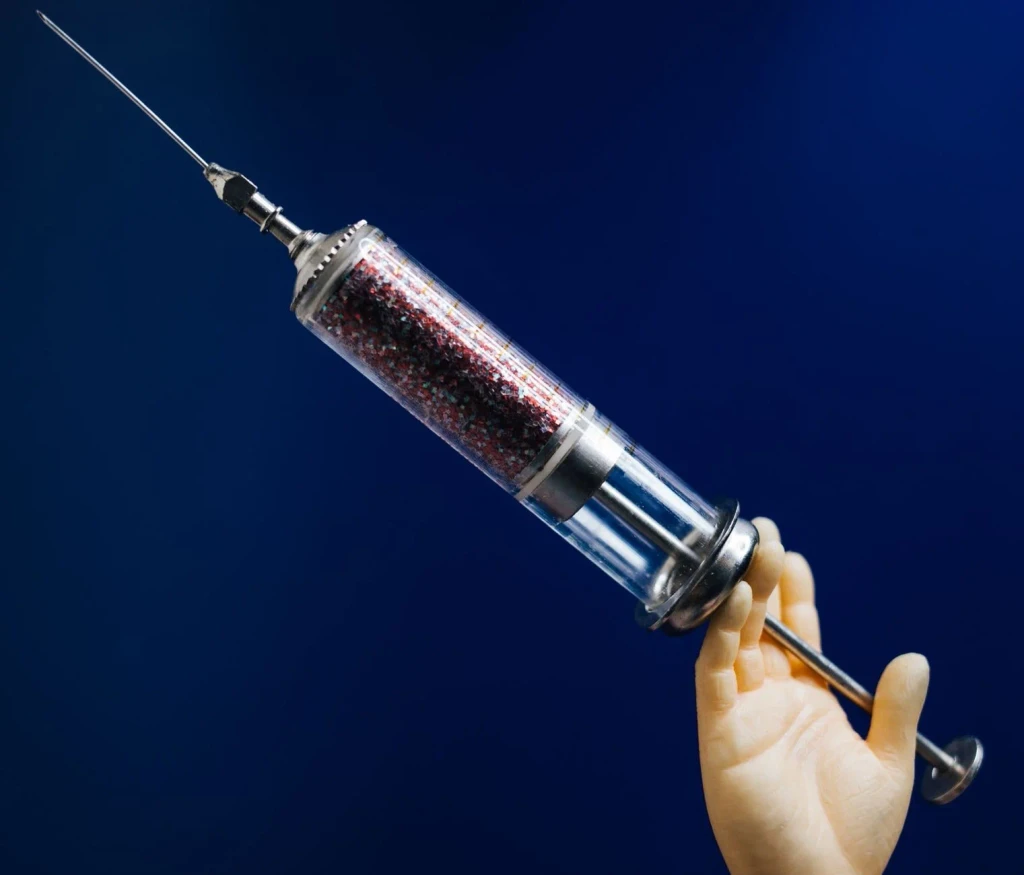
A large syringe filled with colorful beads sits isolated against blue. The vibrant contents suggest the complexity within vaccination.
Photograph by Ellie Burgin, via Pexels.
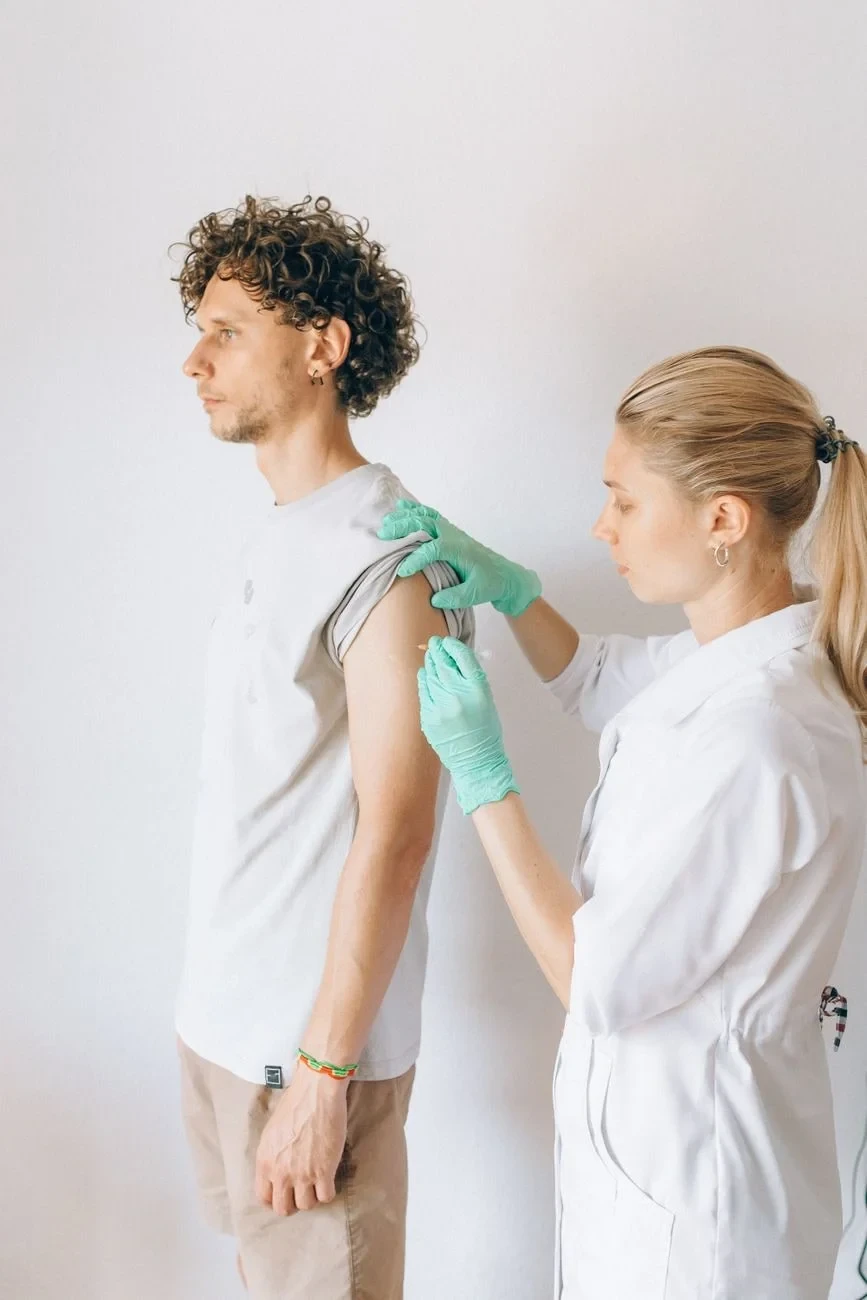
A nurse administers a vaccine to a patient indoors. The photograph documents the moment where medical prevention becomes real.
Photograph by Nataliya Vaitkevich, via Pexels.
A playful arrangement of paper cutouts shows illness alongside medical tools. The composition presents vaccination as a response to human vulnerability.
Photograph by Monstera Production, via Pexels.
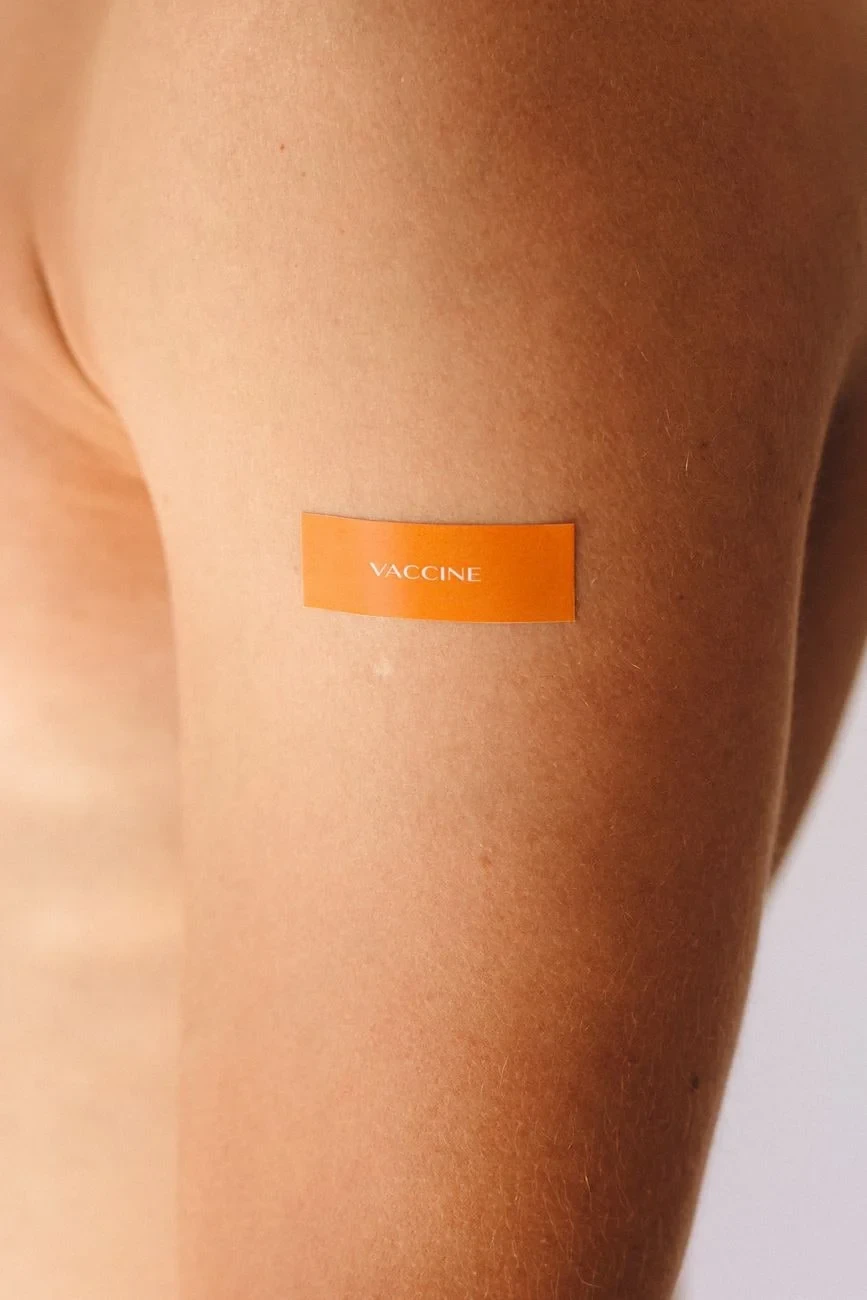
An arm displays a vaccine bandage. This simple image captures the aftermath of protection.
Photograph by Nataliya Vaitkevich, via Pexels.
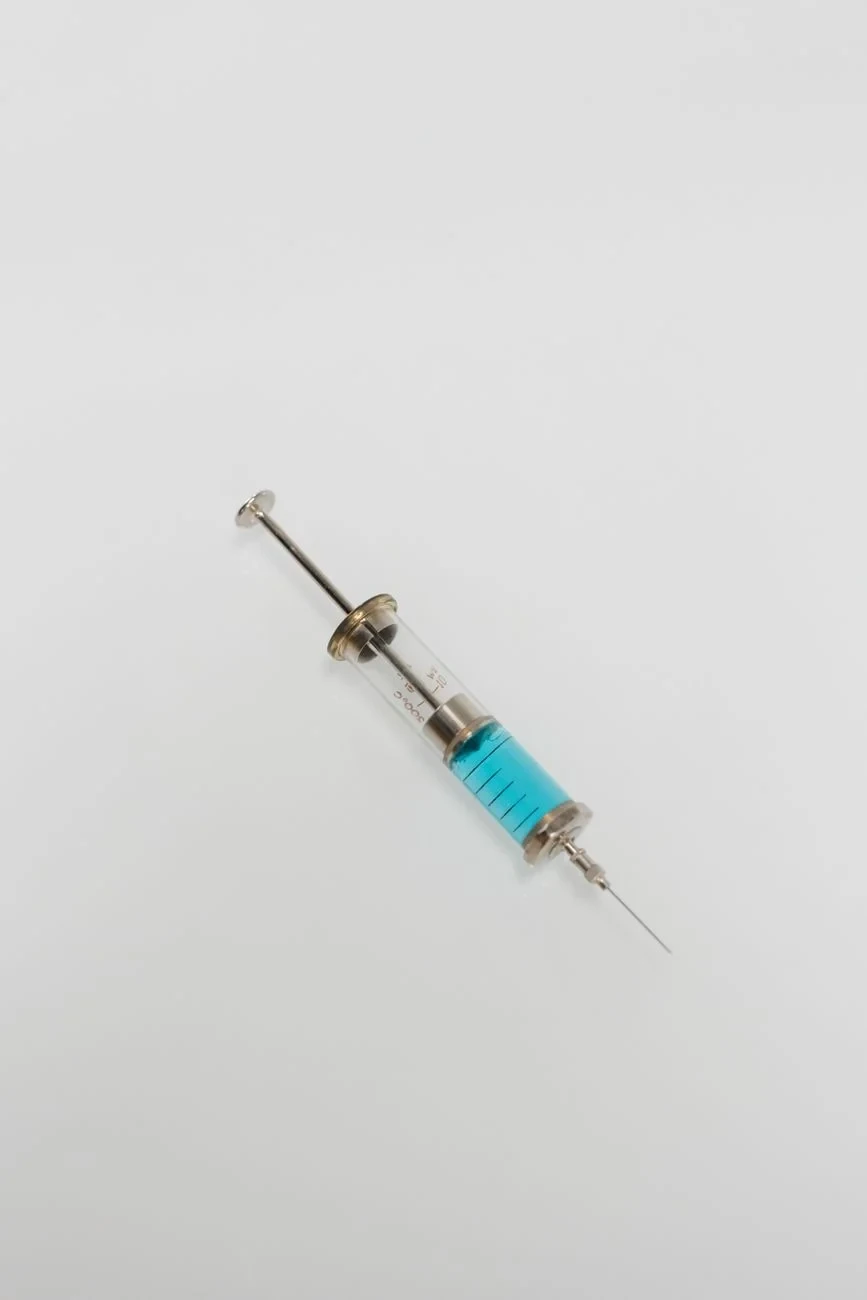
A vintage syringe holds blue liquid on a minimal white background. The image evokes the historical lineage of vaccination as medical practice.
Photograph by cottonbro studio, via Pexels.
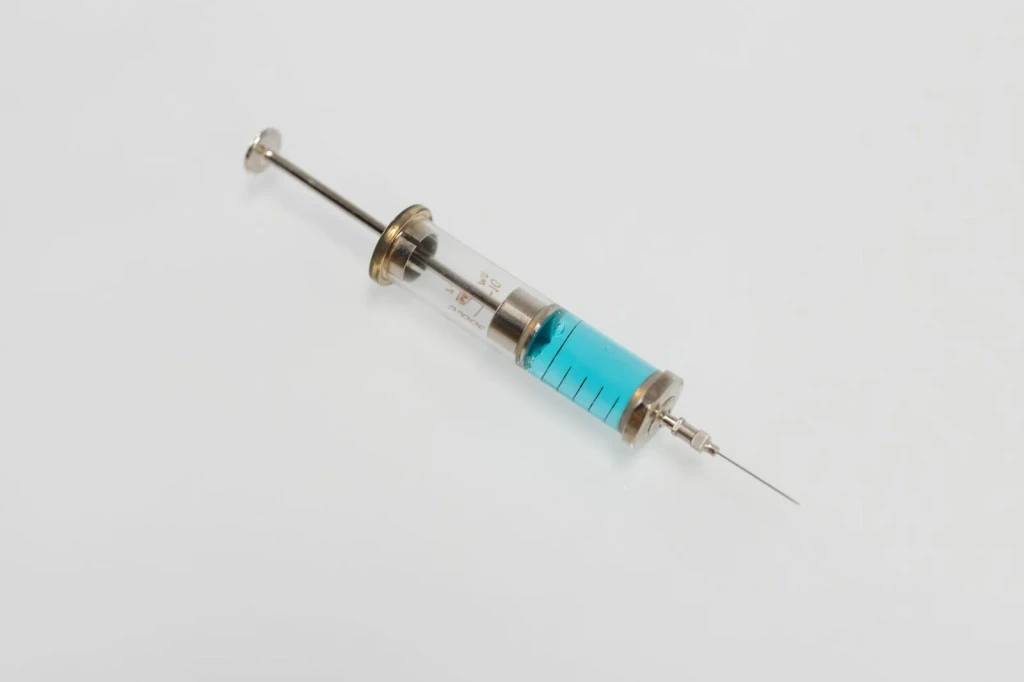
A vintage syringe filled with blue liquid sits spare and clean. The image honors the history of injection-based medicine.
Photograph by cottonbro studio, via Pexels.
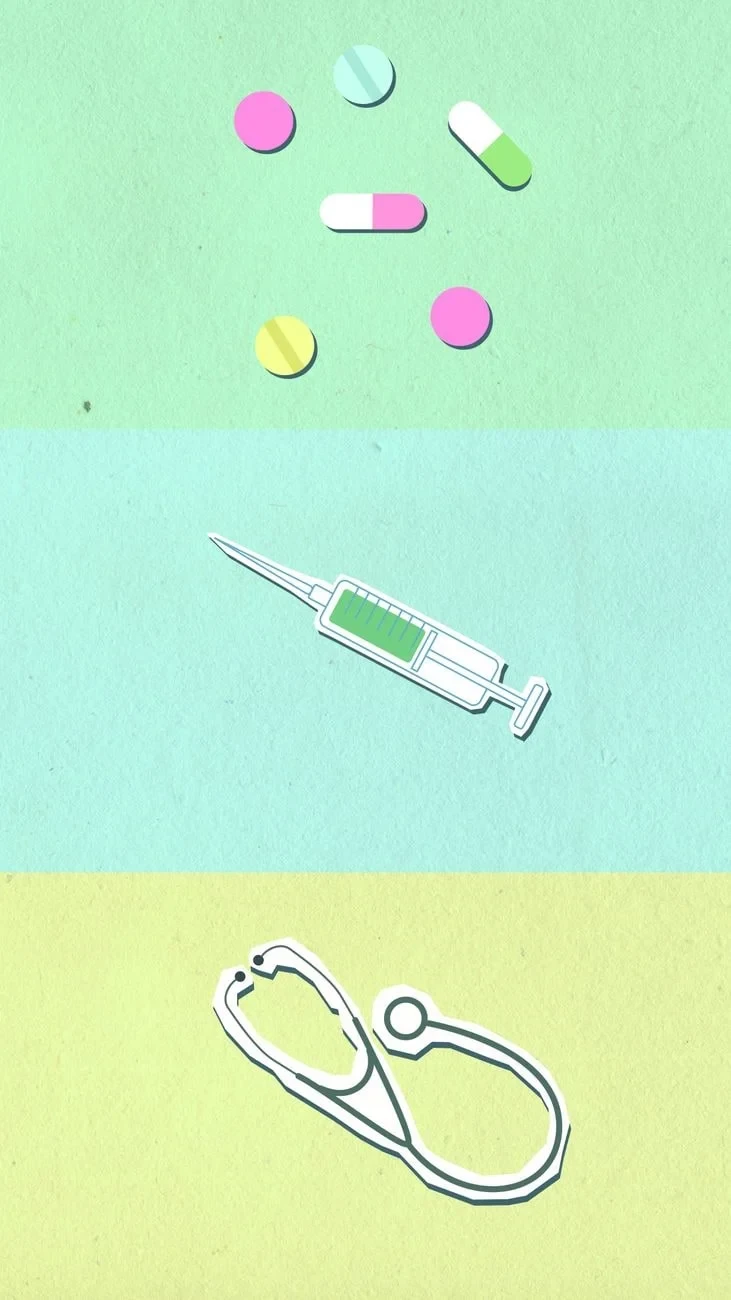
Paper cutouts arrange stethoscope, syringe, and capsules across a colorful ground. The composition combines symbols of diagnosis and healing.
Photograph by Monstera Production, via Pexels.
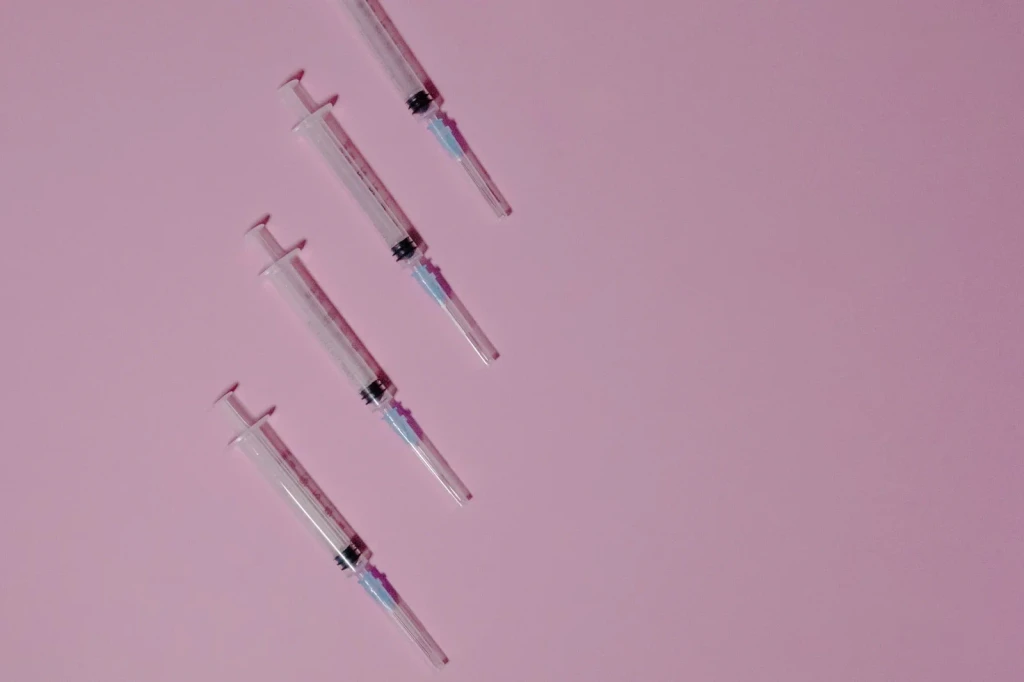
Four syringes arranged on a soft pink background. The repetition suggests readiness and scale.
Photograph by Tara Winstead, via Pexels.
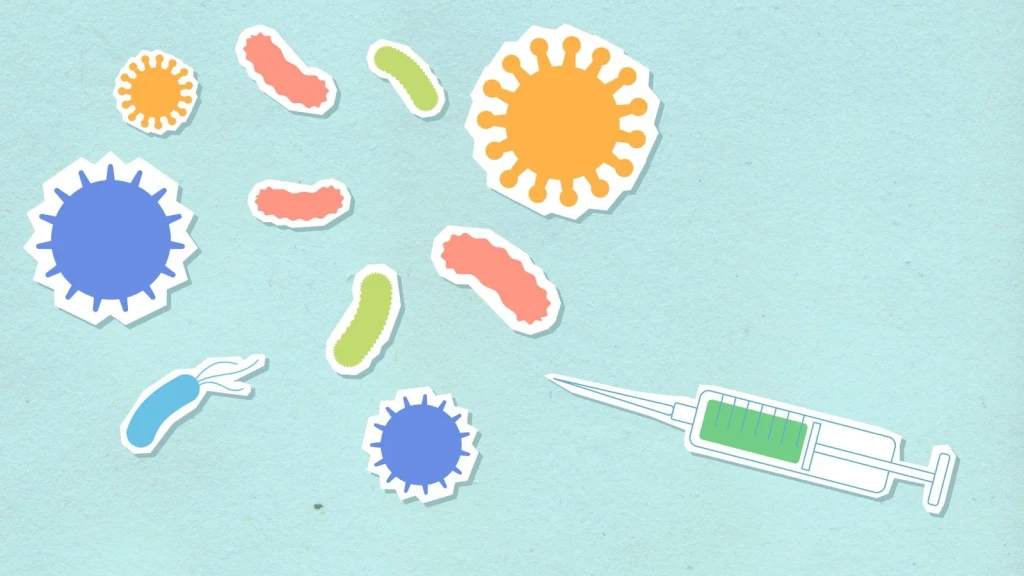
Paper cutouts of contagious viruses surround a syringe on a blue ground. The composition presents the vaccine as a direct response to disease.
Photograph by Monstera Production, via Pexels.
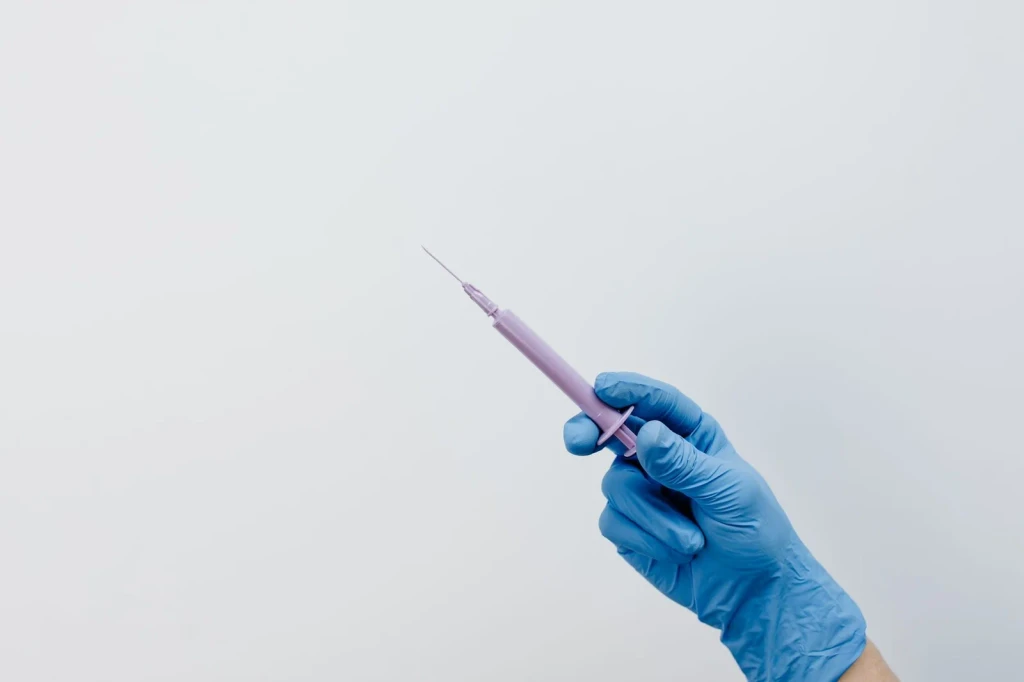
A gloved hand holds a filled syringe. This close study of the vaccination tool itself emphasizes the practical, physical act of immunization.
Photograph by Tara Winstead, via Pexels.
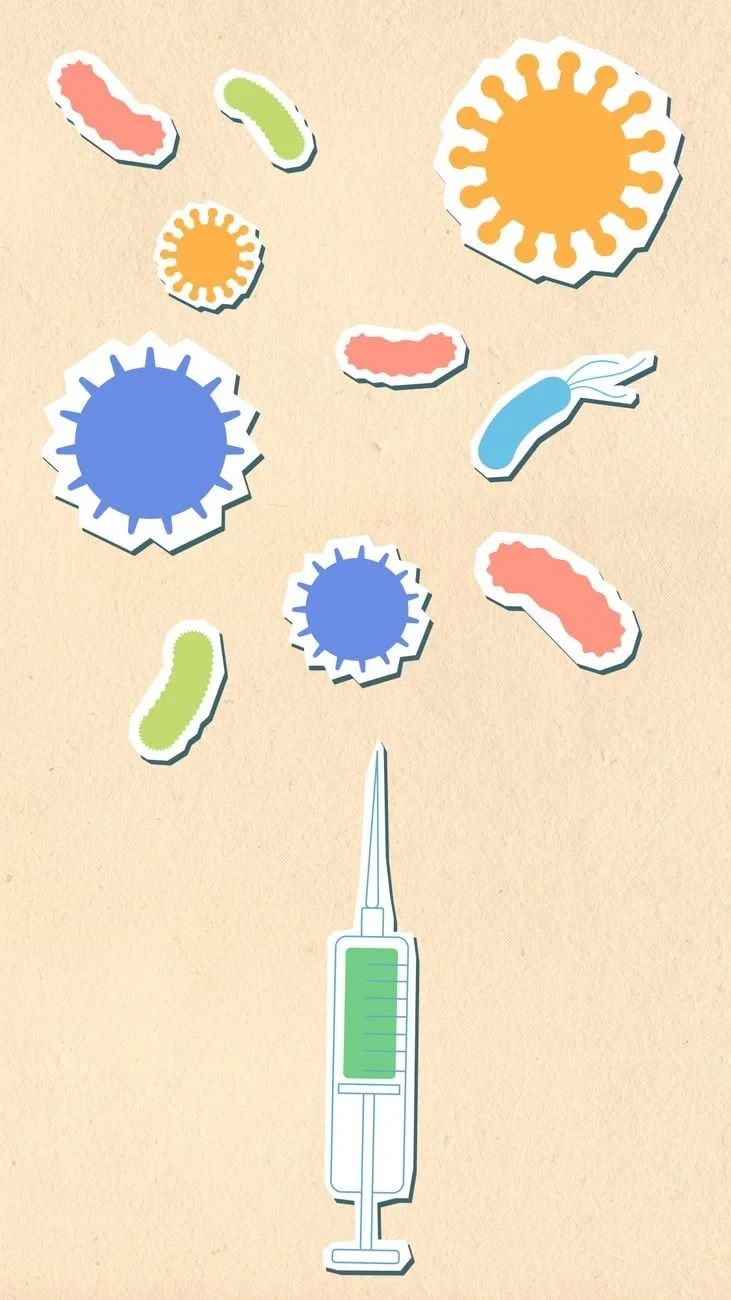
Dangerous viruses in paper form face a vaccine syringe against an orange background. The image visualizes protection during coronavirus pandemic times.
Photograph by Monstera Production, via Pexels.
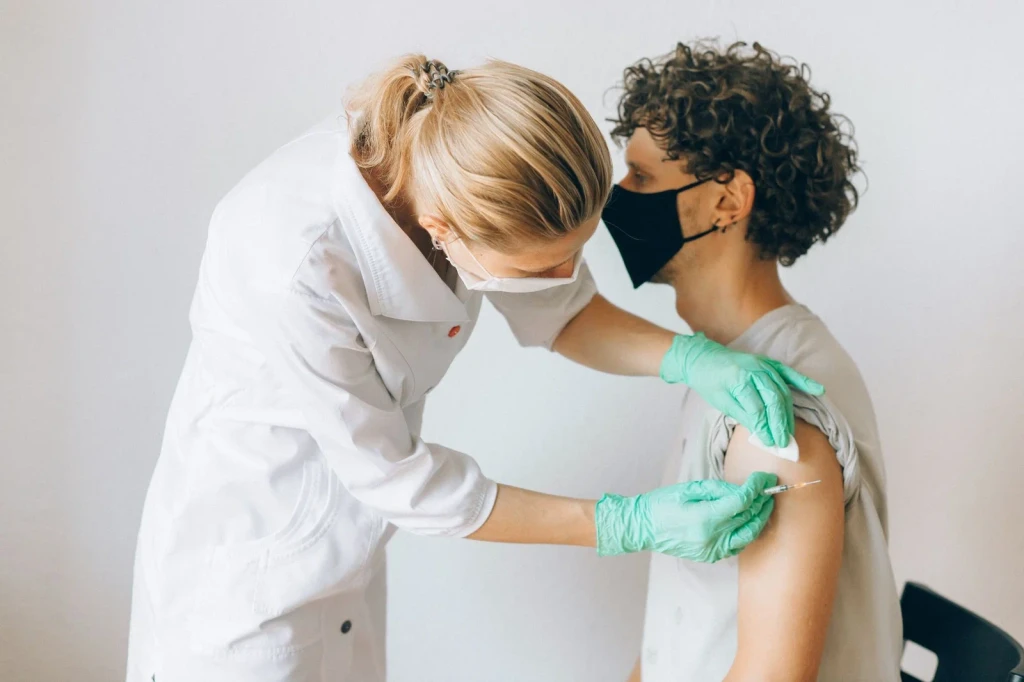
A healthcare worker administers a vaccine to a masked patient. The image centers on the practical moment of vaccination as a medical intervention.
Photograph by Nataliya Vaitkevich, via Pexels.
