3D Gallery
Worlds Preserved Inside Amber
Enter gallery
Worlds Preserved Inside Amber is a 3D virtual gallery on MyGallery3D, a walkable online exhibition of 12 works. Step inside and explore it in your browser: no app, no headset.
Step into this 3D virtual museum of amber, which you can walk through in your browser. Every piece here is a drop of tree resin that refused to rot. Most resin does not survive: sunlight, rain and microorganisms break it down long before it can fossilise.
What survived is a census of a lost forest. In Baltic amber, insects are over 98% of the preserved animals; vertebrates are half a percent, and mostly fur, feathers and reptiles. The Greek name for amber was elektron, the root of the word electricity, because rubbed amber attracts chaff.
Kachin State in northern Myanmar has supplied amber to China for at least 1,800 years, and its mining has drawn attention for unsafe working conditions and for funding internal conflict. In the Rivne Oblast of Ukraine, organised crime groups mine amber illegally, deforesting the surrounding areas and pumping water into the sediments to extract it, causing severe environmental deterioration.
Amber travelled south from the Baltic and North Sea coasts to Italy, Greece, the Black Sea, Syria and Egypt over a period of thousands of years, along a route the Romans fortified. The breast ornament of Tutankhamen contains large Baltic amber beads. A deposit found at Partynice near Wrocław, dating from the 1st century BC, holds an estimated 1,240 to 1,760 kilograms of it.
More than 90% of the world's amber comes from Kaliningrad Oblast in Russia. The coast west of Königsberg was historically the leading source, and the first mentions of the deposits there date to the 12th century. The Kaliningrad Amber Combine extracted 250 tonnes in 2014 and 400 tonnes in 2015. The amber sits in a glauconite layer known as Blue Earth.
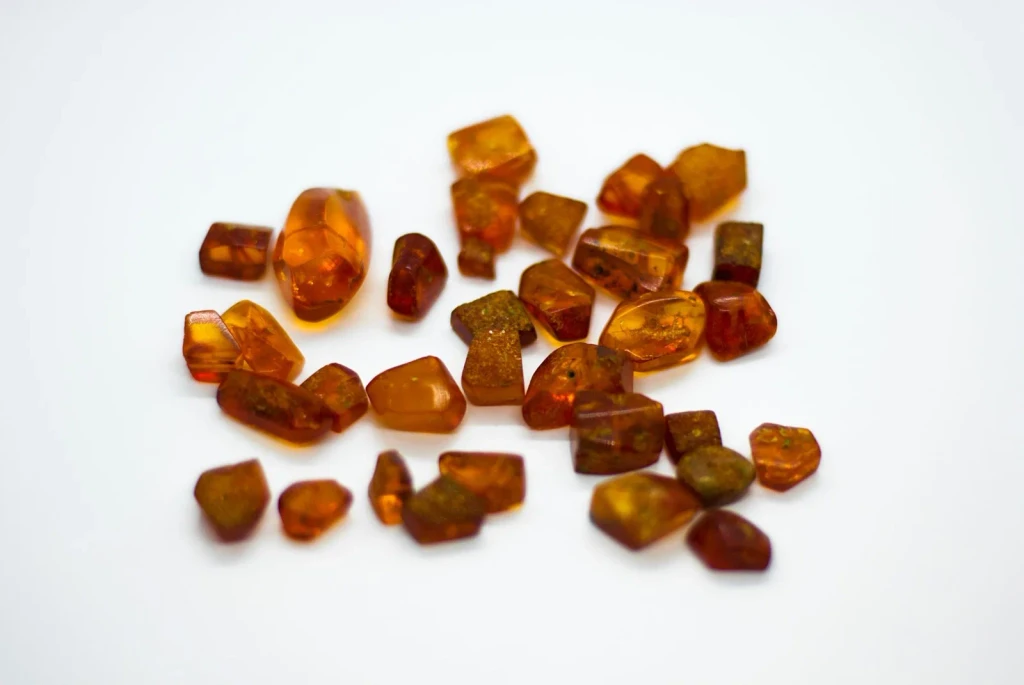
A collection of raw amber gemstones awaits transformation. These unworked stones hint at the preserved worlds contained within.
Photograph by Olga Kovalski, via Pexels.
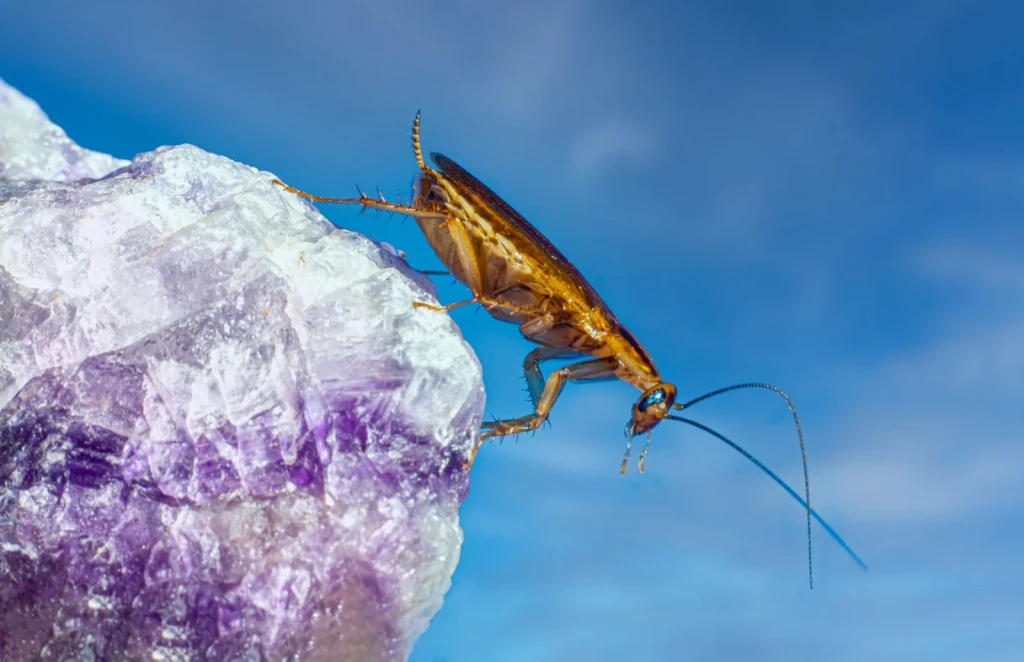
A cockroach perches on vibrant amethyst against open sky. The image juxtaposes the insect with a mineral form, both subjects of preserved study.
Photograph by Erik Karits, via Pexels.
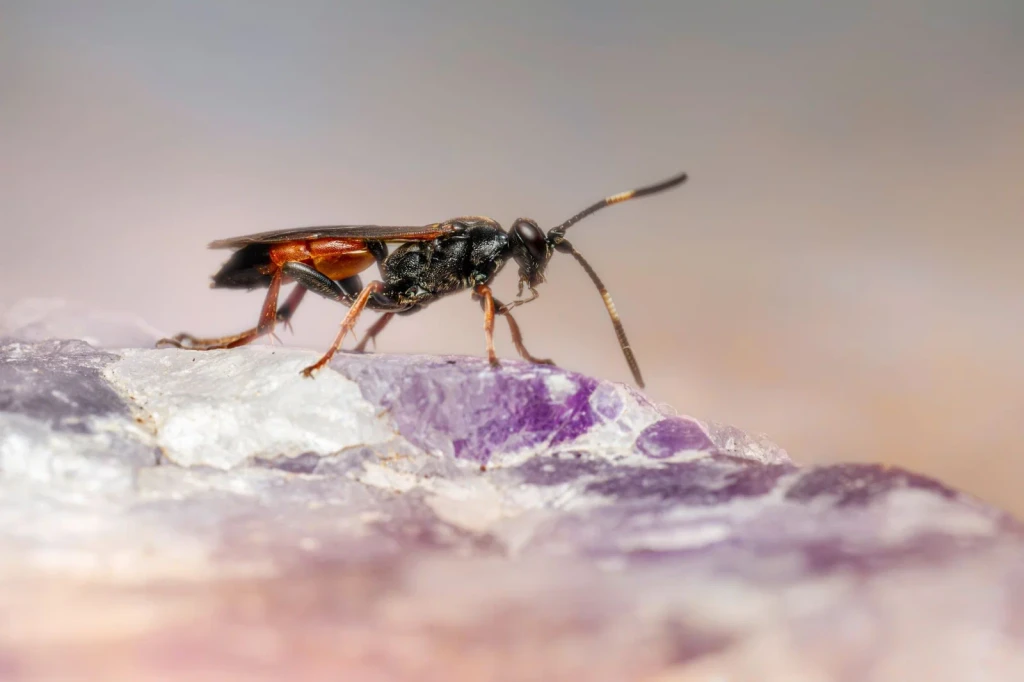
An insect rests on purple amethyst crystal. This close study invites us to see the overlooked details of small life forms.
Photograph by Erik Karits, via Pexels.
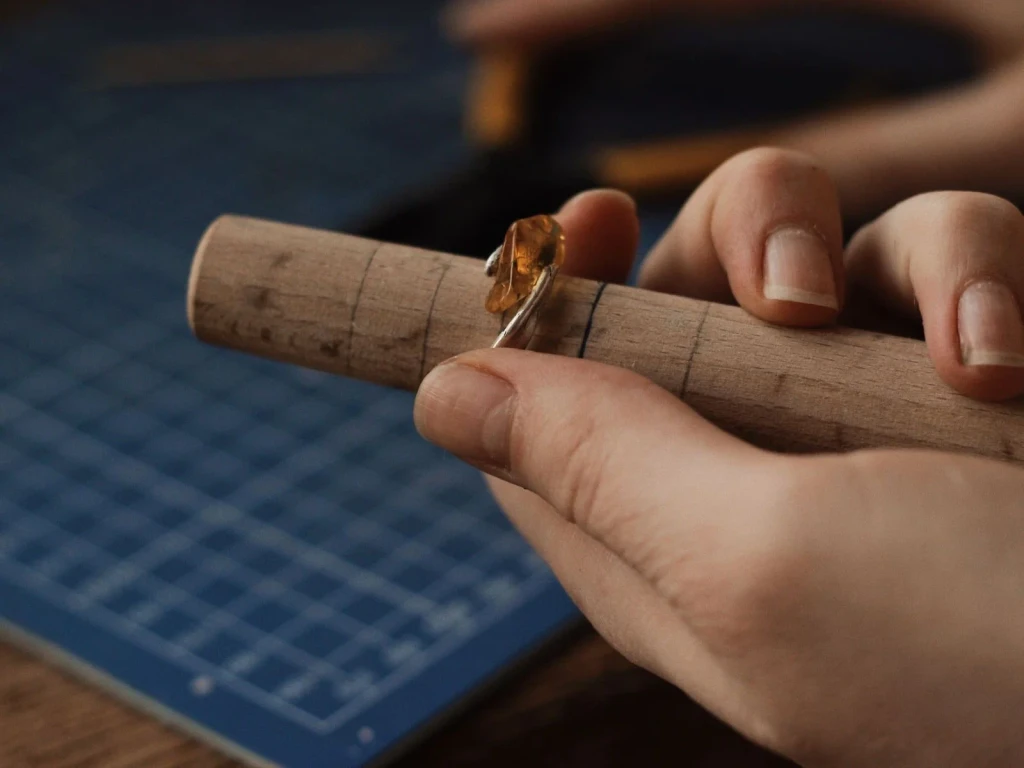
A jeweler works amber on a mandrel, shaping preserved material into wearable form. The image documents craft in progress.
Photograph by Maksim Goncharenok, via Pexels.
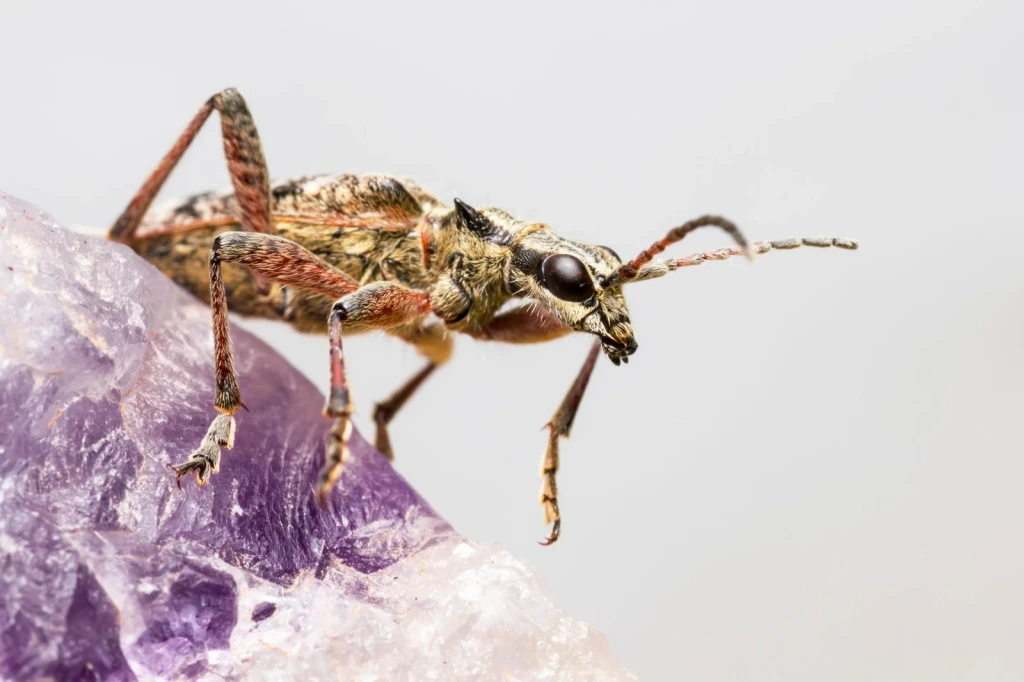
A macro photograph of a longhorn beetle on purple amethyst. The image draws attention to small creatures and the mineral world that surrounds them.
Photograph by Erik Karits, via Pexels.
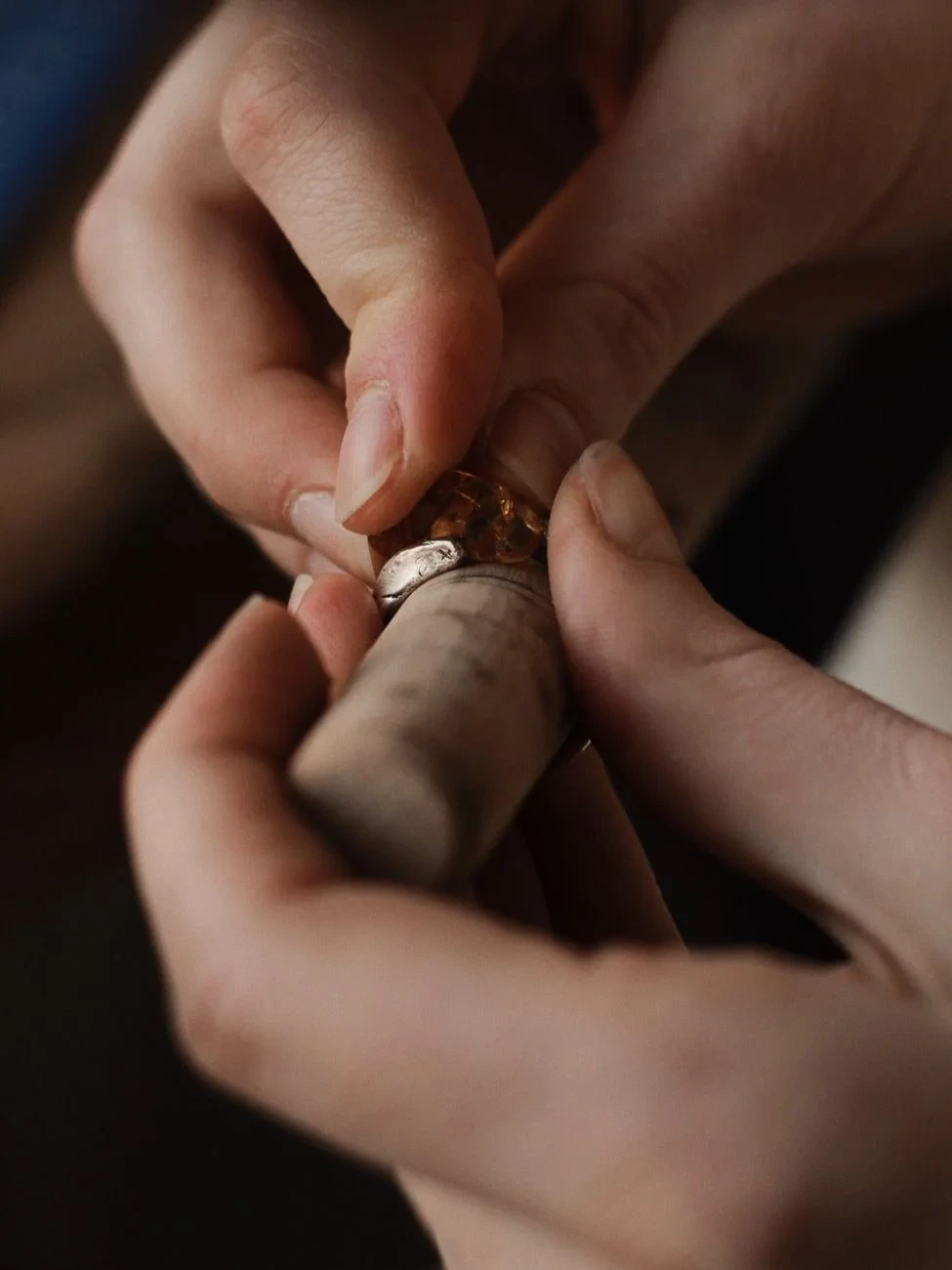
An artisan carefully shapes amber into a ring. The photograph captures the direct contact between maker and preserved material.
Photograph by Maksim Goncharenok, via Pexels.
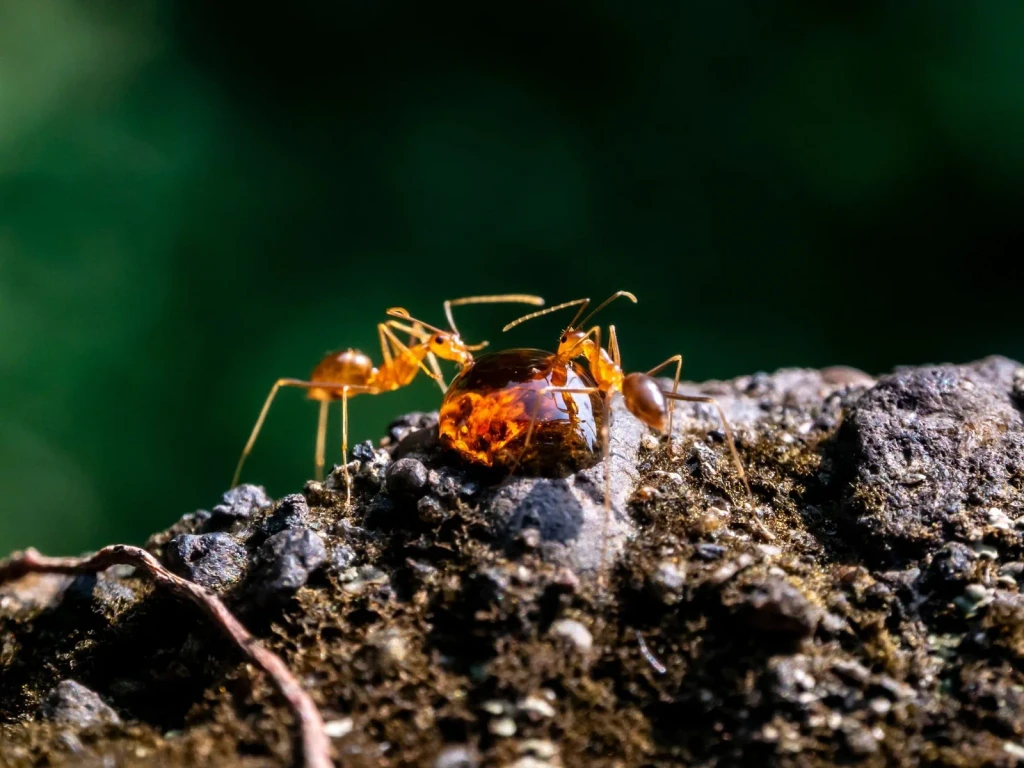
Two ants interact near a globule of amber on rock. The photograph presents a quiet moment between living creatures and the amber substance itself.
Photograph by Wahyu Prabowo, via Pexels.
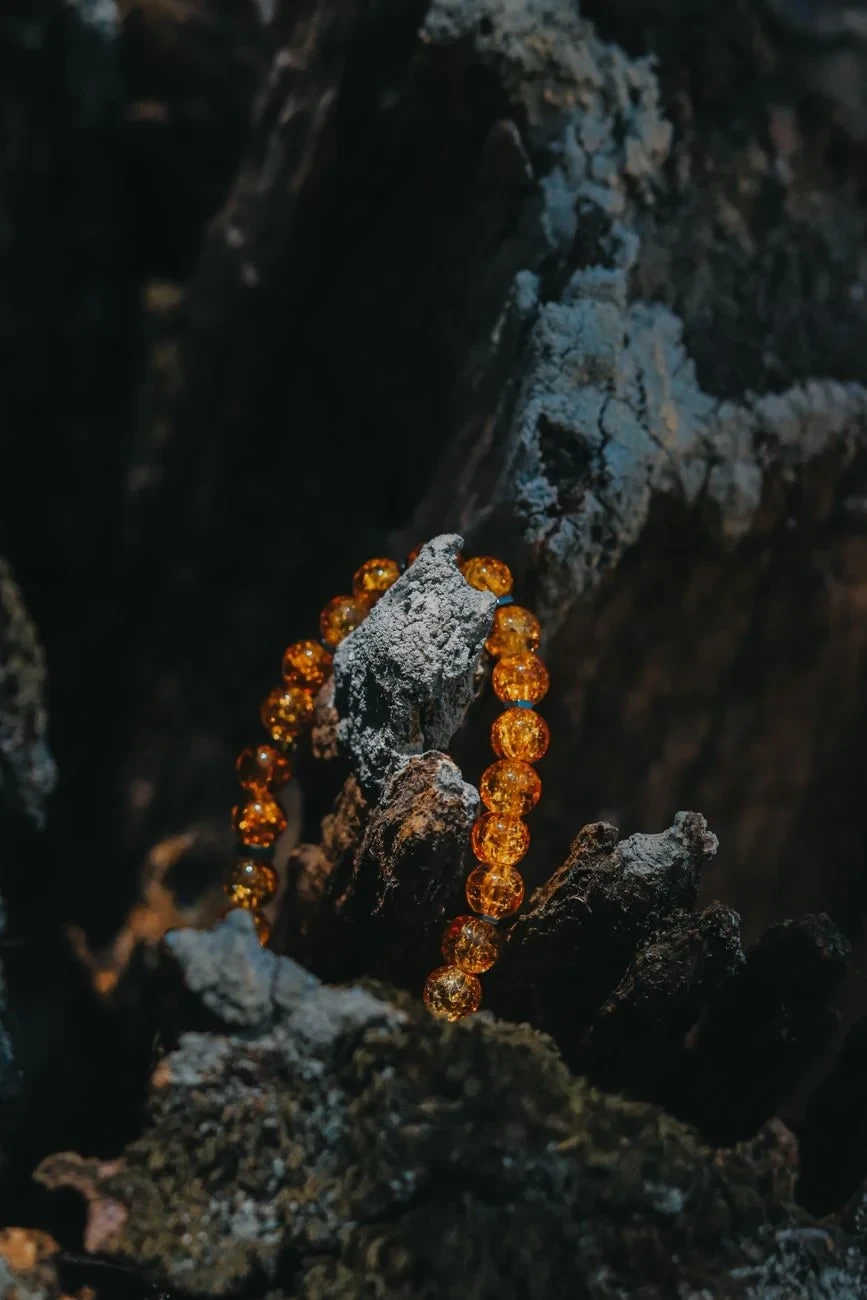
A golden amber bracelet lies across stone. The beaded strand suggests connections between earth and human craft.
Photograph by Ejov Igor, via Pexels.
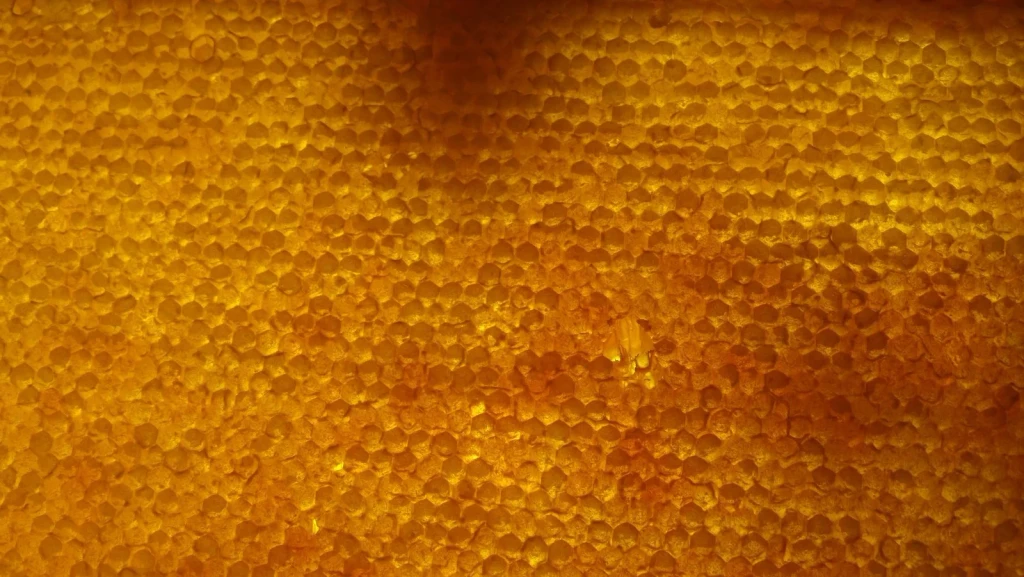
A detailed view of natural honeycomb structure. Its geometric precision speaks to the intricate worlds that can be preserved and studied through close observation.
Photograph by Anastasiia Melnyk, via Pexels.
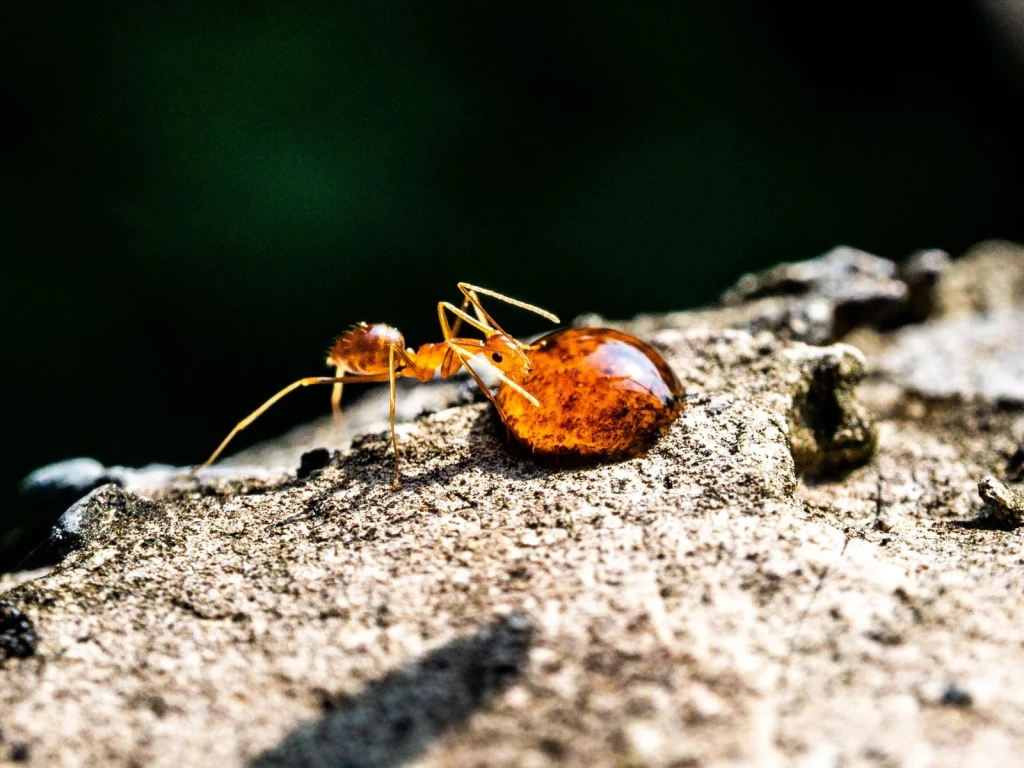
A close-up encounter between an ant and a droplet of amber on rock. The photograph captures a moment where the insect meets the very substance that, in nature, can preserve life across millennia.
Photograph by Wahyu Prabowo, via Pexels.
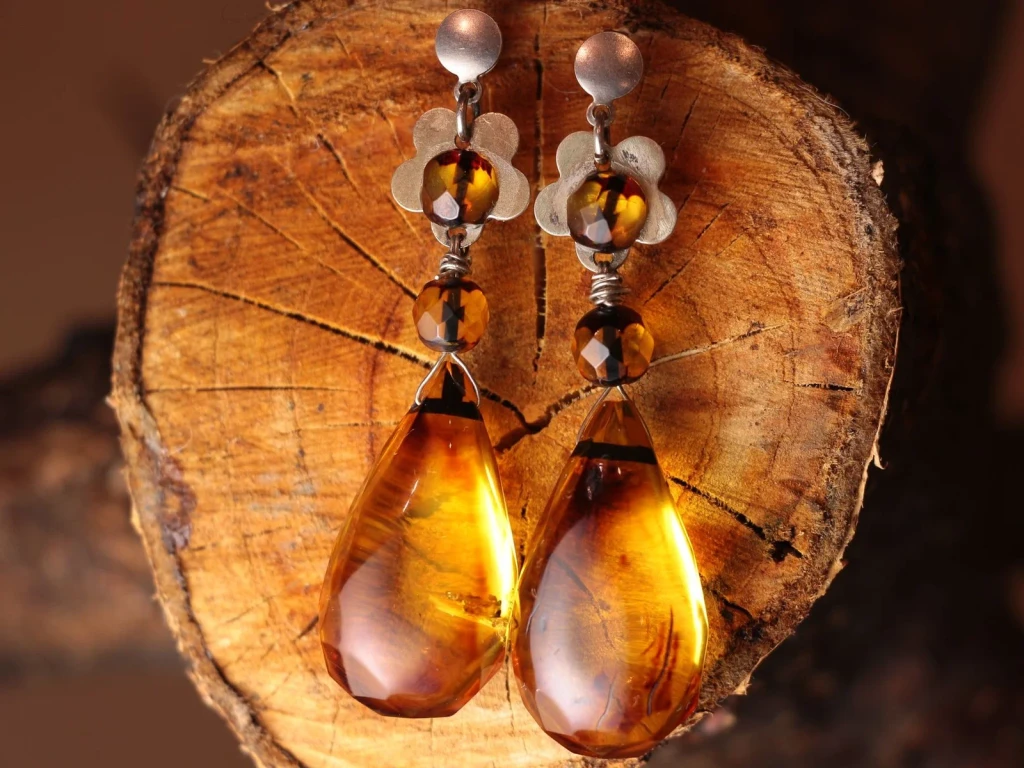
Amber earrings rest on a wooden surface, their metal surroundings echoing natural forms. Two materials meet in finished work.
Photograph by No Edited Pics, via Pexels.
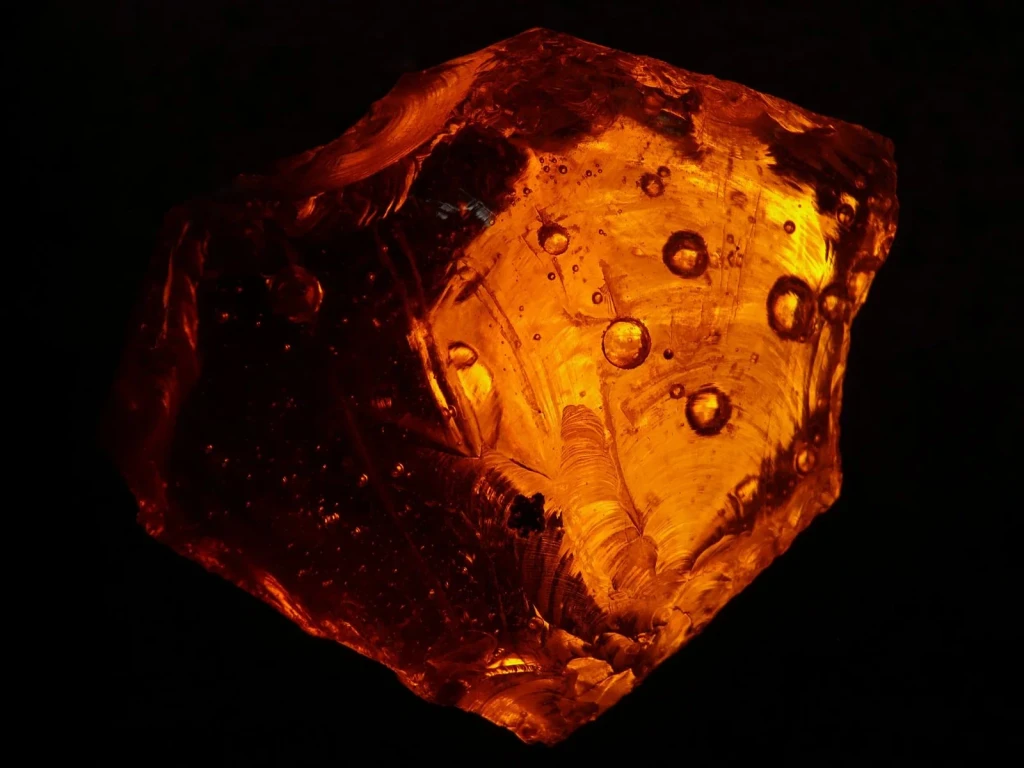
An illuminated amber stone reveals its internal textures and patterns. Light passes through these ancient materials, exposing hidden depths.
Photograph by Pixabay, via Pexels.
