3D Gallery
What Lightning Taught Us
Enter gallery
What Lightning Taught Us is a 3D virtual gallery on MyGallery3D, a walkable online exhibition of 16 works. Step inside and explore it in your browser: no app, no headset.
This is a 3D virtual museum of lightning, and you walk through it in your browser, which is the only safe way to stand this close.
A single flash releases between 200 megajoules and 7 gigajoules and heats the air around it to about 30,000 °C. That is what you hear: thunder is the shock wave from air that had nowhere to go. And when the bolt lands on sand, the heat fuses the grains into glass, leaving a hollow tube in the shape of the strike itself.
A fulgurite is a tube of fused sand: the path of the bolt, kept. Peak temperatures within a lightning channel exceed 30,000 K, enough to vitrify quartz. Fulgurites can reach as far as 15 m below the surface that was struck. Charles Darwin recorded tubes at Drigg, Cumberland, of 9.1 m. The flash lasts an instant. The glass stays.
Positive lightning makes up less than 5% of all strikes, and it is the kind to fear. An average negative bolt carries about 30,000 amperes. Positive flashes can reach peak currents of 400 kA and charges of several hundred coulombs, with long continuing currents that heat surfaces enough to set fires. They also propagate far through clear air, arriving with no warning.
Franklin conceived the pointed rod in 1749. With an iron rod sharpened to a point, he wrote, the electrical fire would be drawn out of a cloud silently, before it could come near enough to strike. Prokop Diviš erected a grounded rod in 1754. The work was not safe: in 1753 Georg Richmann of Saint Petersburg built a kite apparatus, and ball lightning ran down the string and killed him.
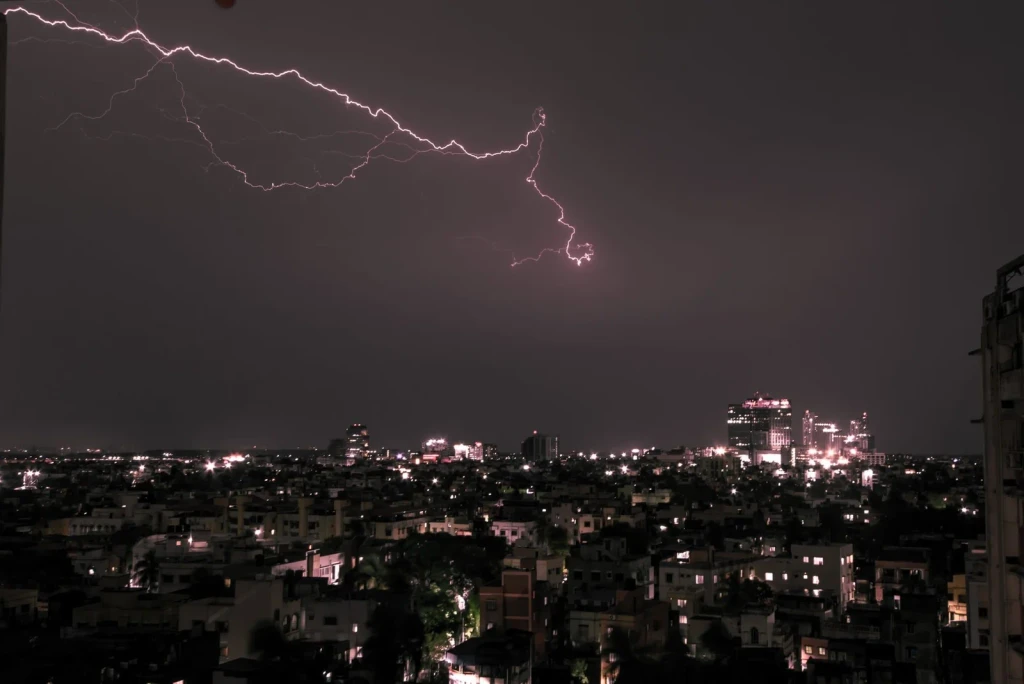
Lightning illuminates an urban skyline during a storm. The photograph captures how a single natural phenomenon can reveal the scale and structure of a city we inhabit.
Photograph by dinkar edupuganti, via Pexels.
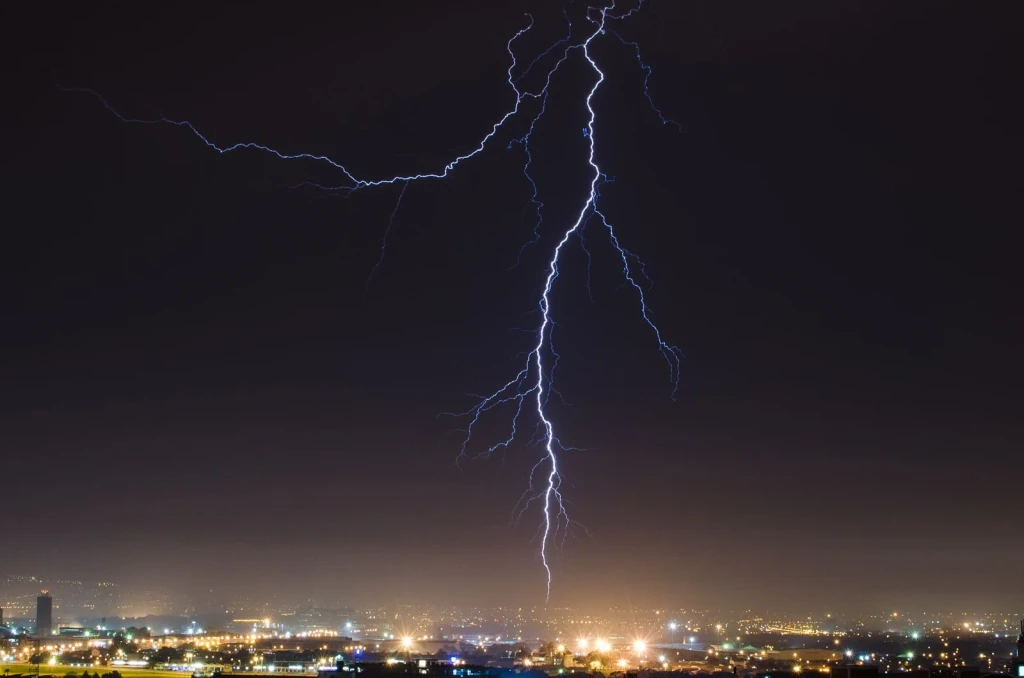
Lightning strikes above a bustling city at night. For an instant, the bolt becomes a source of illumination, turning the urban landscape into something strange and visible.
Photograph by Tomas Wells, via Pexels.
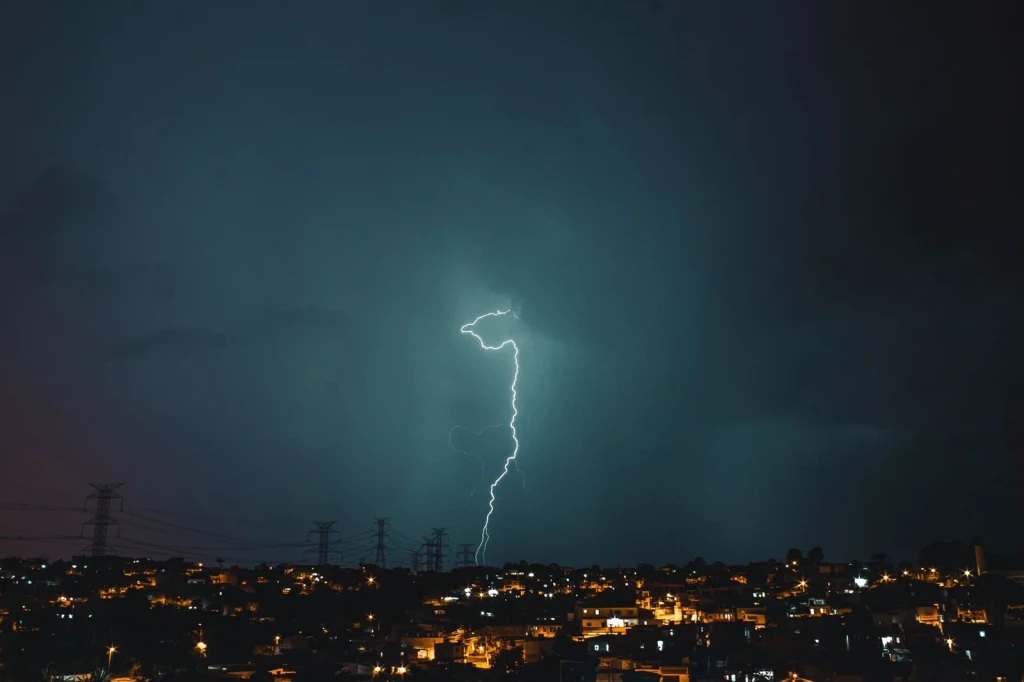
Lightning emerges from dark clouds above a city. The photograph captures the moment when electrical energy becomes visible to our eyes.
Photograph by Bruno Henrique, via Pexels.
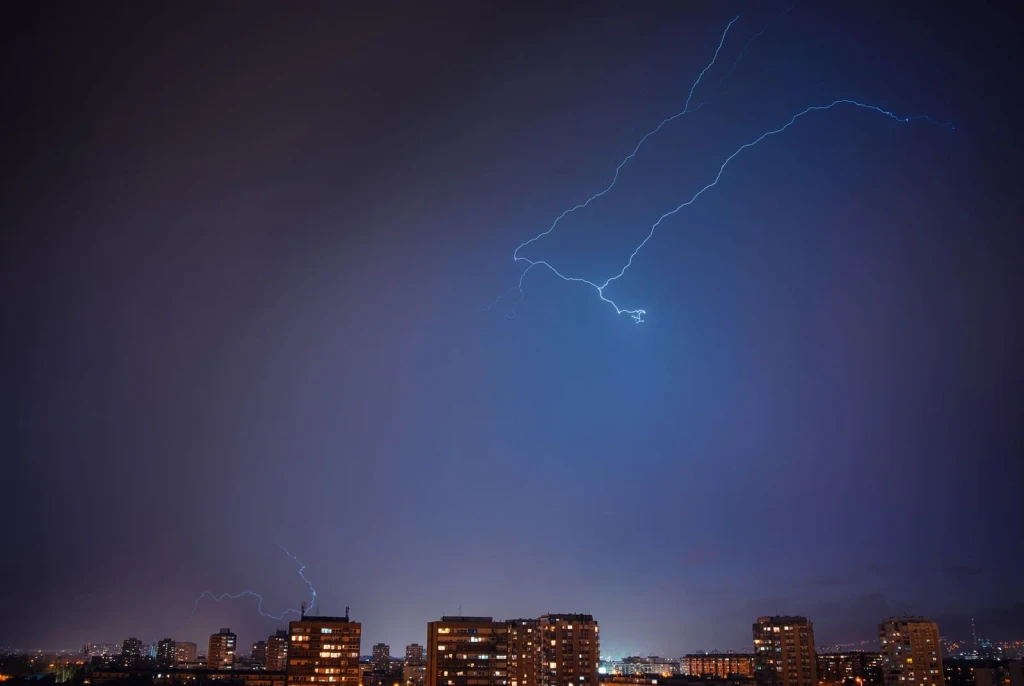
Lightning illuminates a city skyline in darkness. The storm reveals the urban landscape below, showing how nature's electricity can momentarily expose what we typically see only in daylight.
Photograph by ᛟᛞᚨᛚᚹ ᚨᚱᚲᛟᚾᛊᚲᛁ, via Pexels.
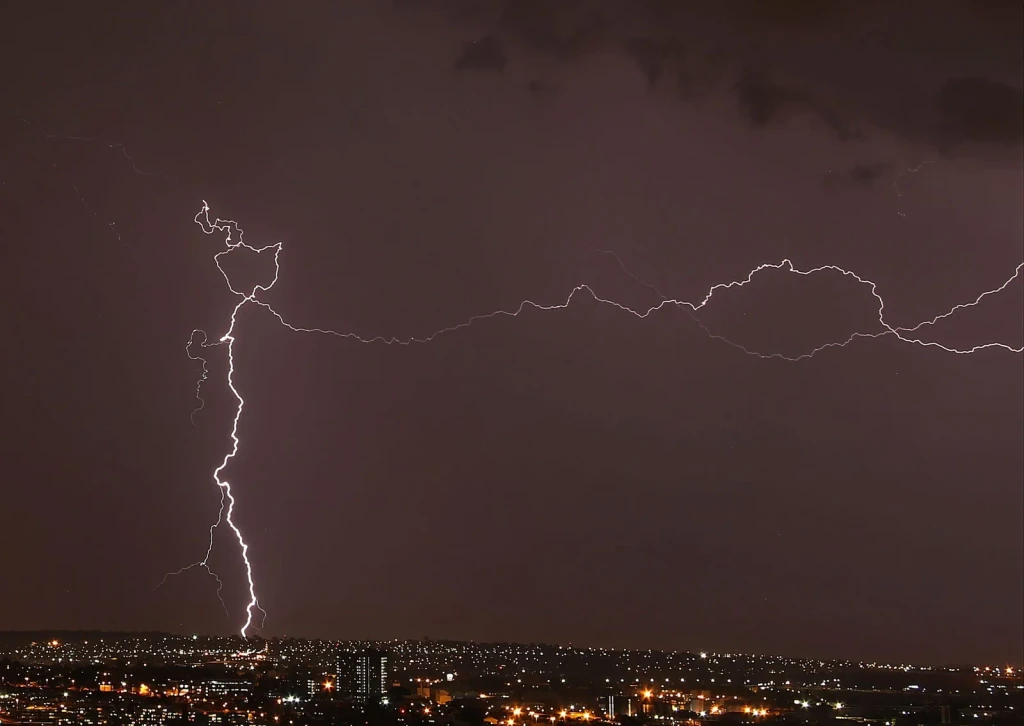
Lightning branches across the dark sky above a city. The image shows how sudden electrical discharge can command our attention and reveal what surrounds us.
Photograph by Derek Keats, via Pexels.
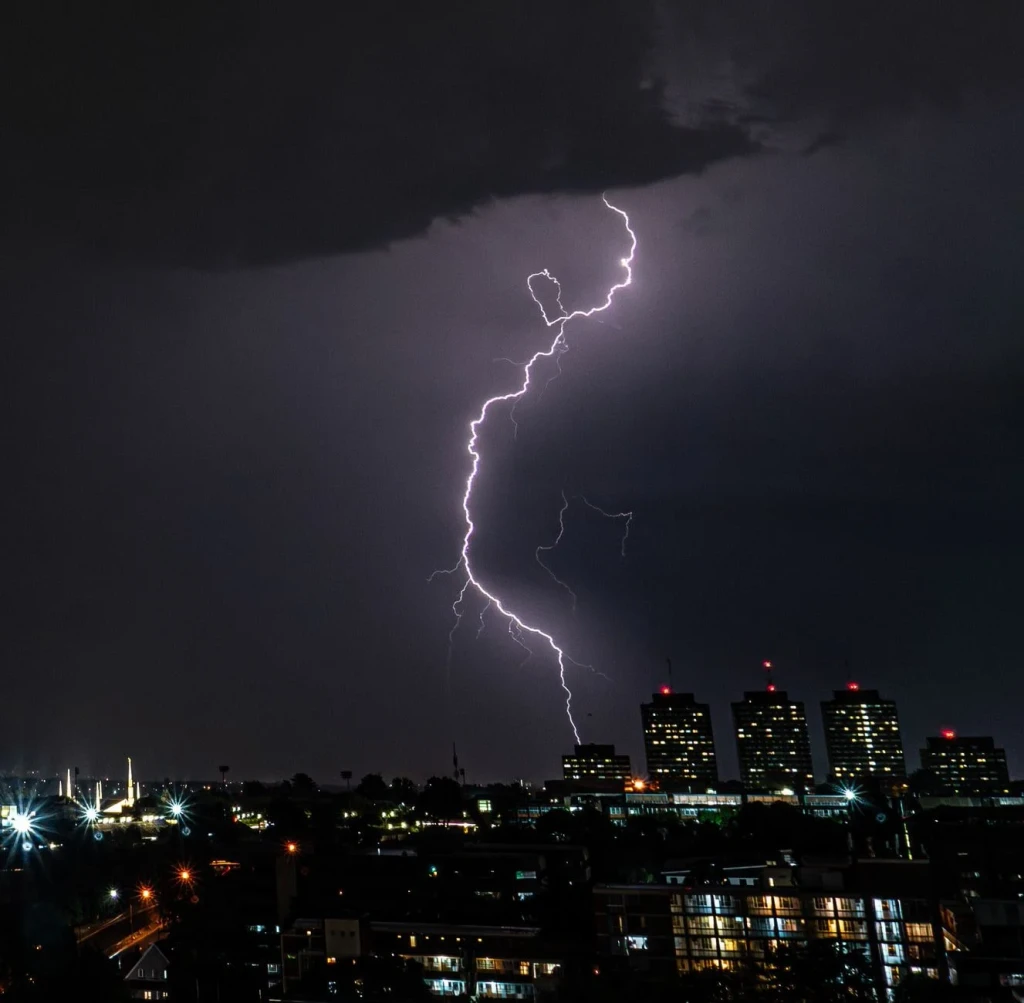
A lightning strike cuts through the darkness above an urban skyline during a thunderstorm. The image shows how the storm's electricity briefly teaches us the shape of the city beneath.
Photograph by Kelly E, via Pexels.
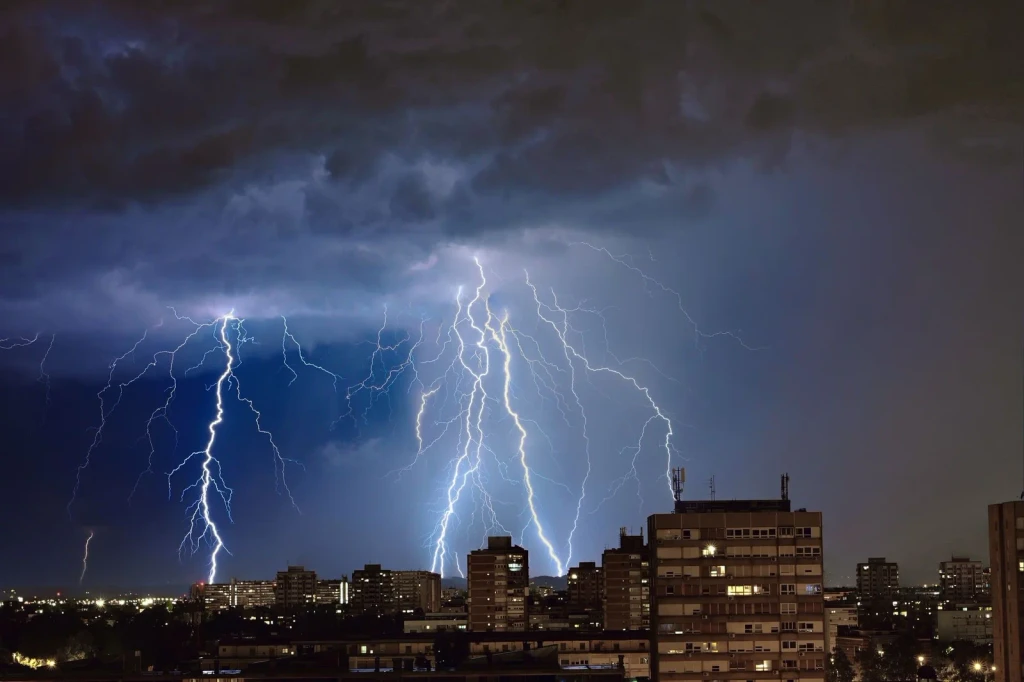
Captivating lightning bolts illuminate the night sky over Zagreb, Croatia, during a thunderstorm.
Photograph by ᛟᛞᚨᛚᚹ ᚨᚱᚲᛟᚾᛊᚲᛁ, via Pexels.
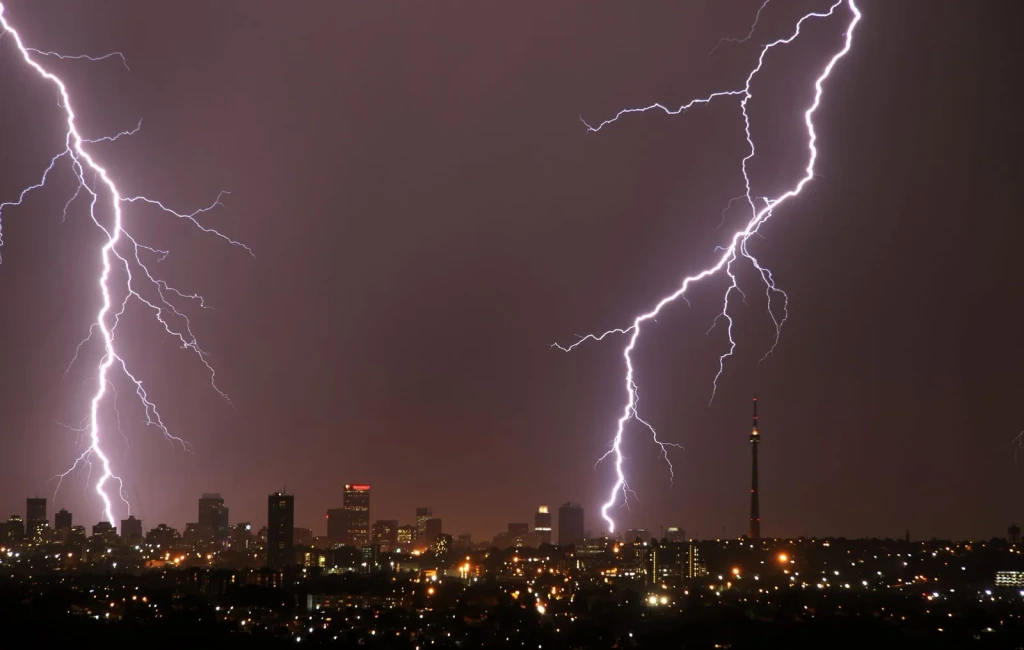
Lightning strikes illuminate a nighttime skyline during a thunderstorm. The photograph captures the moment when natural electricity reveals the geography of the urban landscape below.
Photograph by Derek Keats, via Pexels.
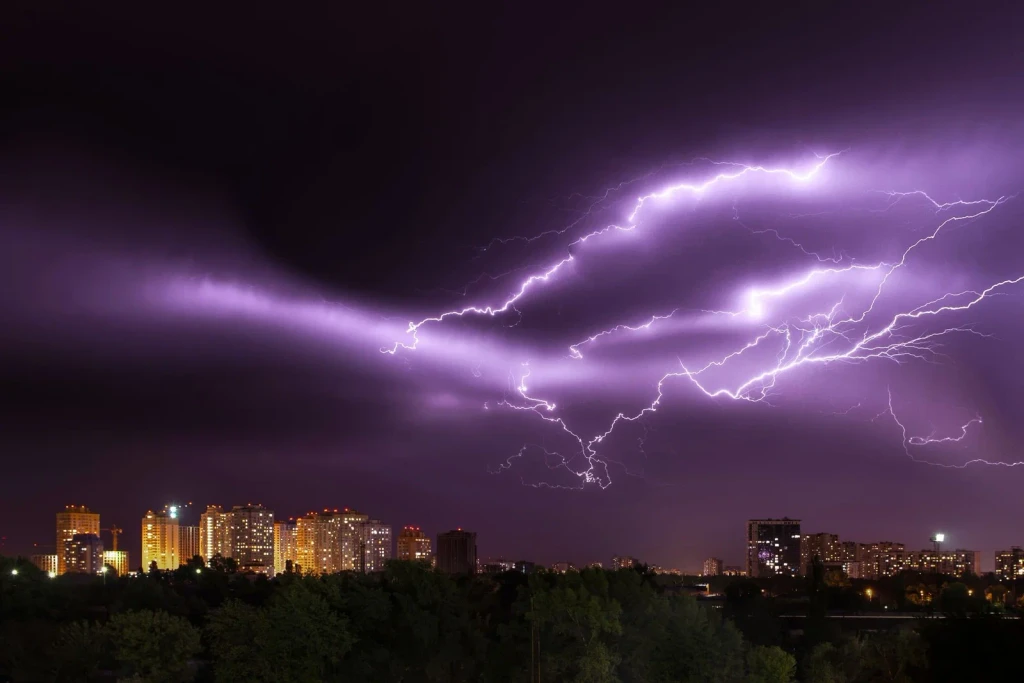
A lightning strike illuminates a contemporary city at night. The image juxtaposes nature's power with human architecture.
Photograph by Dmitry Zvolskiy, via Pexels.
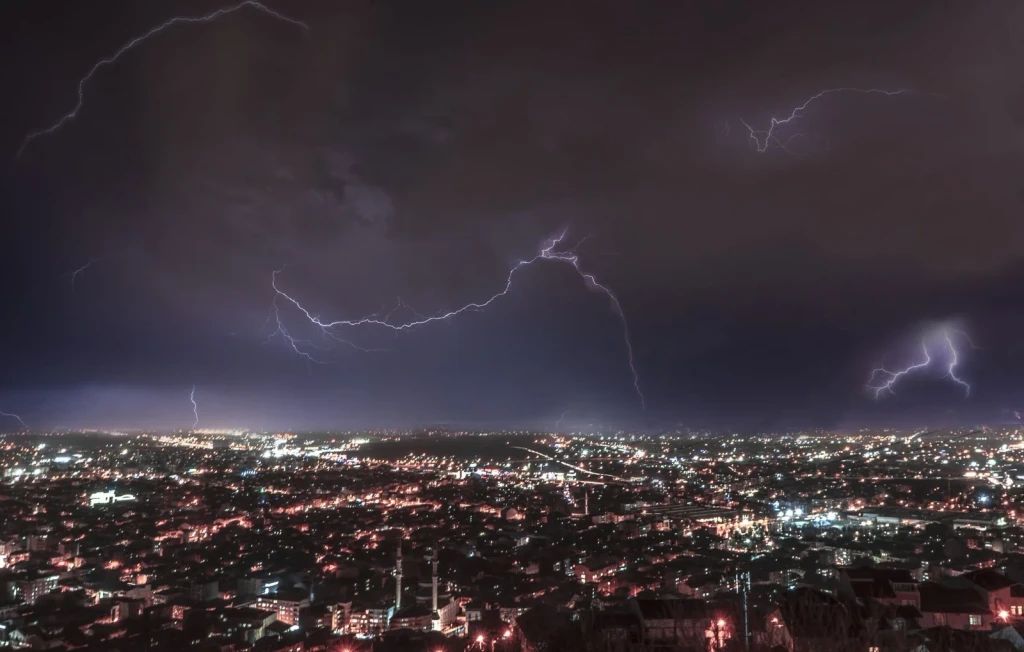
Dramatic lightning strikes light up an urban landscape at night, mingling with the city's own electric glow. Two sources of light. two kinds of power converging in one frame.
Photograph by Onur TAŞKINSOY, via Pexels.
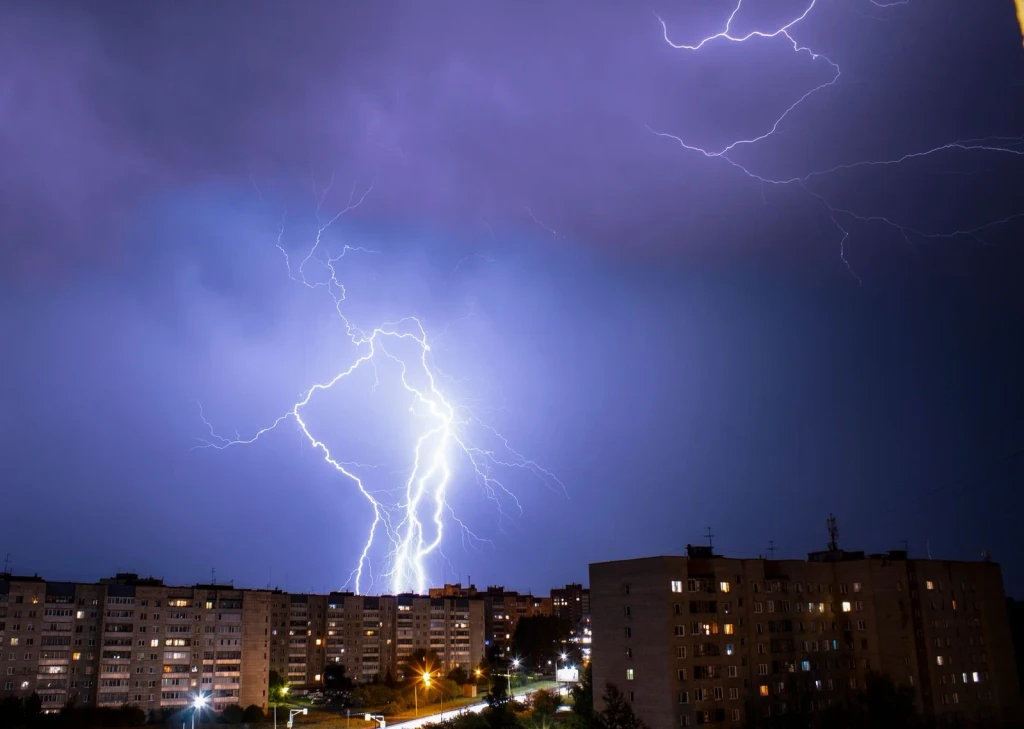
A lightning bolt cuts through the night sky above an urban landscape. The photograph captures how this natural force illuminates the built environment.
Photograph by Danila Popov, via Pexels.
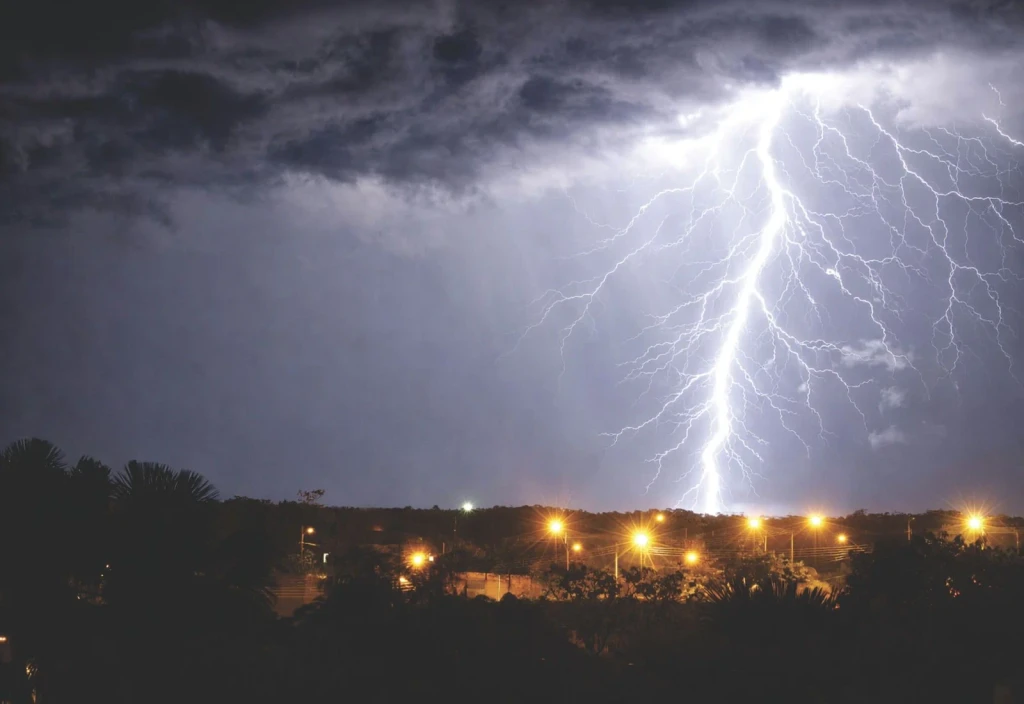
A vivid lightning strike illuminates the night sky. The photograph captures the moment when electricity reveals what darkness conceals.
Photograph by Gleive Marcio Rodrigues de Souza, via Pexels.
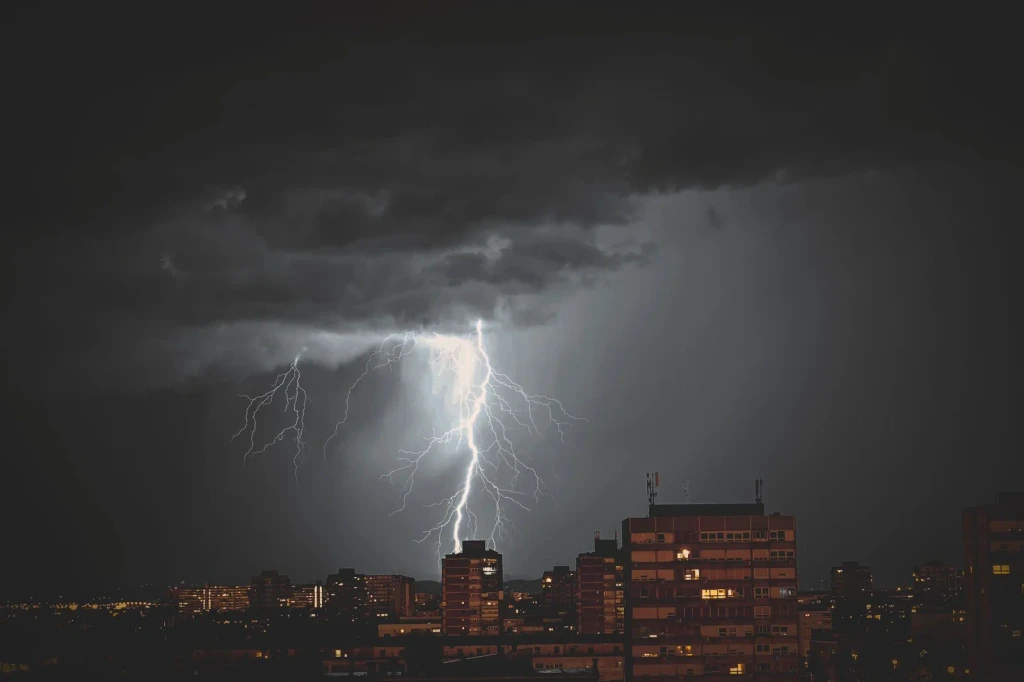
A lightning storm illuminates the skyline at night. The photograph shows how sudden electricity can transform our view of a familiar place.
Photograph by ᛟᛞᚨᛚᚹ ᚨᚱᚲᛟᚾᛊᚲᛁ, via Pexels.
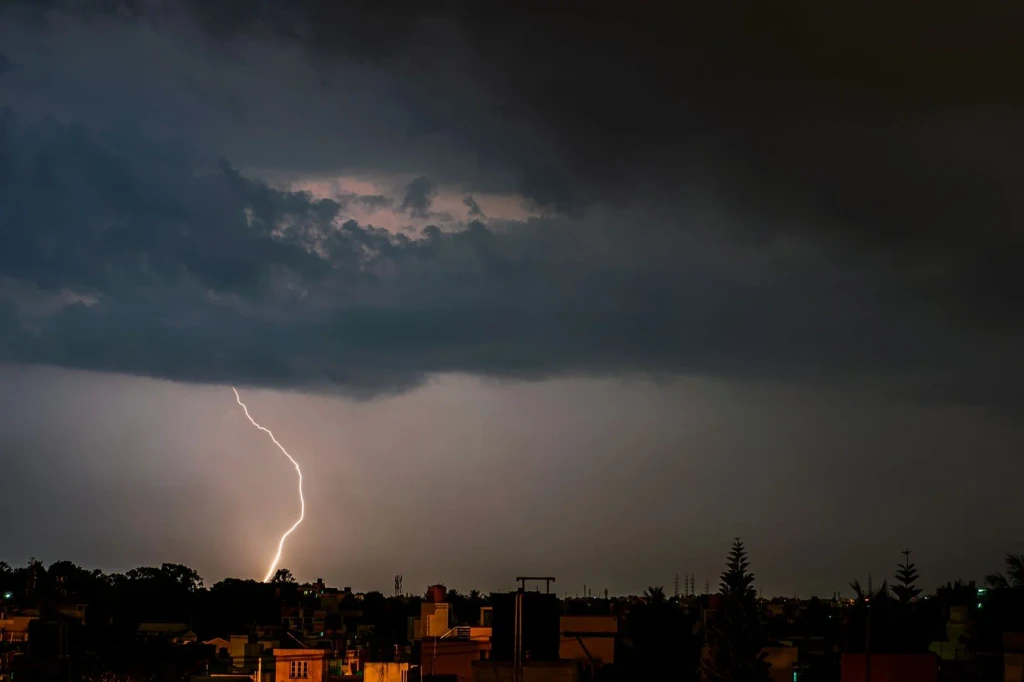
A lightning strike tears across dark storm clouds above a city. The bolt reveals the raw power of nature, rendering the nighttime skyline in stark relief.
Photograph by Deepak Ramesha, via Pexels.
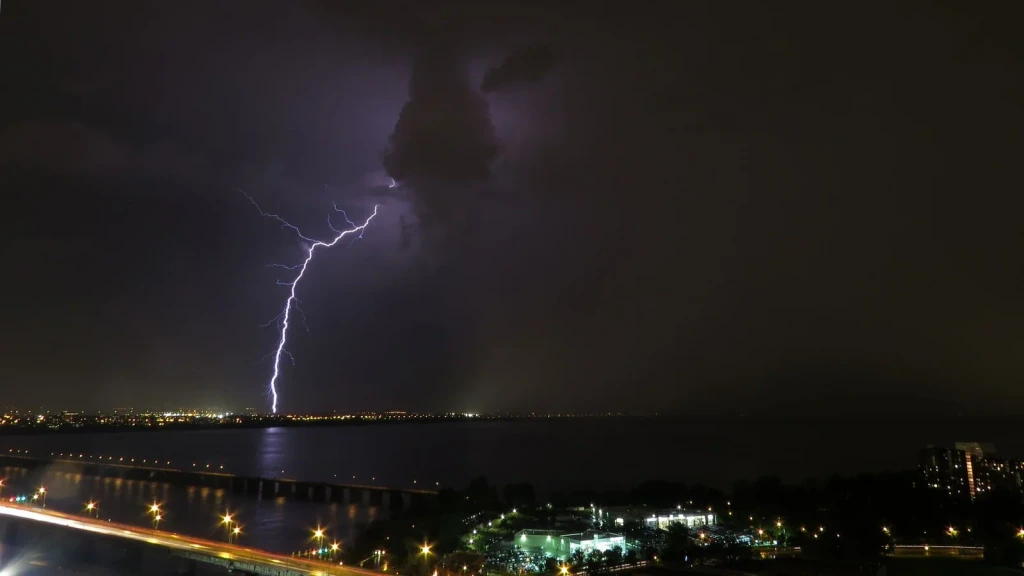
A powerful lightning bolt breaks through the night sky above a distant cityscape. The strike demonstrates lightning's raw energy and its ability to suddenly transform darkness into visibility.
Photograph by Ella Wei, via Pexels.
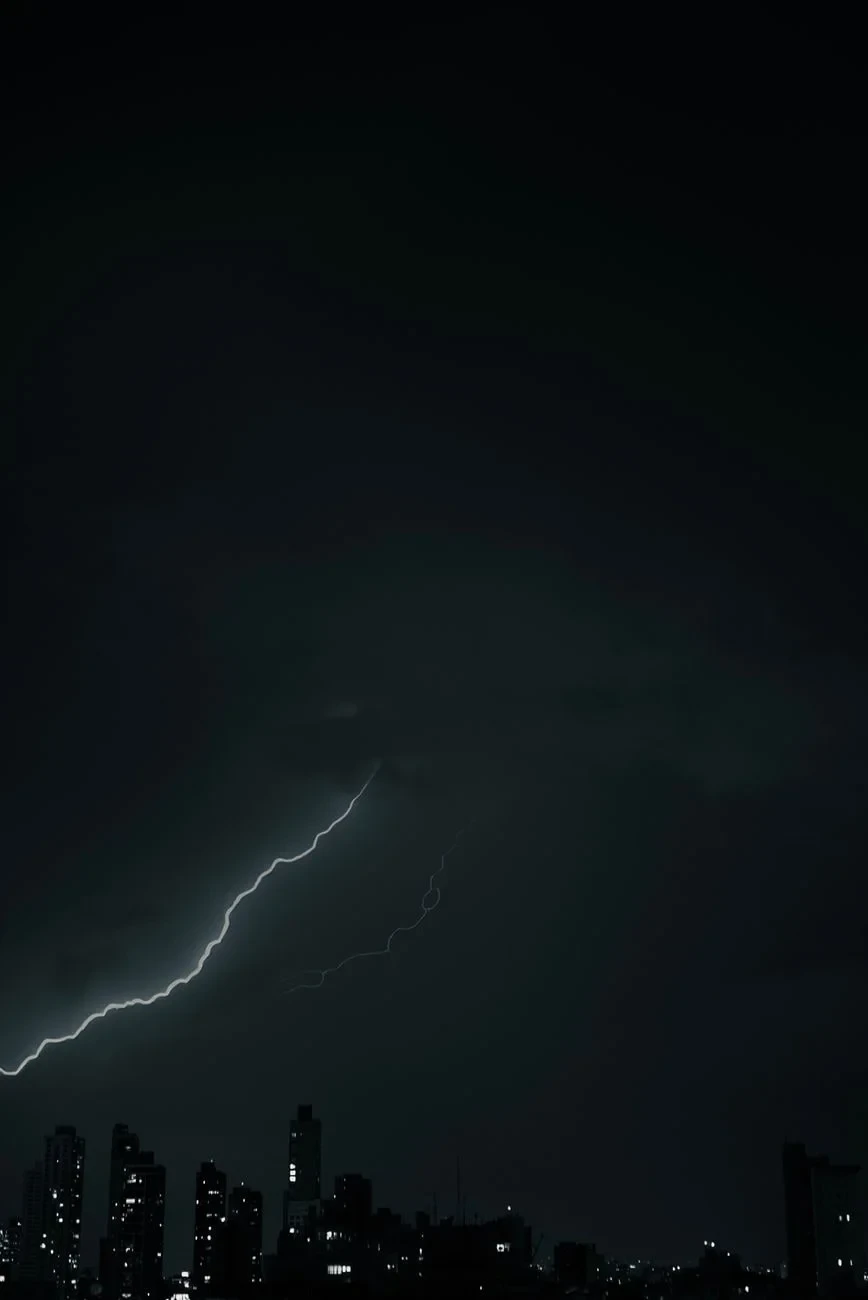
In black and white, a single lightning bolt dominates the frame above a city skyline. The stark contrast emphasizes the bolt's defining geometry.
Photograph by Isabella Mendes, via Pexels.
