3D Gallery
How Rotting Fish Became Perfect Sushi
Enter gallery
How Rotting Fish Became Perfect Sushi is a 3D virtual gallery on MyGallery3D, a walkable online exhibition of 12 works. Step inside and explore it in your browser: no app, no headset.
Walk through this 3D virtual gallery of sushi in your browser, and start with the fact that the rice used to be thrown away.
The oldest form, narezushi, was a way to preserve freshwater fish. Fish was packed in salt and rice and left to ferment for months; the lacto-fermentation stopped it spoiling, and then the rice was discarded. It came from Southeast Asia, probably the Mekong basin, and a Chinese dictionary of the fourth century already describes it. Sushi means sour-tasting. Vinegar replaced the fermentation only in the Edo period.
The old sushi still exists. Near Lake Biwa in Shiga Prefecture, funazushi is made from nigorobuna, a wild goldfish endemic to the lake. The fish are scaled and gutted through the gills, the roe kept intact, packed in salt for a year, then repacked in fermented rice annually for up to four more. Eighteen generations of the Kitamura family have made it at Kitashina since 1619.
Nigirizushi was street food. Around 1824 the chef Hanaya Yohei made or perfected it at his shop in Ryōgoku: an oblong mound of rice with a slice of fish over it, eaten at once. His rice balls were about three times the size of today's, with half the vinegar and more salt. The red vinegar he used, aka-su, was fermented from sake lees.
The most familiar sushi fish is not traditional. Raw salmon can carry Anisakis nematodes, so before refrigeration Japan did not eat it raw. Salmon sushi arrived only in the late 1980s, when Norwegian fishing companies with an oversupply of farmed fish went looking for a buyer and struck a deal with the Japanese company Nichirei for 5000 tons.
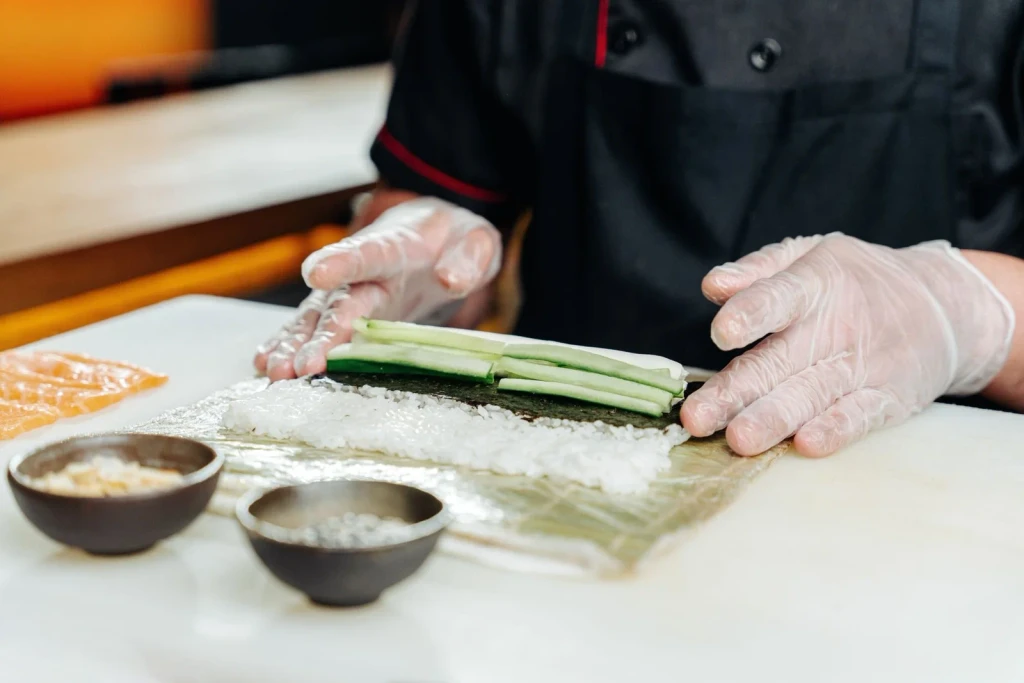
A chef combines rice, cucumber, and salmon into sushi. The image documents a moment of creation within traditional Japanese culinary practice.
Photograph by Ivan S, via Pexels.
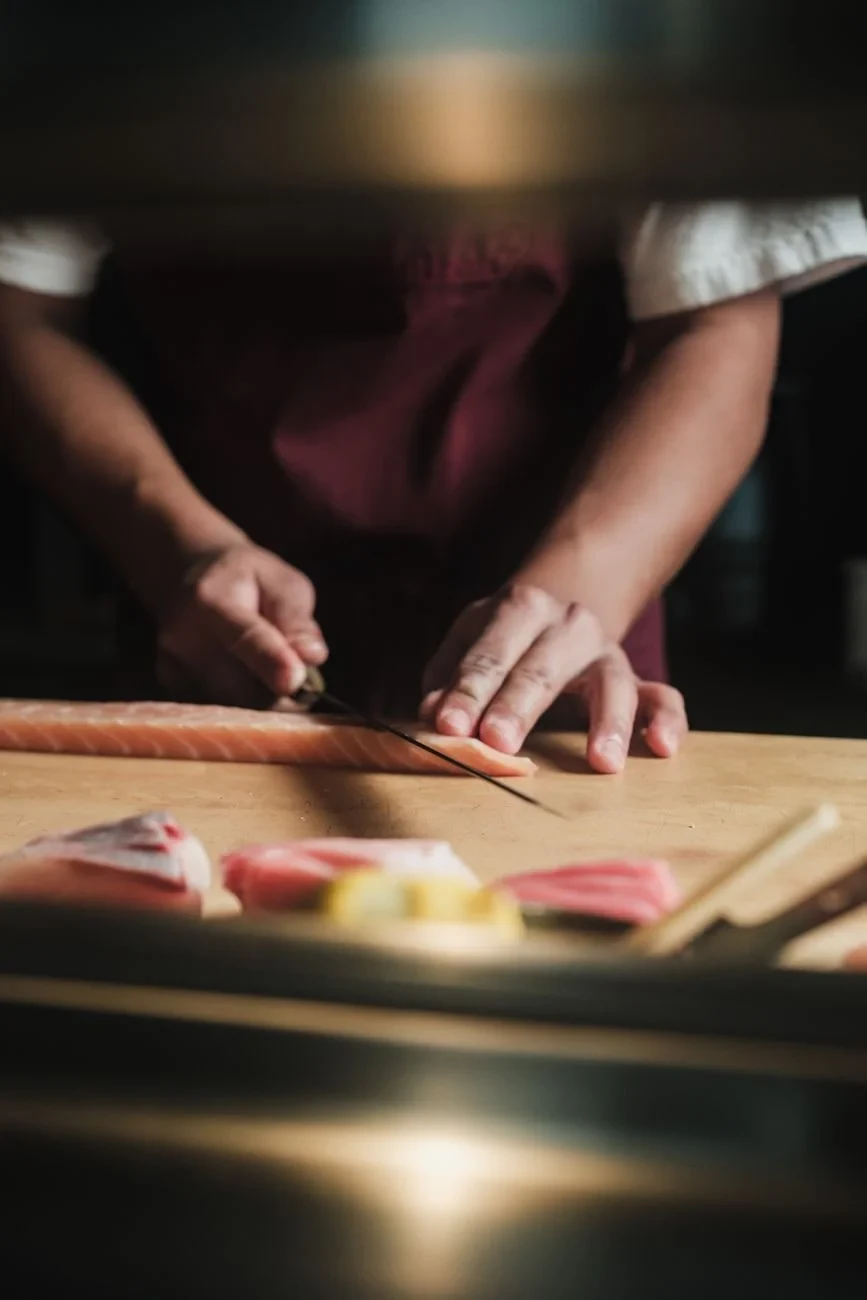
Fresh salmon yields to the knife. This slicing is where raw ingredient becomes sushi.
Photograph by Airam Dato-on, via Pexels.
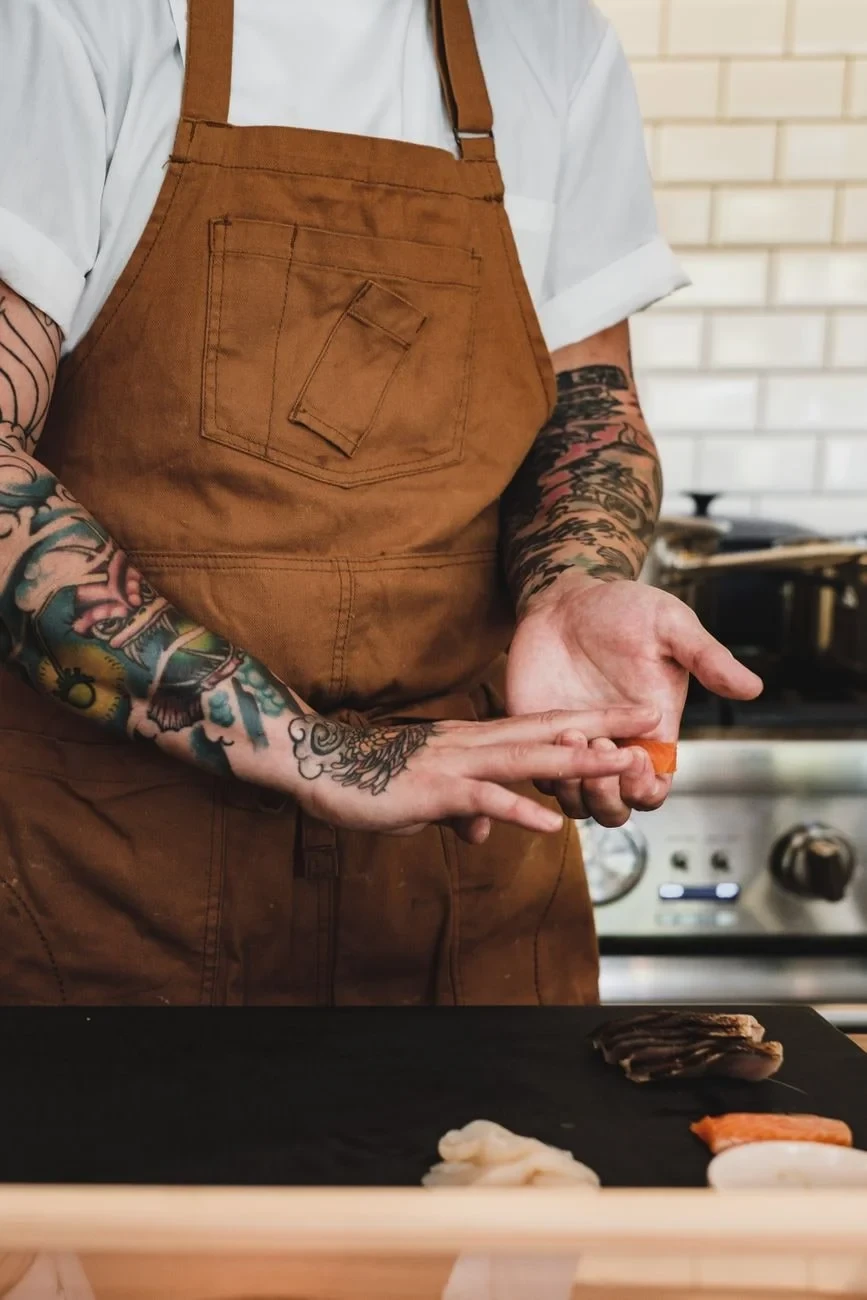
A tattooed chef prepares sushi in a contemporary kitchen setting. The photograph suggests how traditional techniques exist within modern culinary contexts.
Photograph by Airam Dato-on, via Pexels.
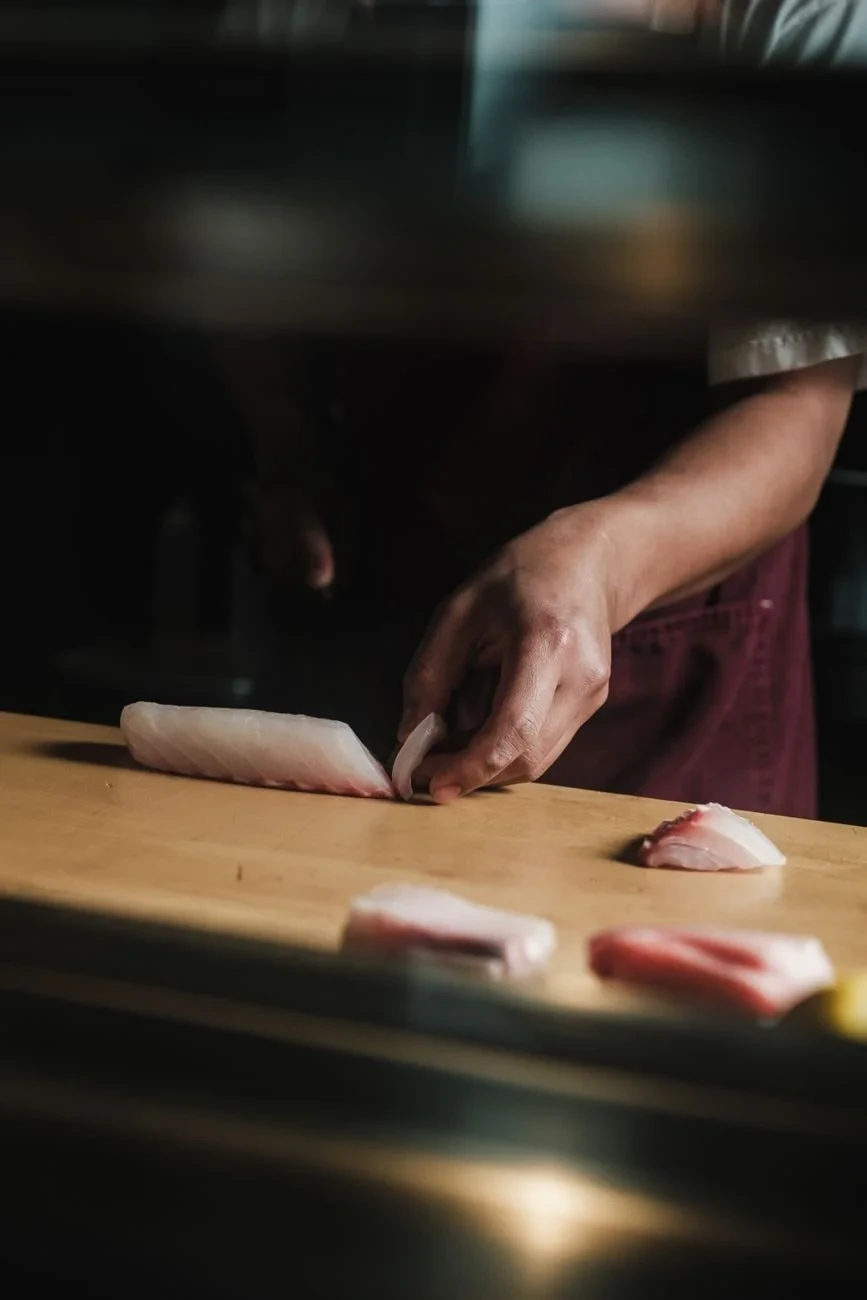
A close-up of slicing sushi on a wooden board. This moment captures one precise gesture in a longer process of culinary transformation.
Photograph by Airam Dato-on, via Pexels.
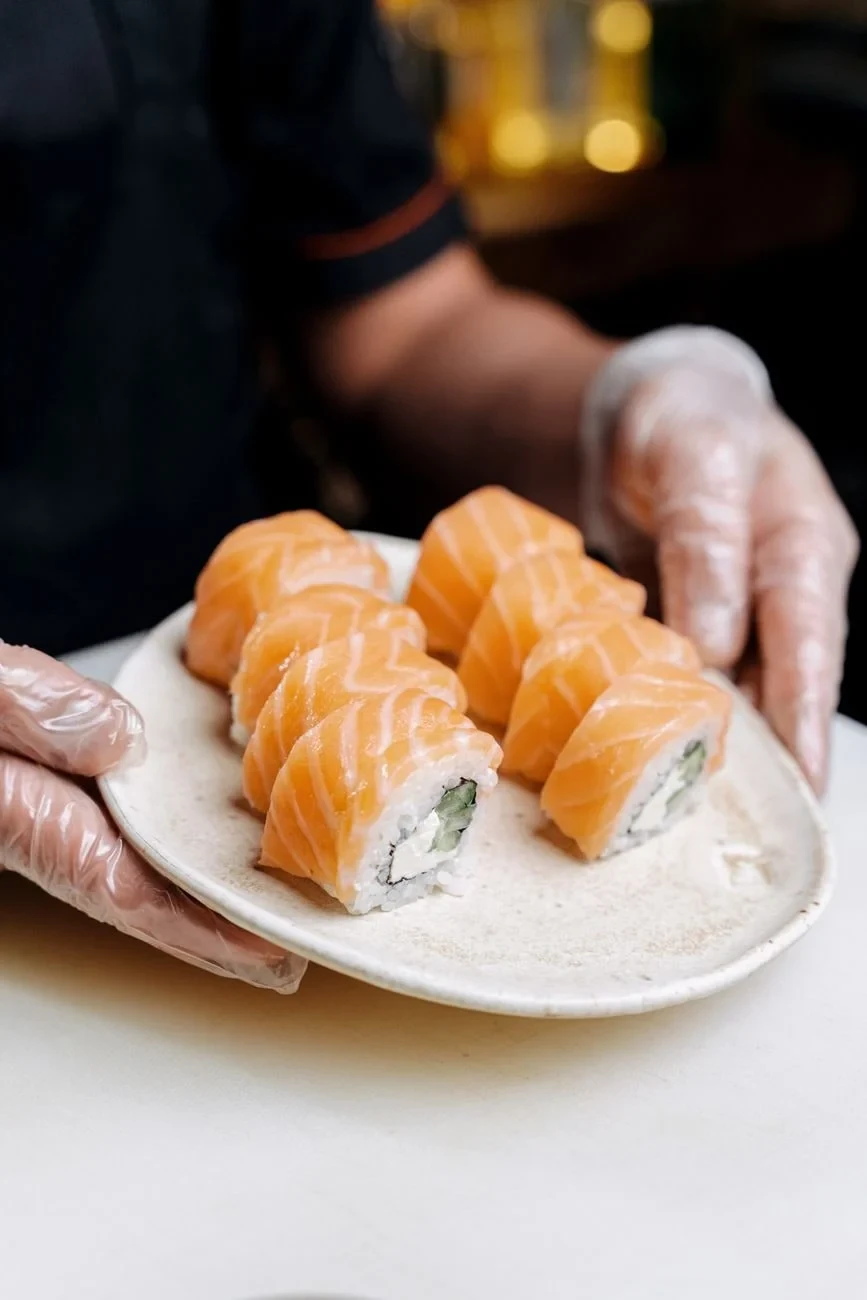
A chef holds a plate of salmon sushi rolls, prepared for service. The image marks the end point of careful preparation.
Photograph by Ivan S, via Pexels.
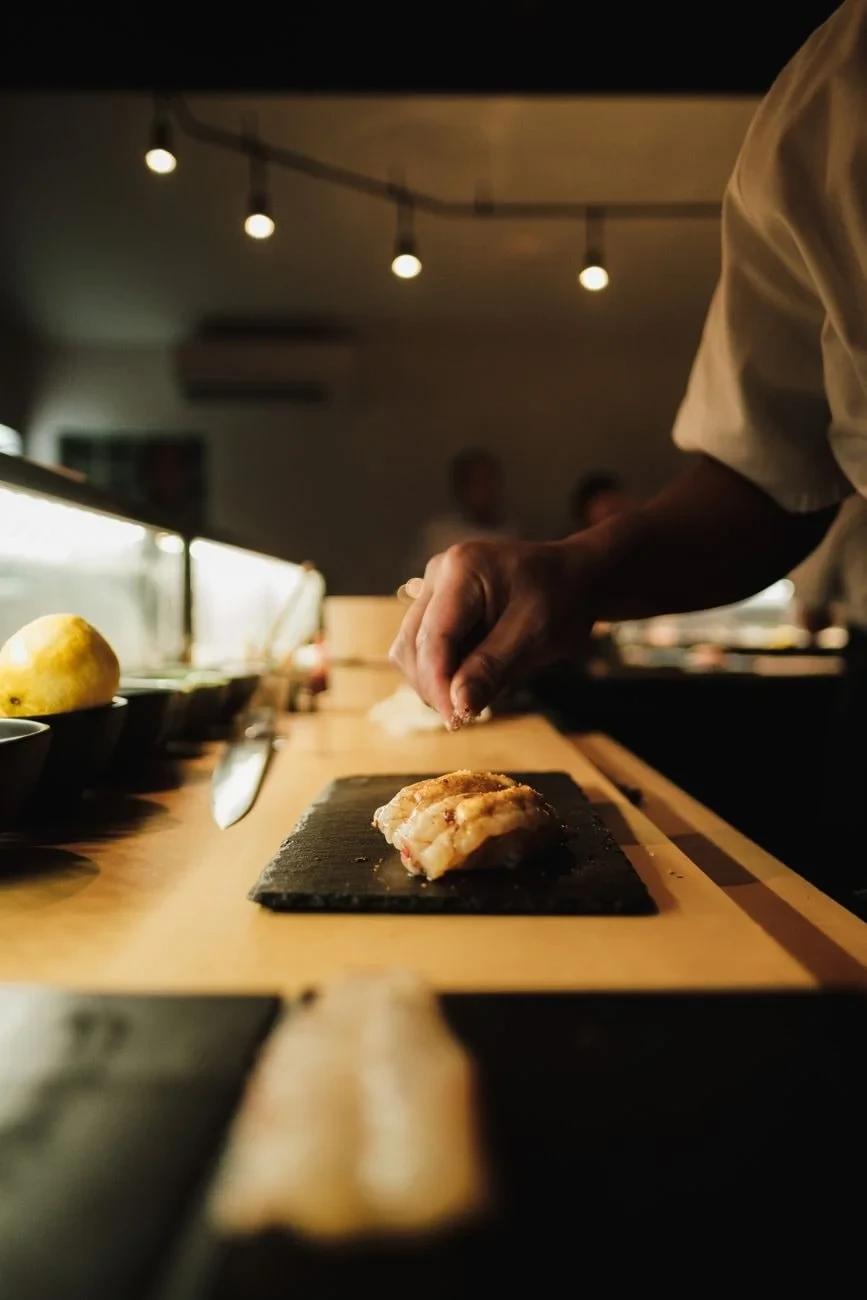
Sushi takes shape under a chef's hands in warm light. Preparation becomes performance in the restaurant kitchen.
Photograph by Airam Dato-on, via Pexels.
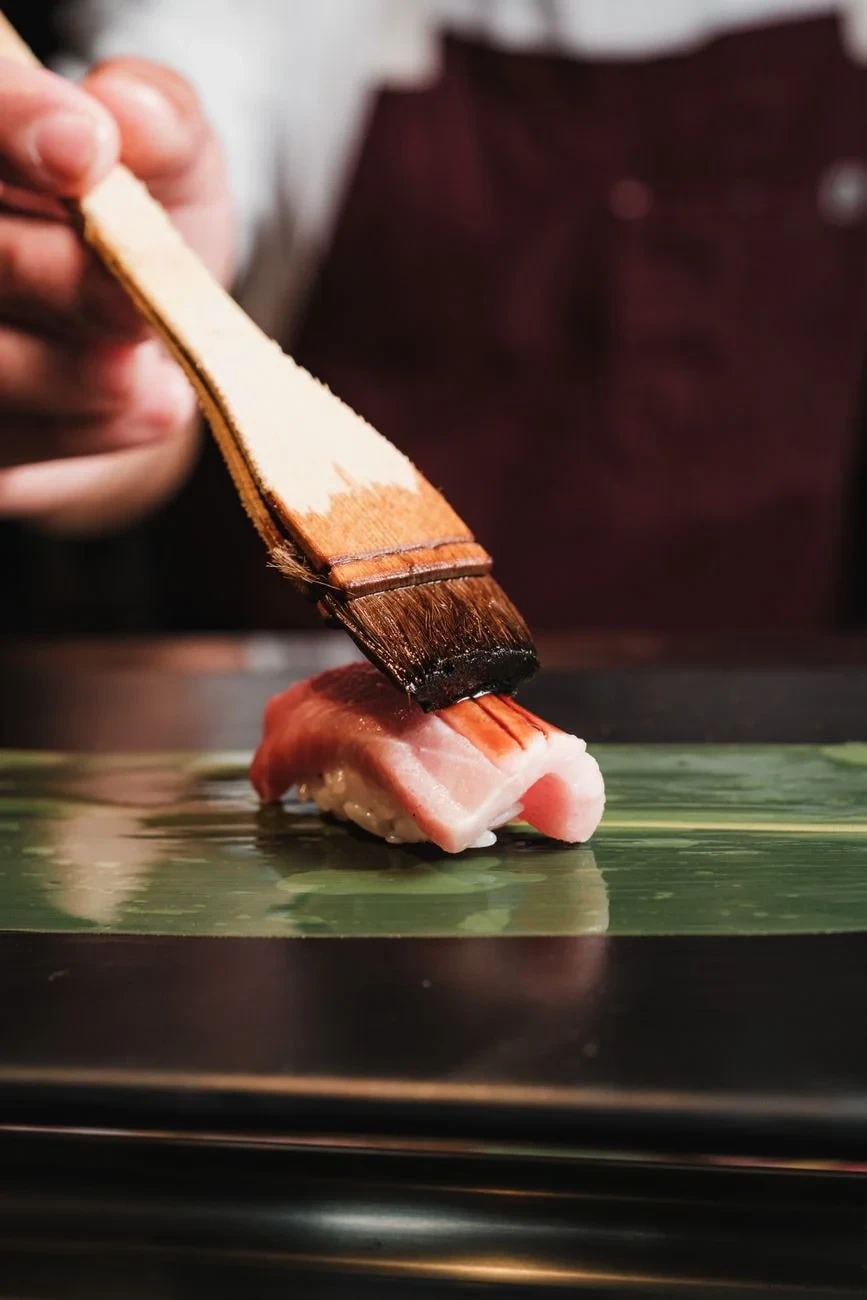
A chef applies glaze to finished nigiri with precision. The brush completes what time and technique have already transformed.
Photograph by Airam Dato-on, via Pexels.
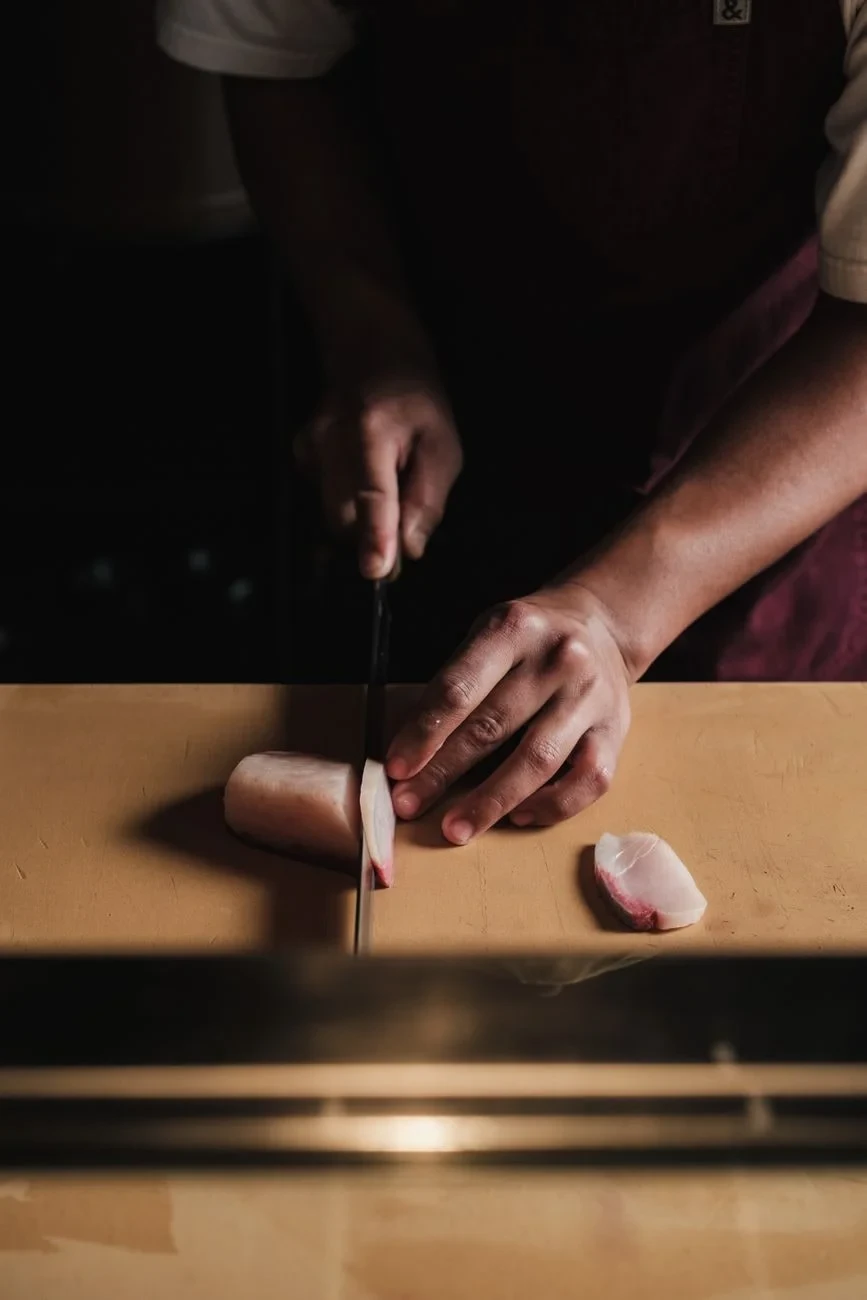
Blade meets sushi in a traditional kitchen. Precision completes the transformation.
Photograph by Airam Dato-on, via Pexels.
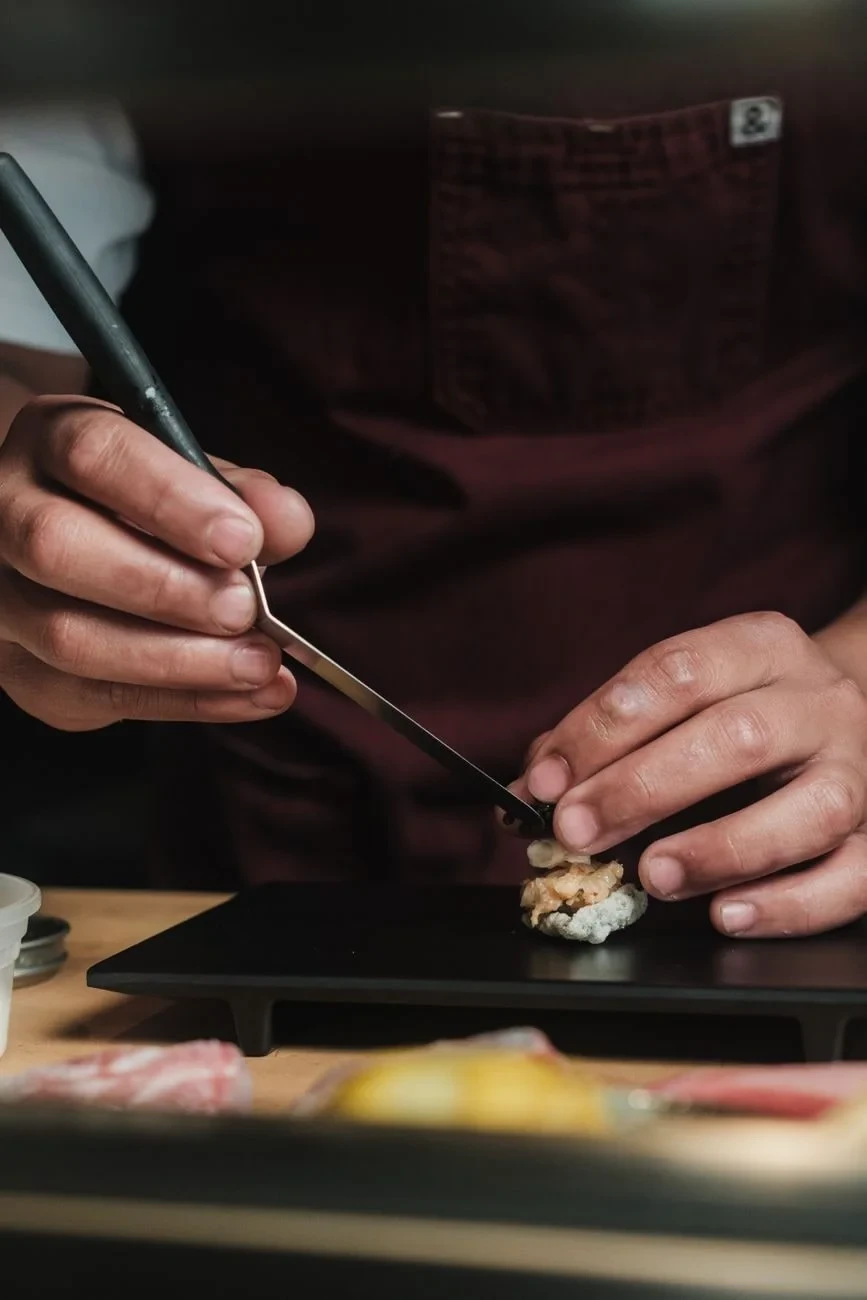
A chef demonstrates skilled technique in a professional kitchen. The careful preparation of nigiri suggests the discipline required to transform simple ingredients into refined cuisine.
Photograph by Airam Dato-on, via Pexels.
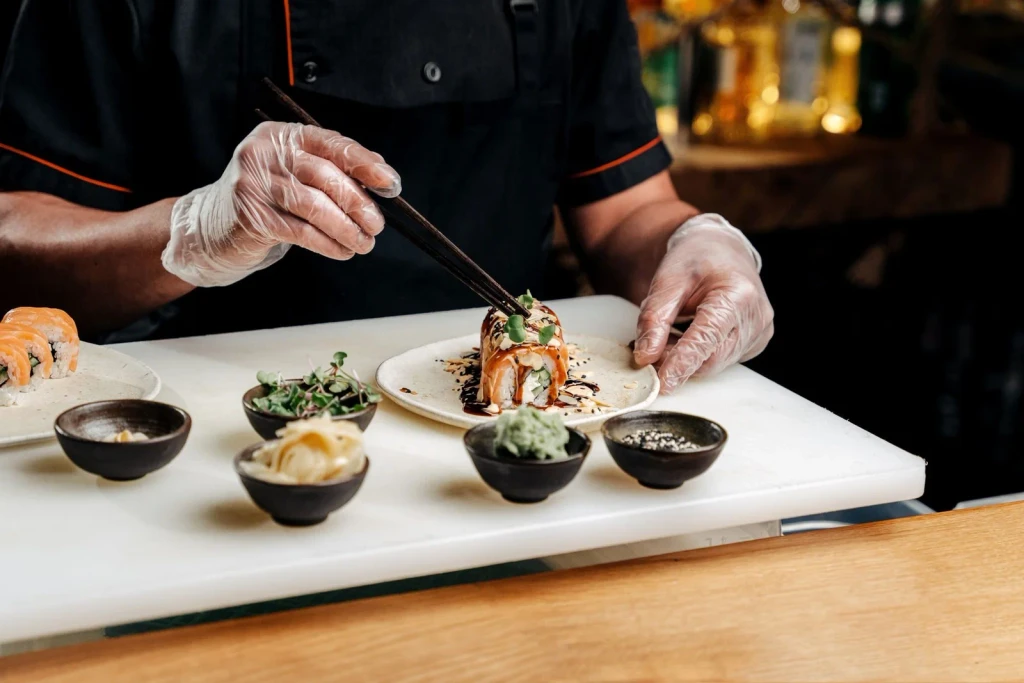
A chef uses chopsticks to organize sushi with care. The composition reveals how presentation is itself part of the craft.
Photograph by Ivan S, via Pexels.
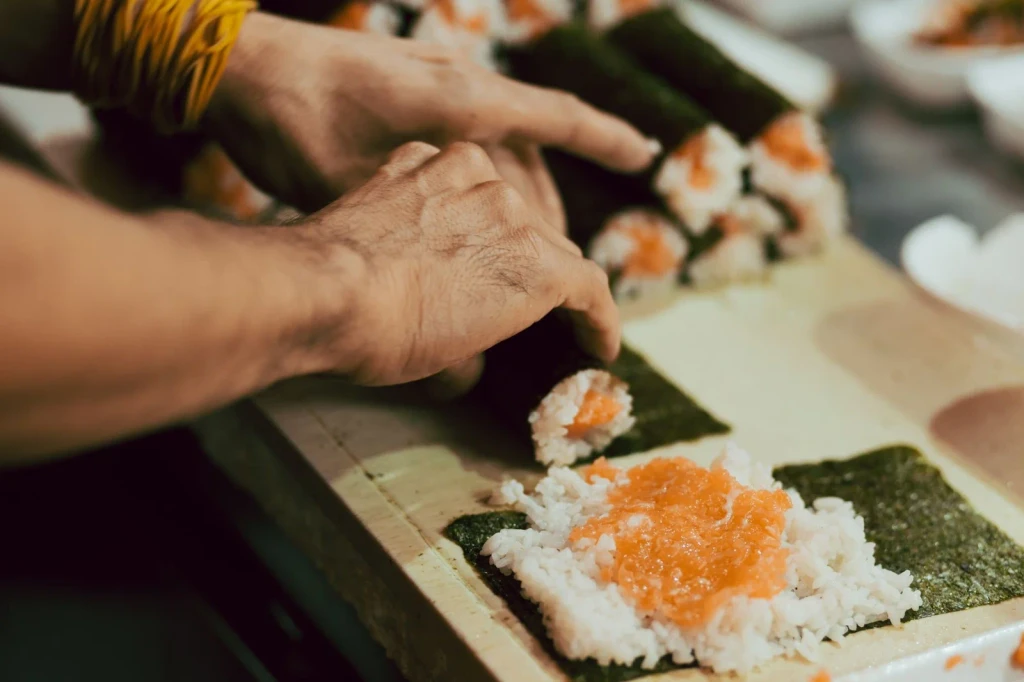
Rice, salmon, and seaweed align on seaweed. The ingredients of perfect sushi, arranged.
Photograph by Th2city Santana, via Pexels.
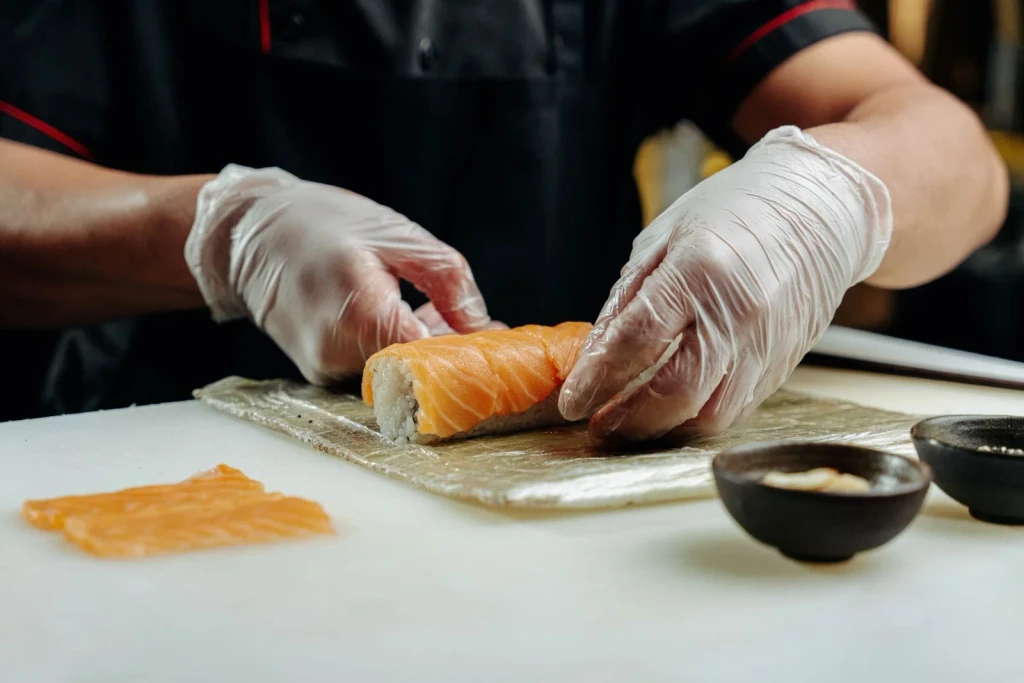
A chef's hands form a salmon roll in close detail. The moment where components become one.
Photograph by Ivan S, via Pexels.
