3D Gallery
The Soul Inside a Puppet
Enter gallery
The Soul Inside a Puppet is a 3D virtual gallery on MyGallery3D, a walkable online exhibition of 13 works. Step inside and explore it in your browser: no app, no headset.
This 3D virtual museum of puppetry is yours to walk through in your browser. Look at the hands, not the faces.
In Japanese bunraku, three puppeteers work one figure in full view of the audience, dressed in black. A performer spends roughly ten years on the feet, ten more on the left hand, and ten on the heads of secondary characters before being trusted with the head of a lead. Thirty years to be allowed to hold a face. Some historians think puppets came before actors.
A bunraku head is a machine. Around 80 types are broadly recognised, and the Japan Arts Council lists 129. Some carry tricks worked by a string: pull it and the gabu splits a beautiful woman's mouth open to her ears, grows fangs and golden horns, and turns her eyes gold. One head, one woman, one demon. The hair is finished with water and beeswax, never oil.
The training is long; the standing was low. Japan's kugutsu-mawashi were itinerants, treated as outcasts by the richer, educated class, the men working small hand puppets while the women danced and did magic tricks to tempt travellers. In Song dynasty China, puppets played to all social classes including the courts, and yet the puppeteers, as in Europe, were counted a lower stratum.
In Java, a wayang is played from midnight to dawn by a dalang, who is both artist and spiritual leader, and the audience watches from both sides of the screen. The puppets are cut from buffalo hide and lit from behind. In 1035 CE the poet Mpu Kanwa wrote that a man is steadfast and just a wayang screen away from the Mover of the World.
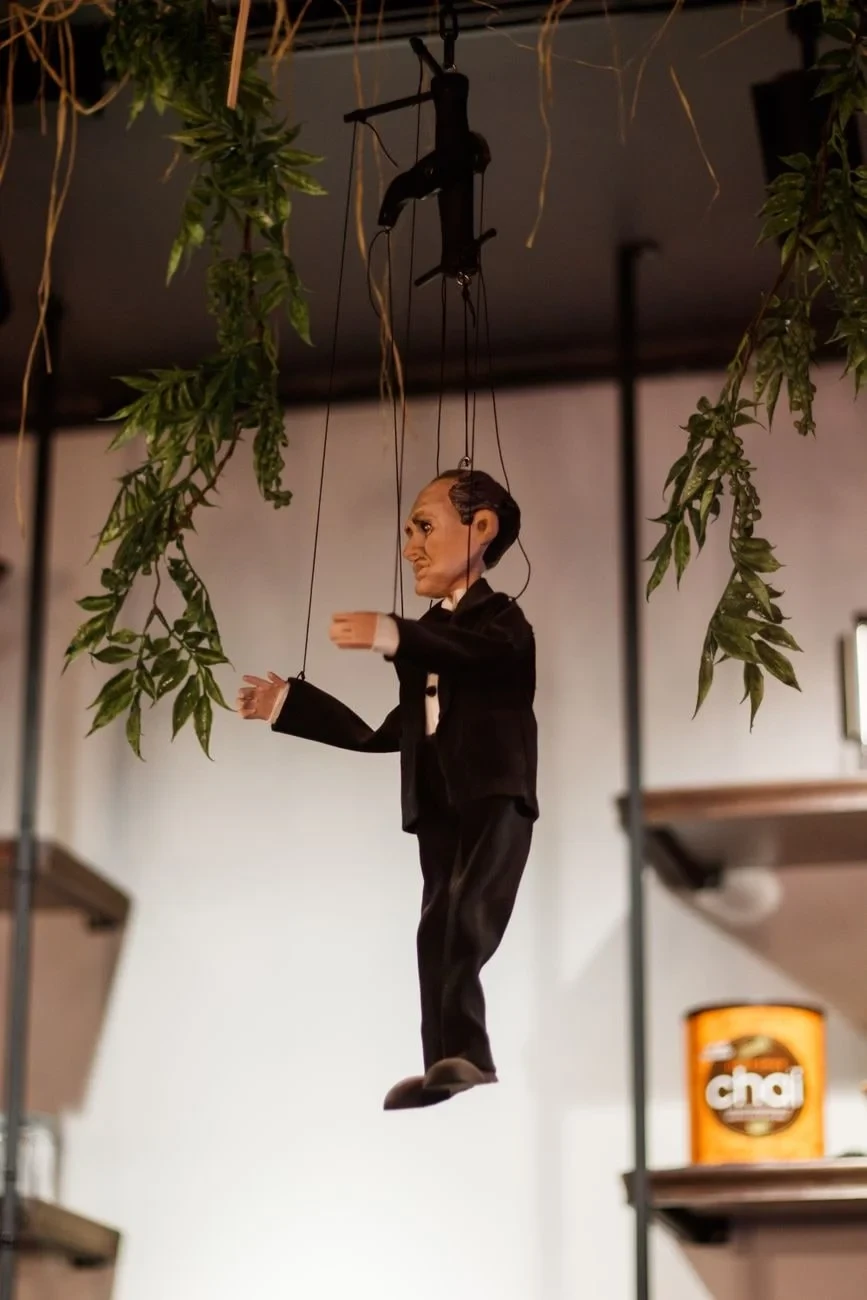
A marionette in business attire hangs indoors among plants. The displacement of a puppet in an everyday domestic space raises questions about control and identity.
Photograph by Ata Ebem, via Pexels.
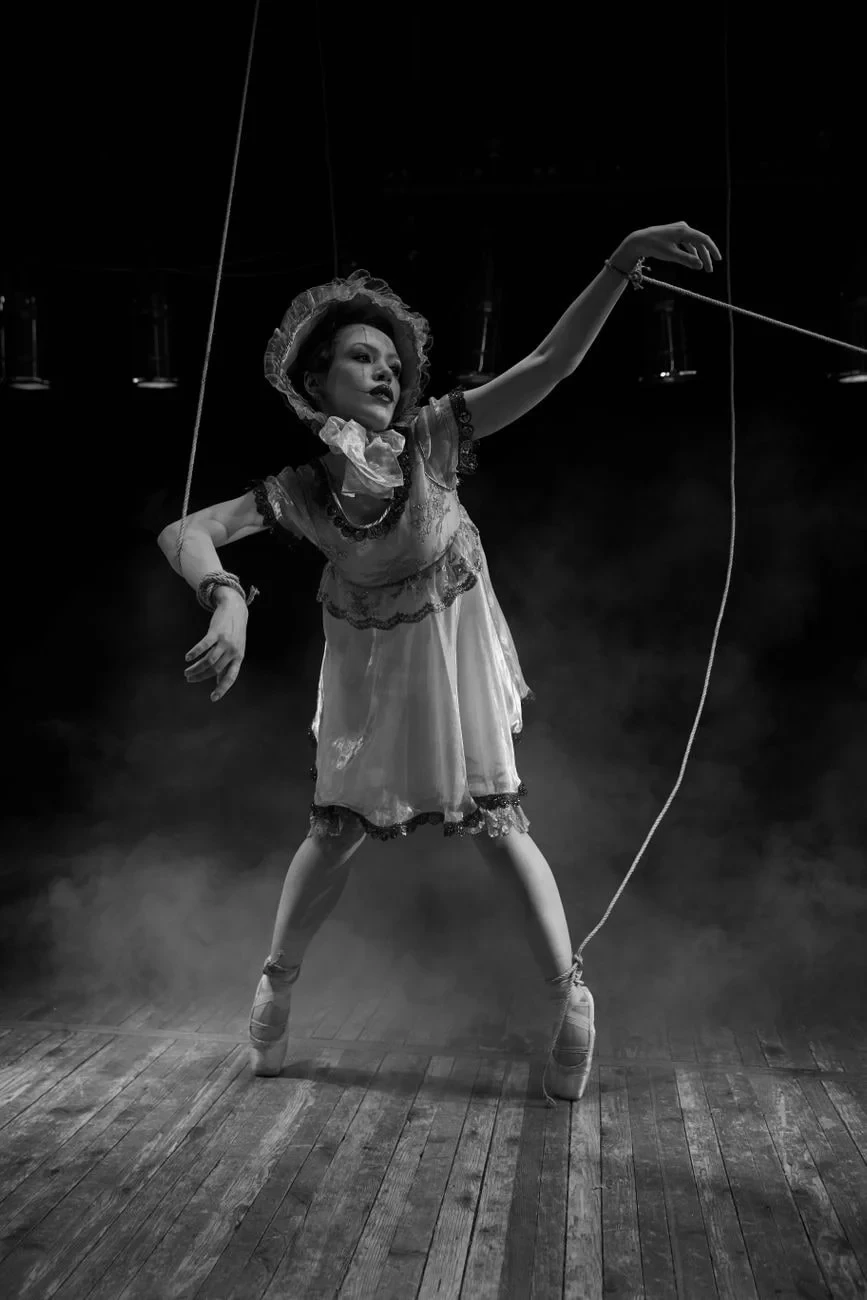
A ballet dancer poses as a puppet on stage. The black and white image collapses the boundary between performer and controlled object.
Photograph by Pexels User, via Pexels.
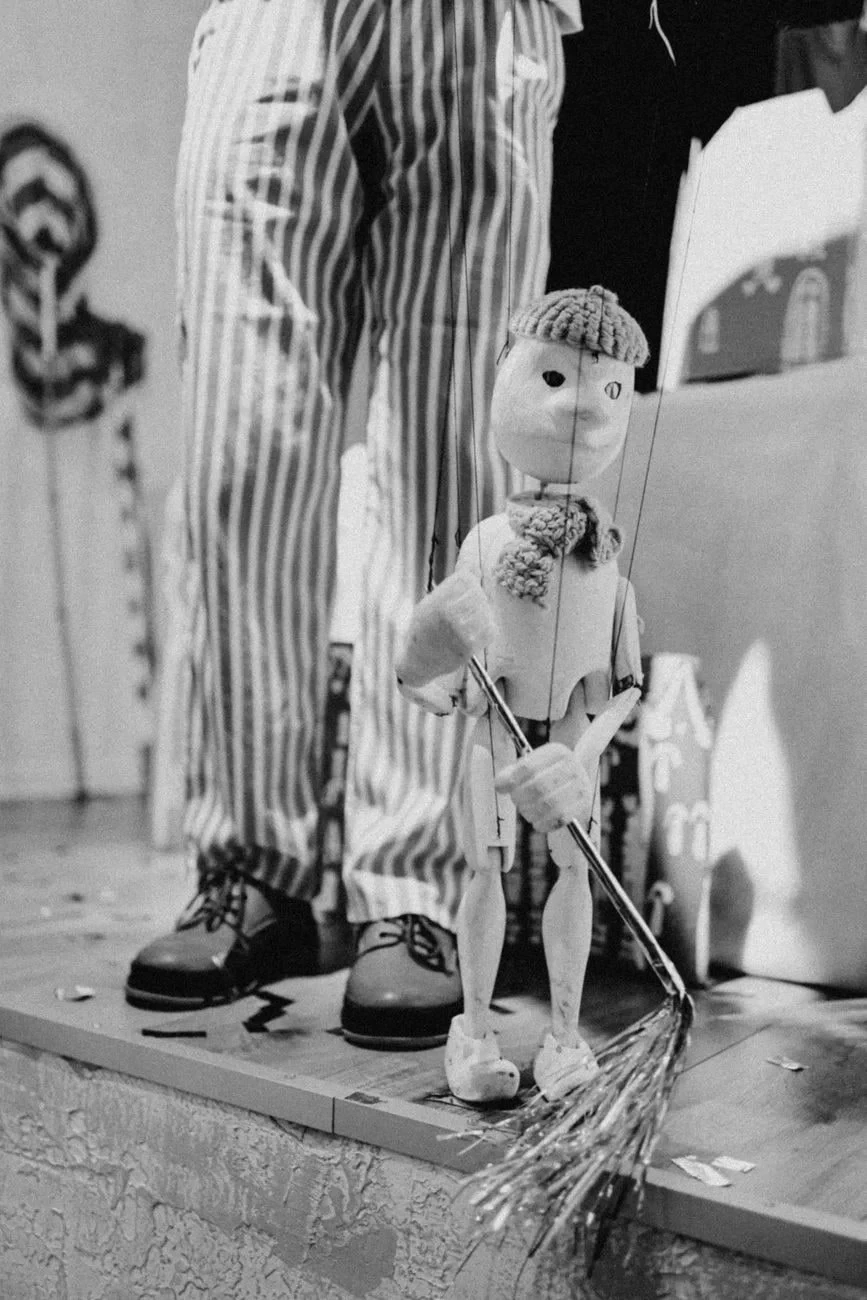
A puppet and a performer with striped pants appear together in stark black and white. Two figures, one question: which one has the soul?
Photograph by Rina Mayer, via Pexels.
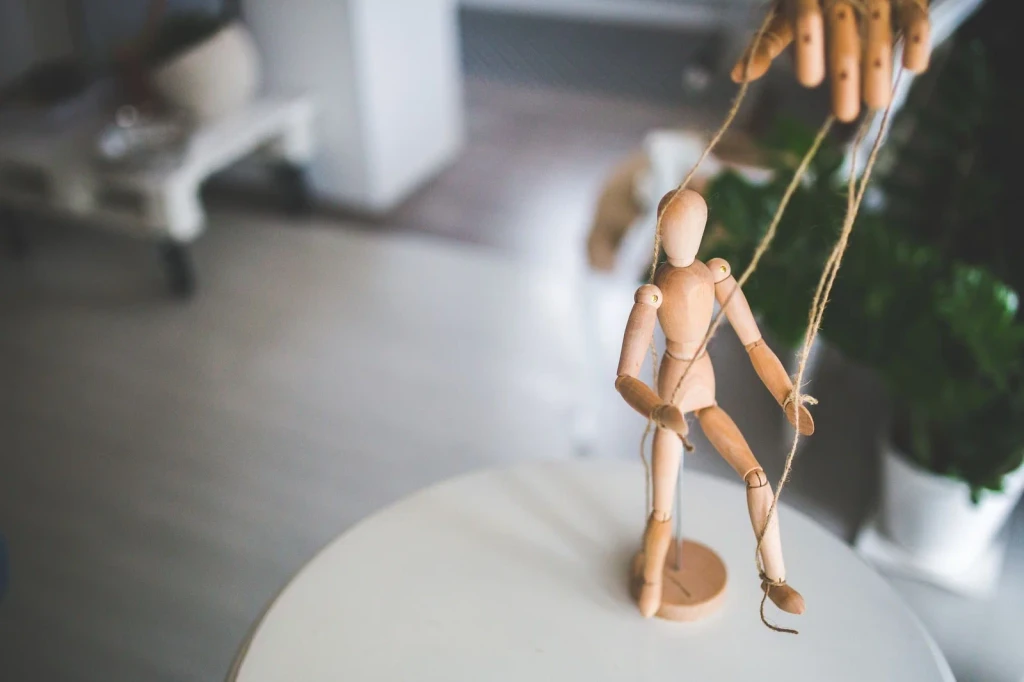
Wooden strings suspend a marionette indoors. This close study of manipulation asks who pulls the strings, and what it means to be controlled.
Photograph by Karolina Grabowska www.kaboompics.com, via Pexels.
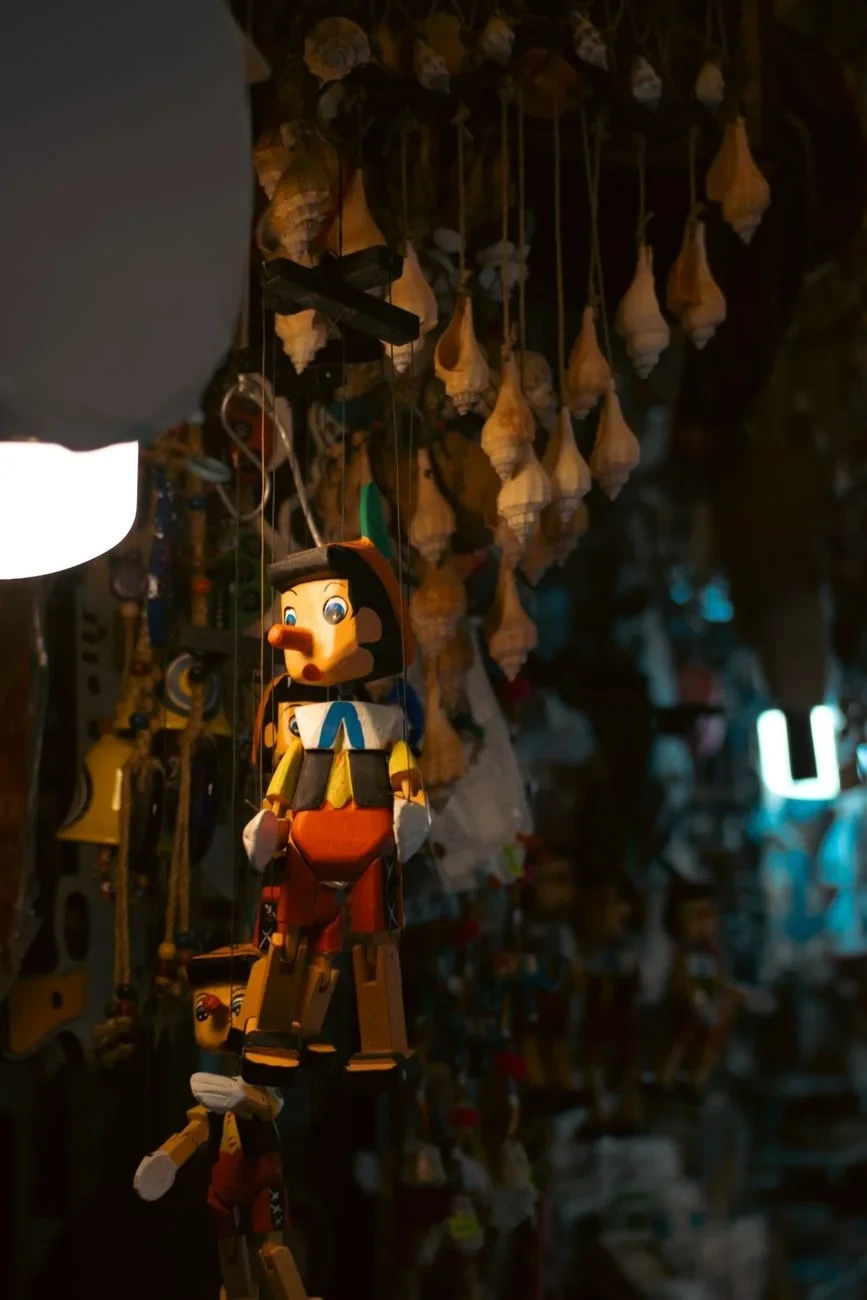
Pinocchio puppets hang in a dimly lit marketplace, their colors glowing softly. Nostalgia surrounds these figures, suspended between memory and the present moment.
Photograph by Çiğdem Bilgin, via Pexels.
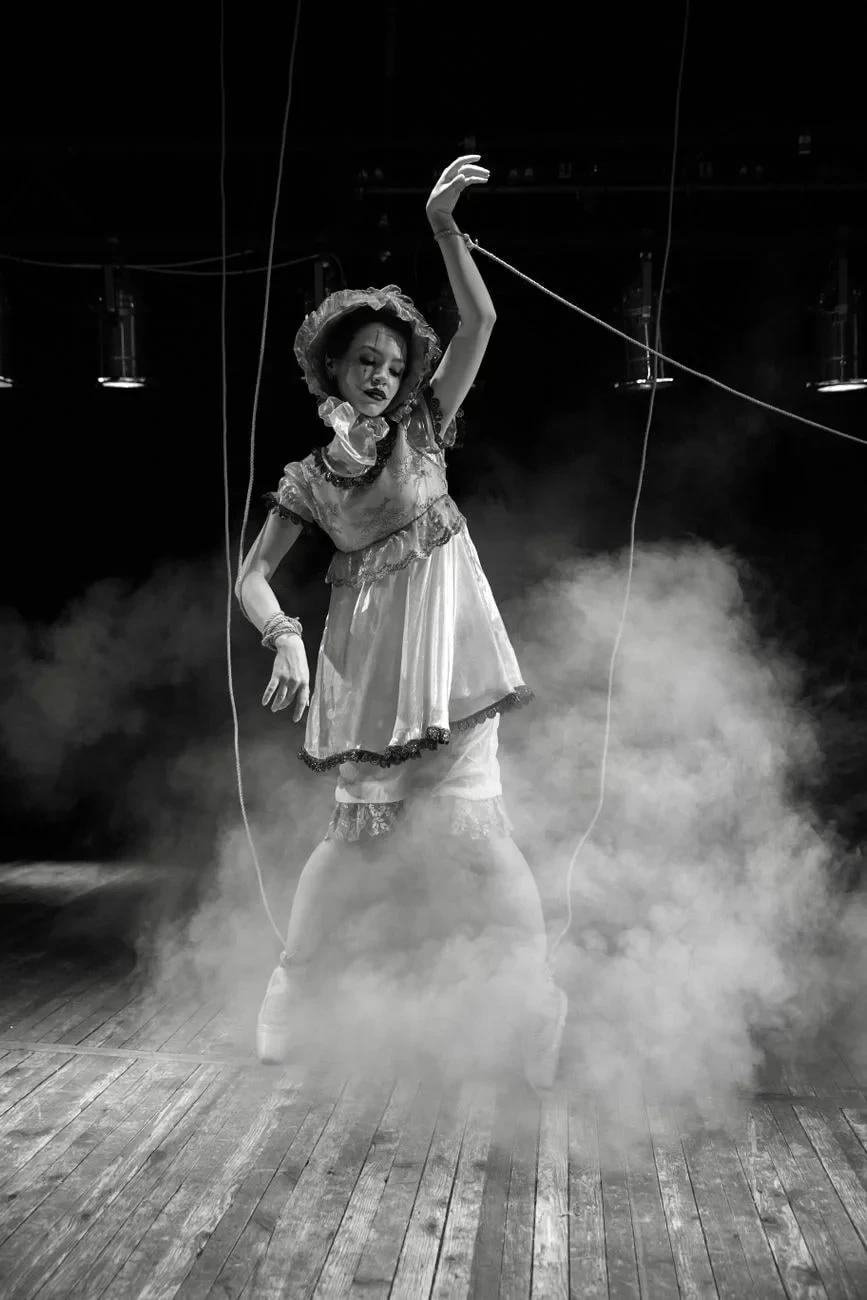
A performer takes on puppet-like form on stage. The photograph captures a moment of transformation between human and object.
Photograph by Pexels User, via Pexels.
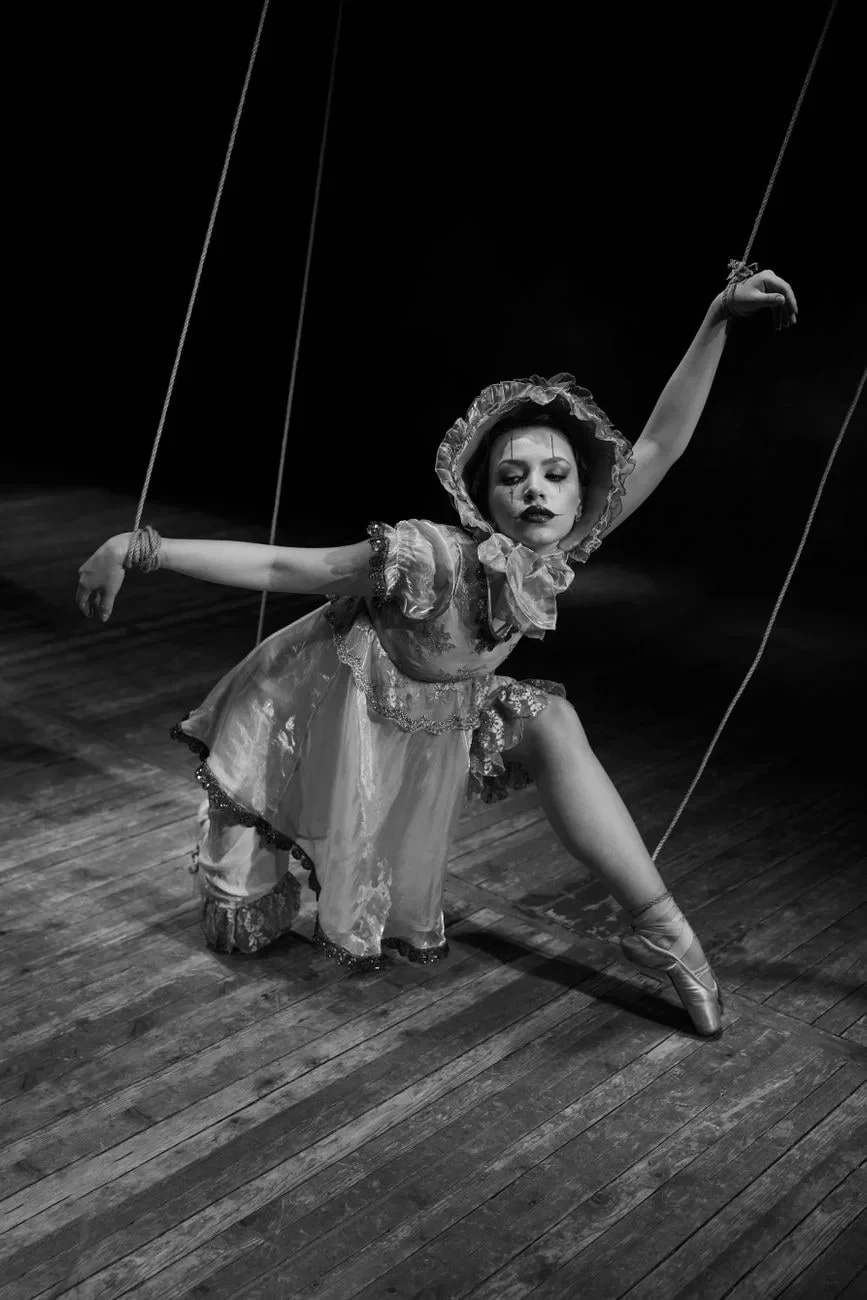
A marionette dancer moves with grace across a dark stage. The image suggests that even suspended by strings, a doll can embody elegance.
Photograph by Pexels User, via Pexels.
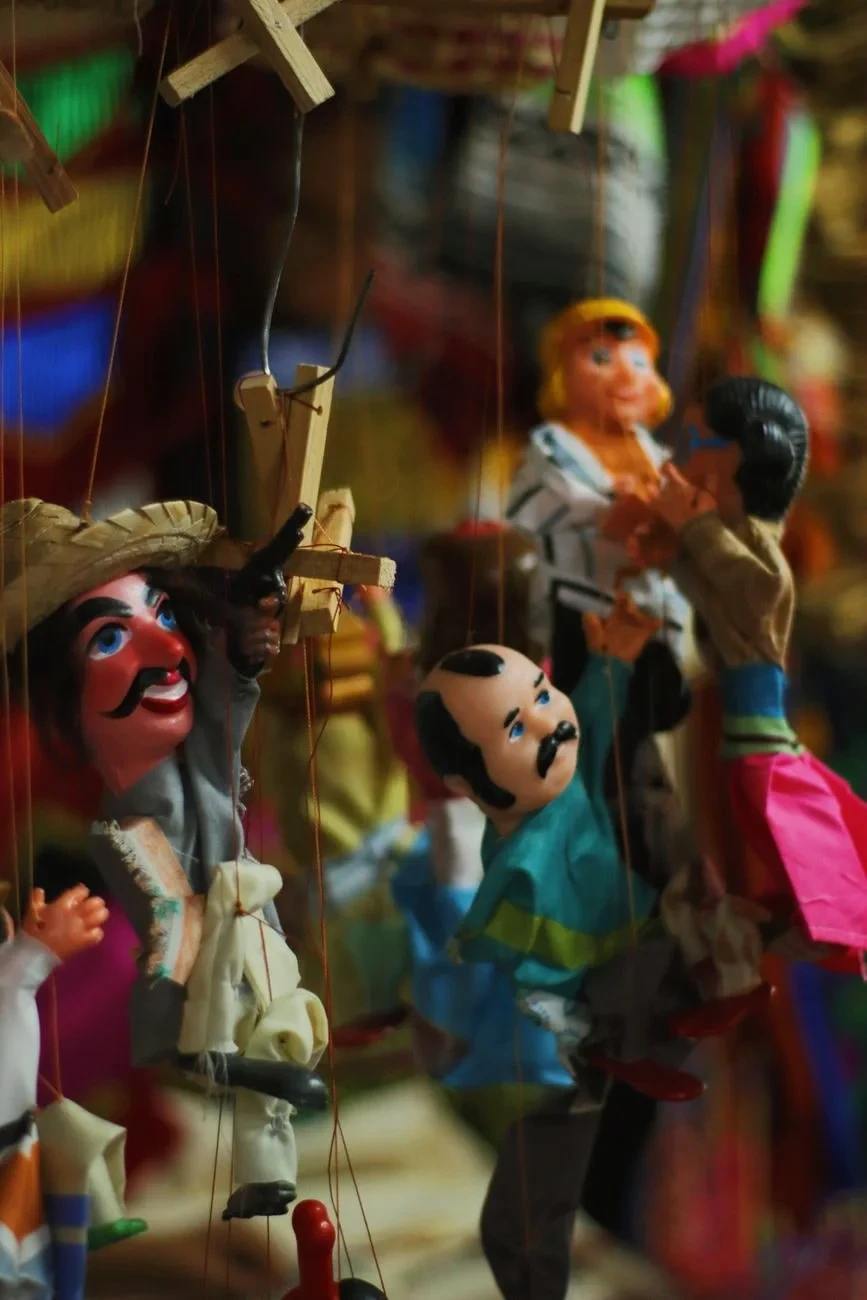
Vibrant puppets dressed in traditional attire are displayed together. Each handcrafted figure carries the intention of its maker.
Photograph by Braulio Enrique Bedolla Martinez, via Pexels.
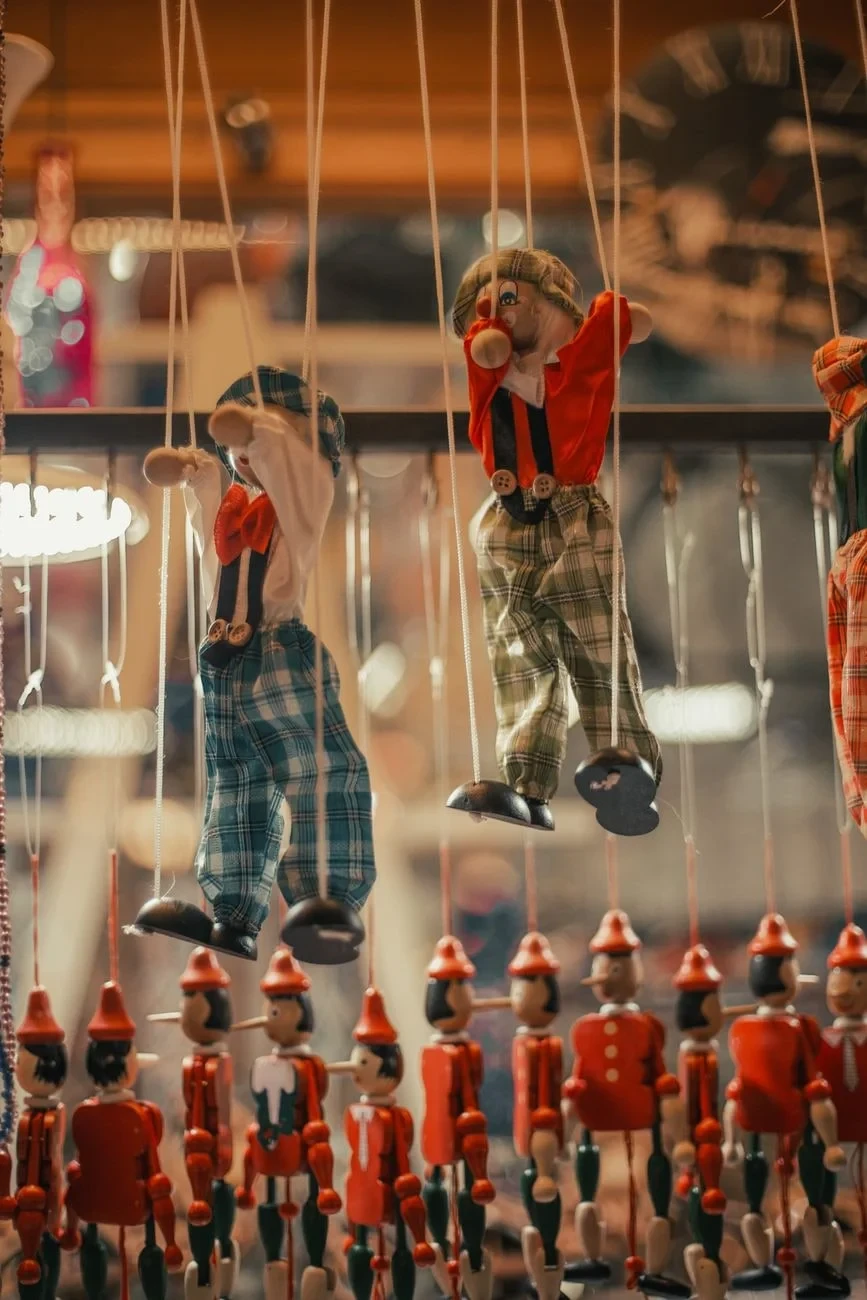
Marionettes in vibrant color hang ready for purchase. Their assembled forms suggest the puppets are complete, waiting to be animated by another's hands.
Photograph by Efnan Yılmaz, via Pexels.
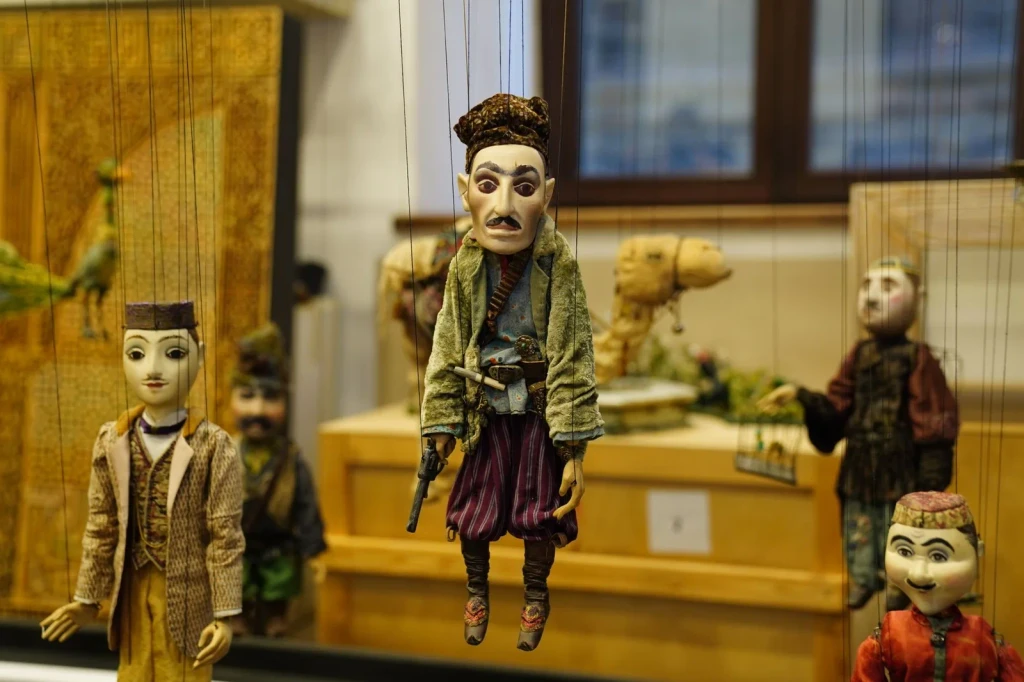
Colorful marionettes showcase traditional craftsmanship and cultural heritage. These figures hold stories within their handmade forms.
Photograph by Tahir Xəlfəquliyev, via Pexels.
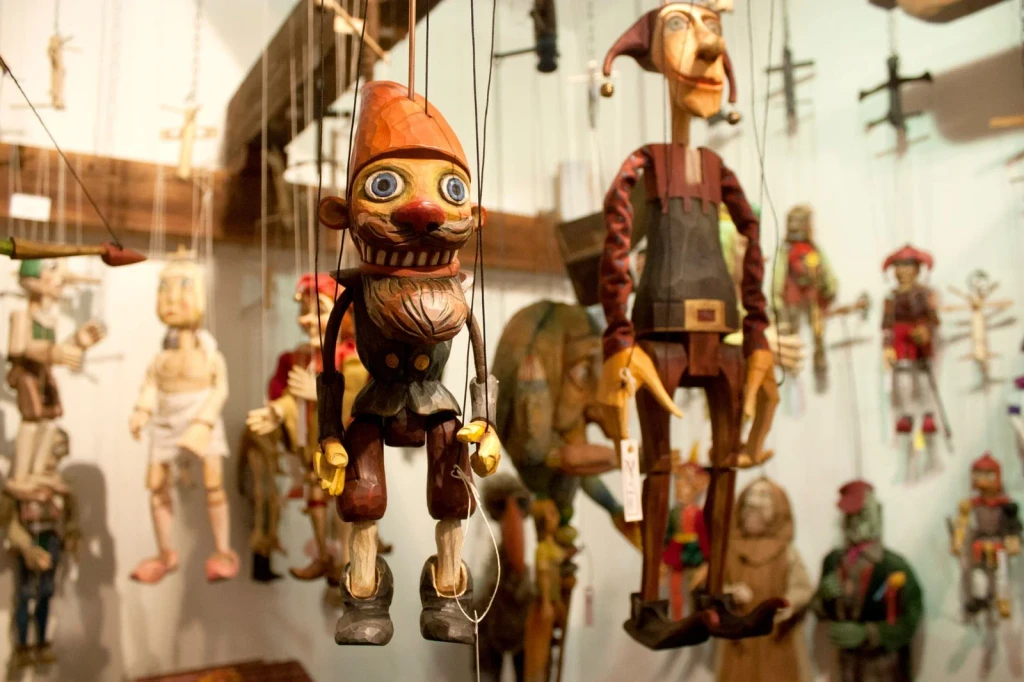
Wooden marionettes rest in close detail, their intricate craftsmanship visible. Each string suggests the invisible forces that animate the inanimate.
Photograph by Bengi Su, via Pexels.
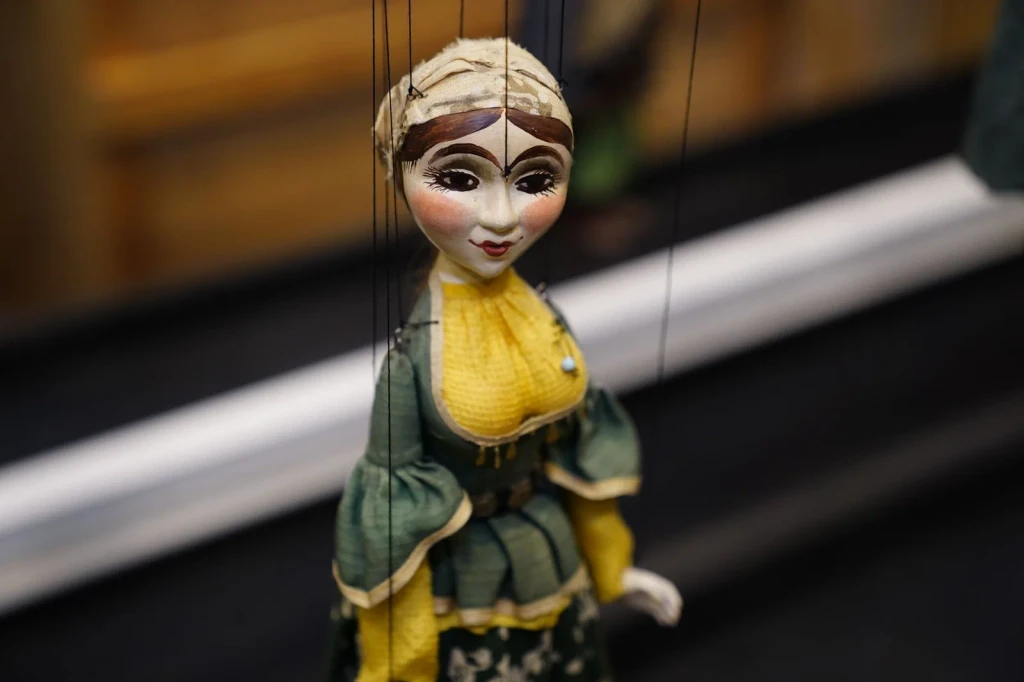
A marionette dressed in intricate traditional costume. The detail reveals the craftsmanship invested in creating a doll with presence.
Photograph by Tahir Xəlfəquliyev, via Pexels.
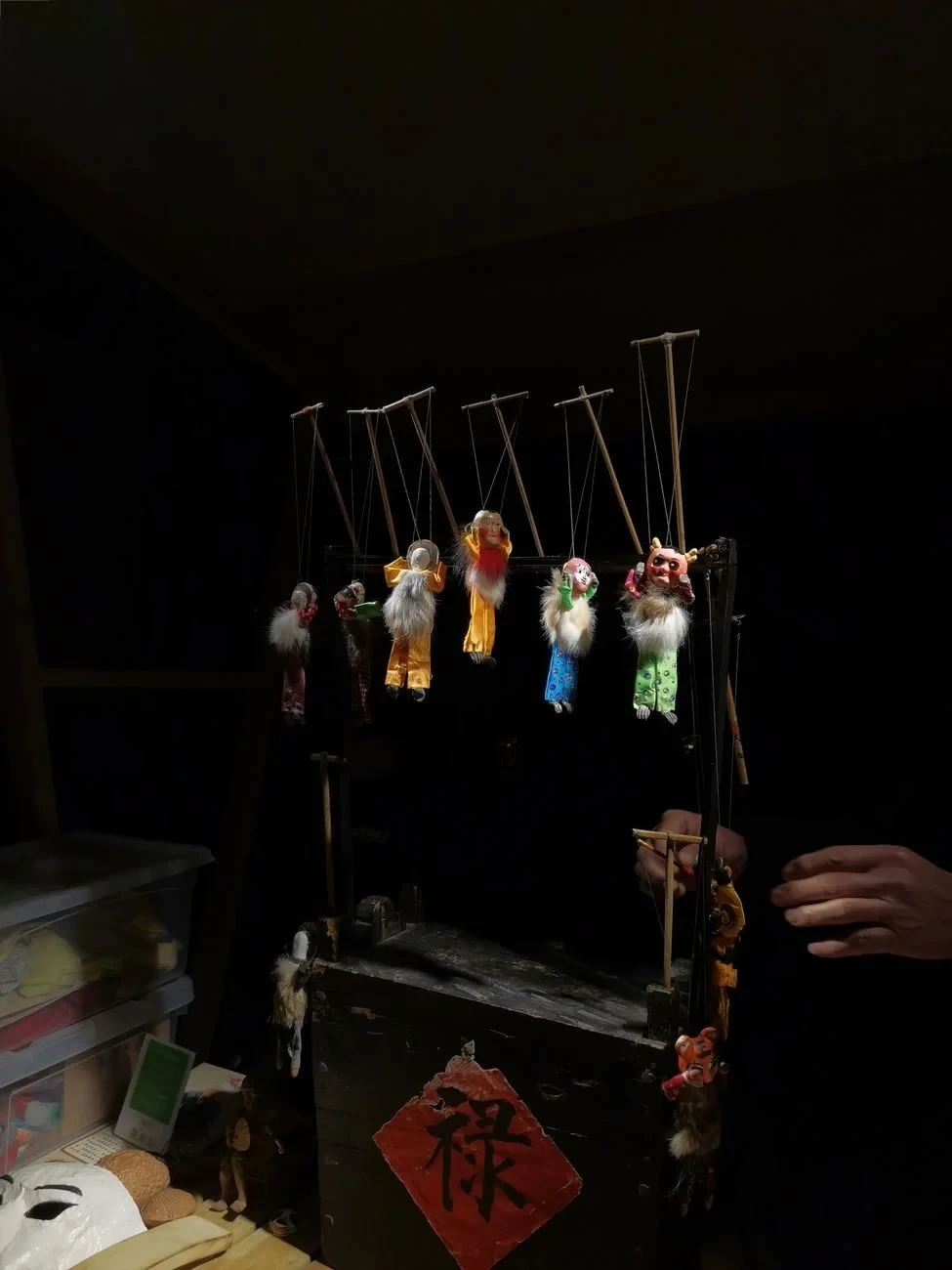
Colorful puppets hang against darkness in a traditional theater setting. In this stillness, the stage waits for the hands that will bring it to life.
Photograph by bjm, via Pexels.
