

A gallery opening night lasts three hours. A shipping crate can cost more than an emerging artist earns from a single sale. For over a century, a physical show was the only way to prove an artist "mattered." That's no longer true. The real question today isn't which format is superior, it's which trade-offs you're willing to accept. This article breaks down the virtual exhibition vs physical gallery decision in plain numbers, then looks at how real artists and dealers have used both.
Virtual Exhibition vs Physical Gallery: The Quick Answer
If you only read one section, read this one. Here's how the two formats compare on the factors that matter most to independent artists:
- Cost: A physical show means venue rent, insurance, shipping, and staffing. A virtual exhibition can be built and published at a fraction of the price, with real costs appearing only if you choose paid promotion or premium features.
- Reach: A physical opening draws whoever can travel to that address, that night. A virtual gallery is reachable by anyone with a link, in any country, at any hour.
- Permanence: Physical shows almost always run for a fixed window, often two to six weeks, then come down. A well-built online art exhibition can stay live indefinitely, working as a permanent portfolio rather than a one-off event.
- Sensory experience: Nothing fully replaces standing in front of a large canvas or a textured sculpture. Physical galleries still win on scale and the social ritual of an opening.
- Barrier to entry: Getting represented by a physical gallery is competitive and slow. A digital art gallery for independent artists removes the gatekeeper entirely, you decide when and what to show.
In short: physical shows win on sensory impact and prestige; virtual exhibitions win on cost, reach and permanence. Most working artists now use both, in sequence rather than in competition.
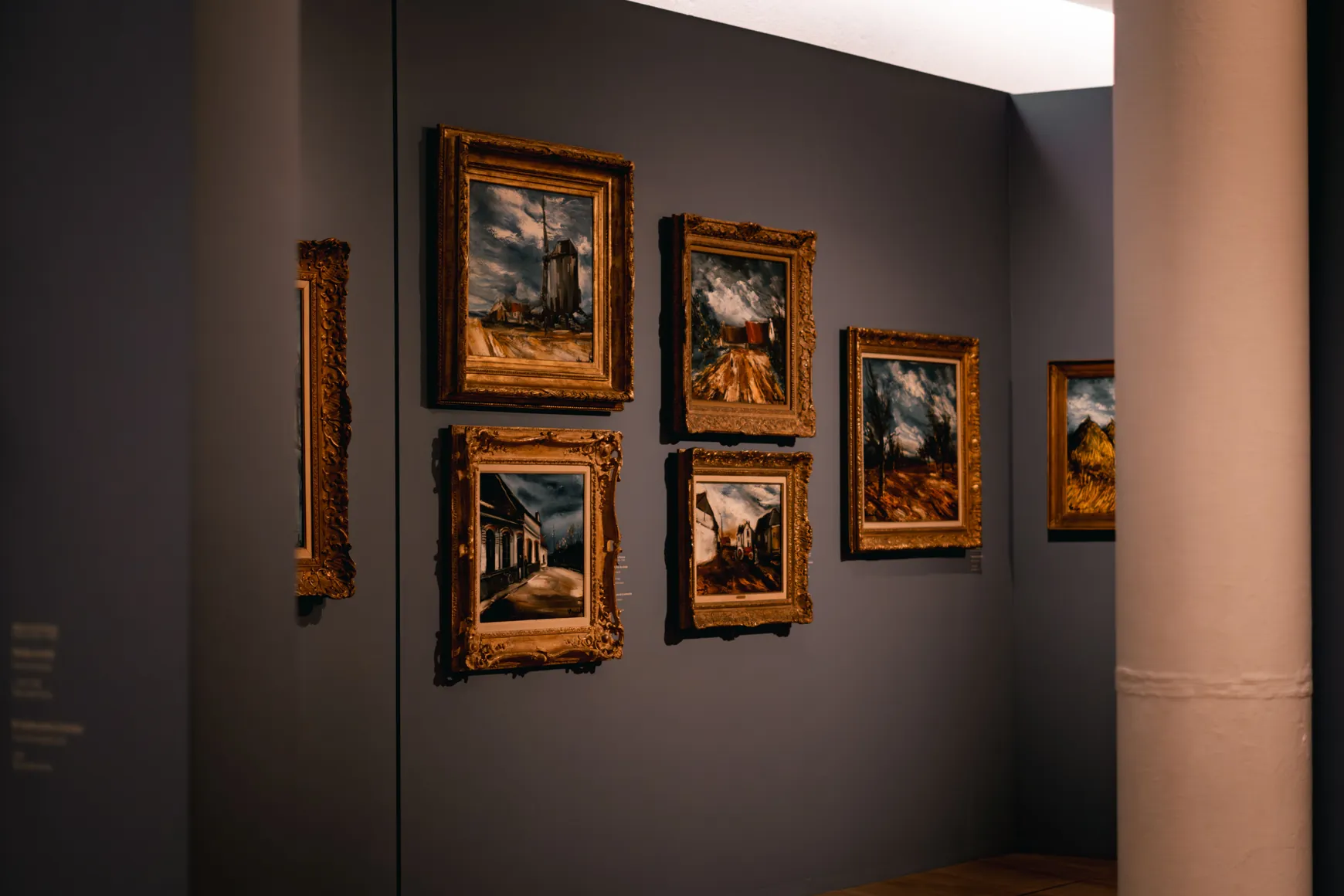
The Real Cost of a Physical Show
The numbers behind a traditional exhibition are rarely discussed openly, which is part of why they surprise first-time exhibitors. Gallery operators report that gallery space rental alone can range from $3,000 to $10,000 per month in many urban areas, with utilities adding another $300 to $700, and marketing budgets typically absorb another 10-15% of a gallery's revenue.
Even artists who don't pay that overhead directly usually cover part of it indirectly, through gallery commissions and out-of-pocket costs for framing, insurance and transport. A single traveling show can cost more than it earns back. This friction is exactly what pushed many independent artists toward digital alternatives. As one industry analysis notes, traditional brick-and-mortar galleries often require substantial financial investments, including rent, commissions, transportation, and exhibition fees, costs a virtual gallery simply doesn't carry.
What Independent Artists Gain Online
The benefits of online art exhibition go beyond saving money, though that's the part everyone notices first. The bigger shift is structural: distance stops being a cost. Virtual exhibitions eliminate physical barriers, allowing artists to showcase their work to a global audience without anyone needing a plane ticket, and they also reduce the costs of transporting, insuring, and installing artworks that usually eat into a physical show's budget.
The market data reflects this shift: the online art market was valued at 6.491 billion USD in 2024, and analysts note that online galleries and auction sites provide artists with unprecedented access to global audiences, while collectors benefit from a wider selection of artworks. For an independent painter or photographer, that means a viewer in Seoul or São Paulo can walk through your work the same week you finish it.

Case Studies: Trade-offs in Practice
Numbers are convincing, but real situations are more instructive. Three scenarios show how these trade-offs play out:
- A major art fair goes digital. When Art Basel ran its "Pioneers" online viewing room with only 100 selected dealers, dealers reported strong enthusiasm for the online viewing room, including some consistent sales, with sales ranging up to six figures despite no in-person foot traffic. The trade-off: exposure depended entirely on the platform's curation rather than walk-in visitors.
- An independent painter building a permanent room. A landscape painter who relied on two regional group shows a year now keeps a walkable 3D gallery online between events, so collectors can revisit the full collection months later and buy pieces that never made the physical selection due to space.
- A ceramics shop owner replacing flat product photos. An Etsy seller of hand-thrown ceramics found flat photos couldn't convey scale or glaze texture. A browsable 3D room let buyers "walk" around each piece before purchase, closing the gap a showroom would fill, without the rent.
The pattern across all three: physical and digital exposure aren't mutually exclusive. Artists who do best treat the physical show as the event, and the virtual gallery as the permanent record that keeps generating views long after the opening lights go off.
So, Which Should You Choose?
If your work depends on scale, texture or a live social moment, a physical show still delivers something a screen can't replicate. But if your goal is to build an audience beyond your zip code and keep a body of work visible year-round without the upfront cost of a rented room, an online art exhibition is the more sustainable default.
The most resilient approach isn't choosing one over the other, it's sequencing them. Use a physical opening to create a moment, then keep that moment alive with a digital art gallery for independent artists that stays open around the clock. That's exactly what MyGallery3D is built for: our AI turns your uploaded images, Shopify or Etsy shop, or existing portfolio into a walkable 3D gallery in minutes, shareable with a single link. Building your gallery is free, you only pay when you're ready to publish it live, and PRO features remain an optional bonus, never a requirement.
FAQ
Is a virtual exhibition as effective as a physical gallery show for selling art?
It depends on the work. For long-term visibility and reaching international collectors, a virtual exhibition is often more effective since it stays accessible indefinitely; large-scale or heavily textured work still benefits from a physical show.
How much does it cost to set up an online art exhibition compared to a physical one?
A physical show typically involves rent, insurance, shipping and staffing that can add up to several thousand dollars, while a basic online art exhibition can be built for free and only requires payment when you publish it live.
Can independent artists really reach a global audience with a digital gallery?
Yes, a link to a 3D gallery can be opened from any country, at any time, any device (mobile, desktop/laptop, VR headset), without travel, removing the barrier that limits a physical opening to whoever lives nearby or can travel that weekend.
Should I choose a virtual exhibition or a physical gallery for my first show?
Most independent artists benefit from doing both: a physical show for a memorable event and local press, paired with a permanent virtual gallery that keeps the work discoverable long after opening night ends.
Sources
- What Are the 9 Operating Costs of Running an Art Gallery? — BusinessPlan-Templates.com
- Exploring the Pros and Cons of Virtual Art Galleries — Albert Lascaux, Medium
- Virtual Reality and the Future of Art Exhibitions — Arts Artists Artwork
- Online Art Market Size, Share, Industry Growth 2035 — Market Research Future
- Here's What Sold at Art Basel's Semi-Exclusive 'Pioneers' Online Viewing Room — Artnet News, 2021